Showing posts with label kristen shull. Show all posts

Friday, January 10, 2025

45 Days Of CCS, #41: Fantology 4

The fourth volume of Fantology is probably the weakest volume overall, but there's still plenty of interesting material in there. A lot of it felt strangely rushed; there were numerous spelling errors and the margins were so tight that I couldn't read some of the stuff toward the middle. Some of the pieces were so sloppy that I was surprised they were published, and the sequencing of the stories also felt somewhat off-kilter. That said, the best stories were excellent, and the overall concept remains sound. 


This is an anthology of fantasy stories set in the same world, based around a central map. Some of the stories are continuing serials, and others are one-shots. This volume's theme is "maps," which is a great theme for a fantasy anthology. There are a number of non-CCS folks in here as well, but I'll start with CCS artists first. Whiteley Foster kicks off the book with a 7-page story that simultaneously feels like it's too long and totally insubstantial. It's about two characters arguing about taking a job as surveyors. Her character design is so Disney-cute and exaggerated that it was hard to see them as characters. Alex Washburn's latest Clan Zargs chapter is something I covered earlier in this feature, but suffice it to say that he makes great use of the map to further his narrative, and the focus on surprising character twists added a lot of spice. 


Carl Antonowicz's unsurprisingly downbeat story follows a religious pilgrim and two servants going on a quest in a deadly desert. The attention he lavishes on world-building is actually a clever misdirection, as the quest itself ends in failure. It's the relationship between the characters that's most interesting. I wasn't crazy about his use of a digital font considering how sketchy his linework was. 


Catalina Rufin has another winning entry in her Barbarian Family series. With the burly barbarian dad Brono and his teen daughter Satu going on a map-led quest, Rufin explores family dynamics in a way that transcends the usual limits of the genre. With Brono harshly critical of Satu's ideas, Satu is vulnerable to a deep gnome's sweet words and promise of magic. Rufin asks some tough questions here, and her character design is sharp and expressive. 


Rainer Kannenstine sketchy and cartoony story about a lonely explorer in over his head in a dungeon takes advantage of old-school Dungeons & Dragons map construction to build the narrative. The looseness of the art gives it a lot of energy and helps play up its whimsical, funny aspects. It even has a genuinely emotional end.


It was such a pleasure to see co-editor Kristen Shull return to her serial. It's about a down-on-her-luck mage and her unlikely partnership with a princess whose quest is to assassinate a god to save her people. Even switching over to drawing digitally and working with a surprising lack of detail, Shull shines doing fantasy work in a way she doesn't in other genres. Her pacing, her understanding of how to depict action, her sense of humor, and her flair for the dramatic make each chapter a rousing success. 


As for the rest, there are a few highlights. F.Ostby's story about young rabbits exploring a forest at night for a treasure rachets up the tension but has a delightful payoff, with a pleasant mix of cartoony characters and a naturalistic setting. Niloufar Lari & Soroush Elyasi have perhaps the best-looking strip in the book, and it's about a quest of transformation and the intimacy of dance; only the digital font detracts from its elegance. Emily Claire's short story about a soldier finding his way back to his lover after three years is quietly devastating. PMK's bar crawl story is hilarious and exceptionally well-cartooned, and it embraces the map concept fully. Finally, Stephen Pellnat's story is a masterful piece of narrative misdirection. The cartooning is excellent, and the swerve is set up early on in a way that is easy to ignore. I missed a few serials from previous issues, which likely led to some replacements, but hopefully, they will be followed up on in the next volume. 


Friday, December 8, 2023

45 Days Of CCS, #8: Kristen Shull

One of the things I like most about Kristen Shull is her genuine sense of curiosity about the world. She's not one to make assumptions, and this leads her to being open to a number of possibilities. In her mini Creative Spark, she talks about being around a bunch of programmers who thought using generative AI to create art was a marvelous thing. Shull spends the duration of the mini pondering if AI is just another tool that creates new possibilities, or a blatant appropriation of the works of others. She gets deep into the idea of which is more important: the creator or the creation? She applies this to problematic creators and how we should approach their work. At heart, however, she hits on the concept that art is a means to connect and communicate with others something from their own consciousness. AI isn't capable of that; it's like taking someone else's words and claiming they are your own expression. There is a fine line between influence and plagiarism, and AI, as currently constituted, absolutely bulldozes that line. 


Shull is quick to note that the urge for a shortcut to make the labor of art easier is hard to resist. She works exclusively digitally these days, something she started doing toward the end of her three year run doing a diary comic. When she started doing it, you could see the quality of the work immediately improve and on a consistent basis, as she was no longer running herself ragged drawing the other strips too quickly. However, working digitally erased some of the more interesting quirks in her drawing when she actually took the time to do them; you can see this in her fantasy work, which was done on paper. While her comics overall are pretty consistent in terms of drawing, they don't quite have the same liveliness they once had, and that might be related to her thinking of fantasy comics as a completely different kind of process. 


One thing that's certainly true of Shull is that she has a knack for creating a compelling personal narrative in the form of anecdote and connecting it to deeper feelings. Uphill is about her learning how to snowboard. She discusses being a skier in her youth and an athlete as a rugby player, but trying to snowboard absolutely kicked her ass. That feeling of wiping out in the snow again and again, of seeing no progress, brought her back to a rugby game where a superior opponent just mauled her team despite her best effort. Shull is at heart an action cartoonist, and the sequences where she's snowboarding and then playing rugby are not only exciting, but they work in perfect concert with the emotional narrative. At the end of the day, it was encouragement ("You're doing so well!") in both cases that kept her going, even if she didn't believe it. The design, the coloring, the placement for lettering, all contributed to this mix of dynamic action and thoughtful contemplation. 

For a bit of fun, Shull gave me a copy of Left Handed Shrek, a sketchbook zine featuring artists drawing Shrek with their non-dominant hand. There are some fun artists in here, and I tink I liked Coco Fox's drawing best, although Natalie Norris' was also quite cute. 

Tuesday, December 27, 2022

31 Days Of CCS, #27: Kristen Shull

Daily diary comics are an excellent practice, especially for young cartoonists who need opportunities to put techniques into action. They're also ideal for cartoonists who tend to be perfectionists to such a degree that it takes them ages to complete a page--and even then, they're not satisfied. You can't be too fussy with your line when you're doing a diary strip; you simply need to keep your pencil moving. The practice of working every day establishes good working habits and can help unlock cartoonists struggling with blocks. Lynda Barry recommends it as a practice for these and other reasons. I'd add that for someone specializing in memoir, it's an excellent way of crafting narratives out of personal events. 

However.

One thing I tell my Rent-A-Critic clients is that it is almost inevitable that doing a diary strip will lead to diminishing returns. Not just for the audience, but for the artist as well. Barry recommends doing consecutive diary strips for no more than a year. I recommend no more than three months. When an artist starts falling behind, starts doing strips about having nothing to say, strips about how they're too busy to do a diary strip, or strips about the burden of doing these strips, then it's past time to stop doing them. 


As Kristen Shull notes in her final volume of her daily collection Ego Gala, keeping up with the strip takes on a life of its own. Her diary strips were fresh and fun when she started them, as her bright, upbeat, and mischievous attitude toward life gave her comics an infectious energy. The realities of working, the pandemic, and having too many projects to work on at once started creeping in as early as late 2019. The COVID quarantine gave her a different perspective in 2020, but as things got busier, that same feeling of "Why am I doing this?" started to return. As a reader, reading several strips in a row and then seeing Shull (correctly) talk about how dull those strips were in the next strip did not encourage one to want to read every page. 


This is especially true because there were a number of strips that crackled with her usual energy and enthusiasm. When Shull goes on a trip, or an adventure, or digs deeply into her feelings and tries to understand why she feels the way she does about things, her strips have enough story to distill into a fluid narrative. I think the reason this dissatisfaction with her daily strips resonated with Shull is that at heart, she is an artist interested in narrative above all else. It's why her fantasy stories are so fun; her characters are varied and intriguing, but they all have clearly-defined motivations. Or if a motivation is unclear, it's because it's a deliberate plot point. Shull excels at finding that balance in her genre work as she slowly blends character and plot and provides a fascinating world for them to explore. 

Memoir, especially long-form genre, is just as much a genre as anything else. Even the most urgent diary comic torn straight from one's experience is still mediated by one's point of view, memory, and particular storytelling decisions. The diary strips where Shull is spinning her wheels reflects an inherent sense of having no story to tell, just anecdotes. Quotidian details can certainly be spun into compelling narratives (Harvey Pekar remains the master), but anecdotes on their own are "just a bunch of stuff that happened," to quote Homer Simpson. 

The other problem with a daily diary strip is that the daily practice can be conflated with a daily mandate. There's a sense that if you don't cover every single day, you are somehow failing the practice. For an artist who posts every day on Instagram or their own website, it can be hard to see the bigger picture when they're so constantly in the moment. Of course, Shull's boyfriend Alex mentions the stress that the diary strips cause and asks her to cut back. Shull herself frequently wonders why she's doing this and no other comics work. That compulsion is hard to shake, until Shull does some fun fantasy stickers for a convention, is delighted with what she does, and starts to really question why she doesn't do this all the time.


Shull gets into some interesting meta territory here: what is an artist's identity? When does a specific work define an artist? Shull reveals that the sheer quantity of her practice means a great deal to her, even as she knows that there are plenty of clunkers in there. There's also plenty to be proud of as well; she writes a lot of interesting stuff about relationships, communication, and an honest appraisal of one's own insecurities. She then hits upon the fundamental issue with diary comics: no one should ever feel compelled to do one every day. That's why I recommend no more than three consecutive months in the practice, but I also tell clients that they should return to diary comics when they have something interesting and specific they want to explore. Shull comes to this conclusion before the end of the year, quitting in November. She's since done the occasional (usually weekly) diary strip that is built around specific ideas (her recent discussion of AI was interesting). Hopefully, she can focus on what she does best: fantasy stories, like the kind she does in her Fantology anthology. The one she's been cooking up is dying to be collected as a graphic novel; I hope her schedule allows her to do this in 2023. 

Monday, December 26, 2022

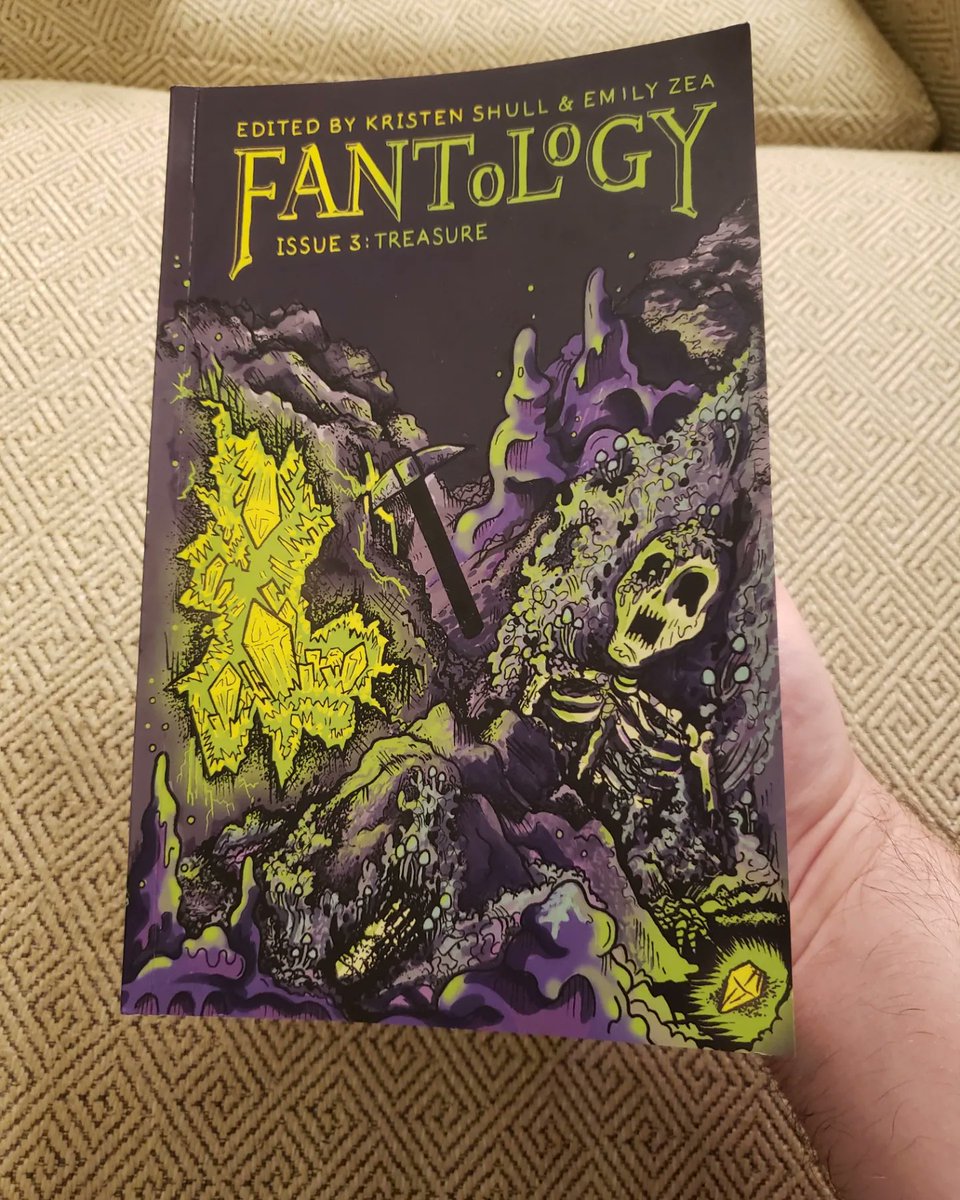
31 Days Of CCS, #26: Fantology Volume 3

Kristen Shull and Emily Zea have produced another winning edition of Fantology, with probably the strongest issue from top to bottom. Its central conceit is that the artists have to work within an established world delineated by a map, which of course is similar to but not as rigidly prescribed as the fantasy minicomic series Cartozia Tales. The theme for this issue is "treasure," and that's a solid basis for stories because it instantly gives protagonists something to want.  


Kat Ghastly's "Lore" kicks things off, and their inventive layouts and page composition make this piece truly stand out. It's as much horror as it is fantasy, as it details a deadly prophecy concerning the new sorceress of the kingdom. Ghastly uses open page layouts, zooms in and out on key characters, uses tiny details to provide narrative and decorative flourishes, and provides rich and provocative characterization. This feels like a long book in the offing. Tay James' work is text-heavy, but the weird lettering choices and bonkers page design help with the light-hearted humor of the piece. Sage Clemmons' entry alternating illustrations with hand-written letters detailing a couple separated by life circumstances is deeply emotional, and ideal for an anthology. Natalie Norris' wordless tale of two mermaid lovers discovering a trove of human treasure is the emotional and narrative opposite: two lovers with no regard to the outside world, inseparable. The treasure amounts to simple baubles for them, instead of life-or-death plunder, and if there's one thing Norris is aces at drawing, it's slender, elegant, beautiful women. 


Emily Claire's piece about disaffected undead employees in a dungeon is funny and has a sharp punchline, although the dependence on grayscale shading made the visuals bland. A pet is a major aid in that story and in Chelsi Fiore's entry about an elf and his small steed being trapped in an underground city. These are breezy transition pieces that lead to the third chapter of Shull's ongoing fantasy story about two accidental traveling companions who both carry secrets. Shull's boisterous and bawdy style of fantasy is propulsively fun, as she pairs a serious (but horny) character with a light-hearted (but also horny) character who loves carousing, singing, dancing, and playing games of chance. Shull has a way of adding a slice-of-life touch to fantasy proceedings that centers the story around her protagonists, and both of them are memorable--both in terms of how they're drawn and their personalities. Hopefully, this makes it into a book one day. 


Michael Beachy's treasure-hunter story is a little visually overwrought, but he reins it in just enough to tell a clear and funny story. Mona's story about a bored wizard staging a tournament because he loves violence is heavy on pen-and-ink pyrotechnics, but her command over her line and clever storytelling techniques makes this fun, right on down to its cut-off ending. I get that it's part of a larger story, but not having any real closure in the story was distracting. The scratchiness of that story is followed by Stephen Pellnat's painstaking detail in service of some dynamic storytelling about a cat adventurer getting more than he bargained for on his adventure, and learning a valuable lesson along the way. There's another stylistic shift, to a sketchy, hatching-heavy story by Jackson Maceo Schleicher about a lack of honor among thieves as they look for a wishing egg. 


Rainer Kannenstine's piece is yet another visual shift, as it looks like scratchout white-on-black, with a simple, blocky line to tell this story of a grappler named Urta whose use of brute force eliminates the need for skill or magic in taking a dragon's treasure. She also has no problem declaring herself the sole recipient of the treasure and turns the dragon into her pet. My vote for most improved feature is Alex Washburn's newest entry about Clan Zargs. These ragtag adventurers get into genuine trouble, and Washburn tightens up everything here: his line, the storytelling, and even the characterizations. On the other hand, co-editor Zea's piece about a pirate challenging her family's lineage with the help of her hostage/protege/niece feels overblown and self-indulgent. She seems so delighted in her Captain Trub character that everyone else in the story is a means to the end of extolling her awesomeness. The story is still well-drawn, although the use of digital lettering takes me out of the actual story. 

While that story was a misfire, Fantology 3 not only holds up well on a story-to-story basis, the sequencing is also fluid and creates contrasts that make each story stronger. For an anthology with an open submissions policy, they did a remarkable job of putting together such a strong group of creators. It helps that there are regulars to anchor it, but this was the best all-around group to be featured in an issue so far. The conceit of Bartlebee the Bard introducing each chapter is fun, but it seems wholly unnecessary for one-shots. Given that some strips are in their third chapter, a summary of prior chapters would have been useful for readers. This volume will definitely delight readers looking for something a bit off-beat in their fantasy comics. 

Monday, December 5, 2022

31 Days Of CCS, #5: The Ladybroad Ledger #5

The Ladybroad Ledger is a broadsheet anthology by women, femmes, and nonbinary cartoonists in Vermont. So says its back page. The original version of this folded a few years ago after four issues, but three CCS students revived it with a bunch of their fellow students and alumni, along with other local cartoonists. The editors are Violet Kitchen, Annabel Driussi, and Sofia Lesage, and it looks like Kitchen handled the editing and Driussi the design. Kitchen took the cover chores and she came up with a powerful, vivid strip filled with violent reds and oranges that exemplified her anger regarding the Supreme Court overturning Roe v. Wade and endangering a woman's right to her own body. It's an eye-catching, righteous bit of fury that demonstrates her considerable skill as a cartoonist. She's got every tool needed to become great. 


One of the fun things about a broadsheet is that cartoonists get to work big. Coco Fox's strip about her struggles with gardening is a 16-panel grid that still has plenty of room to breathe because there's so much room on the page. Her loose, scribbly style and extensive use of decorative flourishes along her panel borders aid in depicting the slightly out-of-control nature of gardening and how difficult it is to control. Kristen Shull's autobio comic addresses the problem of worrying about her readers and audience reactions in general. It also has a lot of interesting visual flourishes that reflect her other cartooning interest of fantasy, and the panel design is chaotic in ways that aid its overall aims. 

A lot of Daryl Seitchik's work involves wide-open spaces, and so working big in her story "How To Become A Mermaid" does a great job of using negative space and black/white contrasts. Masha Zhdanova's comic about summer and falling in love has a nice visual gestalt effect that encapsulates a brief, fleeting feeling. Sofia Lesage's comic about summer goes in a radically different direction: it's a depression journal that's an absolute howl. It's a comic about being trapped in one's own worthless, horrifying mind and body, where the possibility of communication that doesn't poison everyone around you seems impossible. Where one's creative impulses are self-muted and whatever distractions that can be generated are fleeting and foolish. She captures all of these feelings and more in a loose grid that emphasizes body language above all else. 

Leda Zawacki's "29 Miles" suffers from murky grayscale reproduction, marring an otherwise spare, emotionally resonant story about a desperate young woman making a hail Mary play to get a ride. Sarah Woodard's "Open Heart" is a slightly heavy-handed but certainly pointed story about the ways in which the absurdity of racism is highlighted in a medical care facility, with people of all backgrounds providing care and treatment. Driussi's own piece spreads across two pages, depicting the raw, visceral, and erotic experience of experiencing live music. The clashing and clanging images and density of the lettering all play into creating this experience for the reader. 

Sarah Oak's strip about her "Daisy Duke" character grossing out a guy who's hitting on her at work is funny, although her cartooning style is cloyingly stylized. Jen Jolls' piece about someone whining regarding a class has a funny punchline, although the cartooning is all over the place. Keilani Lime and Amy Burns' graphic medicine comic about giving blood (I think; it might be just getting a shot) is funny, reflecting how chronic illness can disrupt any experience. Franky Frances Cannon's full page strip about favorite Vermont bars is cluttered and disorganized, but the drawings are so charming and the actual reviews are so funny that it won me over. Finally, Gabrielle Tinnirello's piece on dresses beautifully uses up the space provided with a host of delicate, decorative elements in a fluid, open page layout. 

There are also essays on why making bad comics is a good thing, how to become a cartoonist, an interview with Kitchen, and a long interview with musician and comics fan Neko Case. Overall, the level of cartooning is superior to the original publication, and more of the cartoonists take advantage of the format to produce work that's outside of their normal comfort zones. 

Thursday, December 31, 2020

31 Days Of CCS, #33: Fantology Issue 2

The second issue of Kristen Shull and Emily Zea's Fantology arrived just under the gun for inclusion in this feature. Unsurprisingly, this issue was generally superior to the first, often in surprising ways. For editors figuring out how best to assemble an anthology, the second issue is the one where all the kinks are generally hammered out in terms of process and production. In an anthology where very little is at stake in terms of money but a lot is at stake in terms of editorial credibility, young editors have to take risks on the kind of work they accept. There were a few newcomers in this issue and the returns were fairly positive on them; indeed, some of these stories were the best in the whole volume. 


One of the more surprising and delightful aspects of this volume is that the shared-world conceit of the first volume not only carried over here, but that some artists used the creations of other artists from the first volume to strong effect. This is another similarity to the Cartozia Tales series edited by Isaac Cates, only without the OuBaPo-style rigidity with regard to rules and switching every issue. This felt like a relaxed and fun one for artists to play together in the same world. Speaking of relaxed, the issue's theme of "Flora & Fauna" struck a nice balance between having no theme and having one that produced too much of the same thing. Each artist was simply compelled to come up with a new animal or plant during the course of their story. Some of them were incidental, and some of them drove the plot. 

While fantasy stories often devolve into world-building exercises, it was clear that Fantology's artists were generally far more interested in character-building. The characters drove the plots, and in the cases where they were returning characters, the stories served to expand on their histories and personalities. All of this is also tightened up by the anthology's narrator and gimmick Bartlebee the Bard, who not only informed the readers as to the anthology's theme, but also introduced each story and served as a natural piece of interstitial material. Unfortunately, one thing that got by the editors was matching up page numbers and the table of contents, which only had a passing resemblance to each other for many entries. 


The continuing adventures of several characters were certainly highlights. Shull's own saga of Sabi and Kata (the elf and the wizard) once again had an episode that was not only entirely satisfying on its own merits but also moved along the larger plot. It even hooked in a character from a group introduced by Leise Hook in the first issue. Given that the main characteristic of the character was his lusciousness, this was right up Shull's alley. Catalina Rufin's continuing adventures of Brono and Satu, the barbarian and his child, continued to be pitch-perfect. While retaining a rough fantasy aesthetic, the gentle quality of the story belied its concept. Filipa Estrela's gentle saga of Frill and Frond, the mushroom person and goblin who became partners in the first issue, is expanded here as the parameters and boundaries of their relationship are tested. Indeed, this is less a fantasy comic than it is a comic about relationships with fantasy trappings, although Estrela made those trappings delightful. Emily Zea's "Troubled Waters" continues the adventures of Princess Trudy and pirate captain Troub. It's a funny and compelling story, as it's made clear that Troub is more closely connected to Trudy than she first let on. Zea's linework here seems considerably more rushed in this issue than the first, however. Alex Washburn's story about a group of dysfunctional explorers maintained its humor thanks to Washburn's thick line and irreverent storytelling. 


The most interesting artists that were new to me were Tao Tao Jones and Chelsi Fiore. The former wrote a compelling story about the Pea from the "Princess and the Pea" becoming a cherished heirloom to a family of servants, until one of them broke away and created her own country based around the pea's growth. Jones' line is thin and scribbly, which suits the material, although I found myself wishing her script was a bit larger. Fiore's story about a desert traveler encountering a fuzzy little potato-like animal was imaginatively drawn and worked well with its short length. It was not just a story about reuniting a child with their family but also about an explorer who respected the environment they traveled in. 

This anthology was filled with pleasant interactions in this particular world, proving that not every fantasy story has to be about conflict. Eddie O'Neill and Kay Brand told a story about a couple going hunting for eggs and herbs so they could have brunch together; the plot was thin, but it was all about fleshing out their dynamic as a couple. Emily Bradfield's story had a little more action, but it was about a witch and a new witch wishing to be her friend and work comrade and how routine can often prevent us from making connections. Rainer Kannenstine's story is a send-up of boastful fantasy tropes. Kat Ghastly offered up more of a psychedelic bit of lore than a story, but it worked as a visually impactful opener. 


There were three stories that particularly stood out. Keren Katz's detailing of how the coin-people introduced in the first issue reversed their process and undid everything that was purchased with them was both conceptually fascinating and heart-rending. In terms of style, there's no one who draws with her level of detail and conceptual power. Kevin Fitzpatrick's meaty story about a potions-master and his imprisonment was full of fascinating character details, ethically thorny dilemmas, and extensive mastery of light and dark contacts. Emil Wilson's story about hunters discovering a bear with an orange tree growing on it not only had an exciting blend of naturalism and weirdness, it also was emotionally complex and touching. 

At 252 pages, the volume felt a little bloated. There were several stories that were had to parse or process visually that could have been eliminated. While the slighter stories were enjoyable, this issue felt unbalanced in that direction. The more complex stories really stood out in this volume, but their tone was subdued by the lighter fare in some of the other stories. Creating a balance in an open-call anthology is extremely difficult, but it's a credit to Shull and Zea that they were able to sequence things in such a way that they were nearly able to pull it off. 

Saturday, December 26, 2020

31 Days Of CCS, #26: Fantology

Every year, someone from CCS always seems to step up to do the work of editing and publishing an anthology. It's a time-tradition that has produced some excellent comics, including Sundays, Irene, Maple Key Comics, and most recently Brainworm. This time around, it's Fantology Volume 1: Origins, edited by Kristen Shull and Emily Zea. It's a straight-up fantasy anthology that makes no apologies for its subject matter and celebrates it with gusto. Not everyone in the book is a CCS student or grad, so for the purposes of this review, I will mostly focus on the CCS contingent.


While there are some solid entries in this anthology, the care that editors Shull and Zea put into make it greater than the sum of its parts. From Tess Scilipoti's simple but eye-catching cover design to the interstitial rhymes of Bartlebee the Bard to the choice of paper stock, this is a cohesive-looking and attractive book. Shull and Zea also chose to put these stories in a shared world (similar to what Isaac Cates did in Cartozia Tales), with a map at the beginning giving readers a rough understanding of that world and where the stories take place. It's a clever device that helps draw together a number of disparate styles and as well as skill levels.


Catalina Rufin's "The Quest" is one of the highlights of the anthology. Rufin went all-in on a thick line weight and spotting blacks and it works well with her relatively simple but expressive character design. It's an interesting contrast, because fantasy art with this kind of line usually tends to be more naturalistic and dramatic, but with the story's actual emotional narrative arc, that contrast between dramatic and pared-down made sense. The story follows a warrior and a young apprentice magician sidekick, and his supposed quest against a powerful witch. Rufin touchingly and hilariously subverts this trope in a way that still makes sense within the genre but also makes fun of warrior-types who can't express their feelings.


Filipa Estrela's "Discovery" is another delightful, warm story about a goblin who happens upon an island inhabited by mushroom people called Mycelia. Estrela cleverly sets the entire paradigm of an explorer on its ear, as Frond the Goblin realizes that she can't report her discovery of the island to anyone, lest it be despoiled by invaders. There's a delightful romance between Frond and Frill, the Mycelium who greets her on the island, and it leaves off on a note that implies that there could be future stories featuring this couple. The one problem with this story is that Estrela's line is light to the point of illegibility at times; it looks more like detailed thumbnails rather than a completed story. The story is also highly text-heavy, and there's some awkwardness with word-balloon placement. This was also a story that fairly cried out for color to add some weight to its pages, but the anthology was of course in black and white. 

I reviewed Alexander Washburn's "Clan Zargs" last year, as he submitted it as a separate feature. It's a nice fit in the anthology, as his anthropomorphic animal character design, thick line weight, and use of negative space allow the pages to breathe while he tells his silly and funny story about a newly-formed group of treasure hunters. I also reviewed Shull's "Thirsty" in her entry this year for CCS, and it perfectly encapsulated the best of fantasy fiction. It's not just telling a fantastical story, but introducing characters who are trying to tell their own story and create their own identity. 


Rainer Kannenstine's "The Apotheosis Of Jahk" is a well-realized story of a fisherman and a malevolent being named Titanis who at first offers friendship and wisdom to Jahk and those around him, but later inspires bloodlust and conquest. It's a story of a seemingly impossible moral problem and how Jahk failed it. Kannenstine's bold use of black and white contrasts matches his simple line nicely; it's a good example of creating a powerful set of images without overrendering.


Zea closed the anthology with "Seas The Day," a delightful coming-of-age fantasy story about a young princess who wants to be a warrior like her older brothers and the pirate who raids their city. Zea's sketchy pencil drawings and spare but powerful inking make each drawing pop off the page without losing any of their expressive power. 

Natalie Wardlaw and L.S. Hook both contributed short pieces. Wardlaw's was a silent story about finding a fairy with torn wings and mending them. It's simple, sweet, and drawn in Wardlaw's signature elegant line. Hook's contribution isn't so much a comic as it is a series of hunky drawings of men on an island that so enchanted the explorer that they chose to remain there. Both are the kind of short, intermediary pieces that provide flavor in anthologies like this. Amy Burns' "When The Gods Grew Bored" is a powerful creation myth for a particular group of people that's well designed and cartooned. Burns' attempt at a naturalistic approach didn't quite land because her character design was too crude; her lettering was also all over the place, which was distracting. 

Other interesting contributions included Jared Beerman's highly atmospheric fumetti photos of miniatures telling a story, Eliot Crow and Keren Katz's haunting story of a people turned into currency in the desert and what ultimately happens to them; Emily Bradfield's story of an official trying to thwart poachers and its surprising outcome; and Tay James' funny story of a young potion-maker trying to decide her future. 

Another volume of this anthology has been produced, and I'll be curious to see what kind of a jump the dedicated creators, as well as the editors, made. The second volume of an anthology tends to be the one where the editors figure out how to fix the errors they made in the first volume, so I'm eager to see what kind of leap they all make. 

Friday, December 25, 2020

31 Days Of CCS, #25: Kristen Shull

Kristen Shull is one of the hardest-working of the CCS cartoonists, having published in the last two years a short fantasy comic, a biographical comic, a 32-page erotic fantasy comic, two years' worth of daily diary strips (and counting), and co-editing two fantasy anthologies. As I noted in my evaluation of her work from last year, she has done the work of getting better in public.

This year, I'm going to take a look at the collected Ego Gala, which has all of her daily diary strips from 2019. I've reviewed most of these before, but I will be reviewing them again in conjunction with Hell Bait, her erotic fantasy comic, as well as "Thirsty," her story from Fantology Volume 1. (I'll be reviewing the rest of that CCS-heavy anthology in a separate post.) Rather than critique each comic separately, I'll be doing a more generalized critique of her work in part, as she notes in her diary strips, she wanted to achieve the same effect in both her autobio and fantasy work: "Find the familiar." That means finding a way to reach and connect to her audience while telling her story, no matter the genre. 

1. All the way open. Once again, to use the Alex Hoffman parlance with regard to autobiography, Shull's memoir is as open as it gets. That's not just because Shull writes about subjects like her sex life, partying, mental health, loneliness, her insecurities as an artist, and much more, but also because she provides a strong emotional context for all of this. She does have a brief intro providing a bit of informational context for certain events in her life, but those were honestly not really needed to understand the emotional contexts of the events or her relationships. Shull balanced this openness against her responsibility to tell a story. While there's a bit of the "then I ate breakfast, then I ate dinner" quotidian dullness found in many diary strips, Shull either limits that as much as possible in telling a story, makes it part of a gag somehow, or at least does a funny or interesting image to go with it. Consciously or not, Shull never lets go of the story.  

2. Fearless. As I've noted elsewhere, it is a mistake to label autobio cartoonist's work as "honest," because how on earth would the reader know? Shull noted in a diary strip that one note she had received during a critique is that she was fearless in terms of what she draws, and that's a far better description. Shull isn't afraid to write about her fears, her vulnerabilities, her absurdities, her desires, and her adventures. While there were times where she felt a little embarrassed about drawing highly personal and intimate activities, it didn't stop her from continuing to write about them. As Gabrielle Bell once wrote, "It is humiliating to expose myself like this, but it is worse to try to hide it." Shull doesn't try to hide it. At the same time, "fearless" is not "reckless." She has an understanding of her responsibility with regard to how she depicts others, especially with regard to how they might make her feel. That comes out during a period where she felt particularly fragile, and she wrote about how she told her housemates that she wanted them to be nicer to her.

3. Bacchus and Minerva. Throughout her diary comics, Shull is referred to as the "Bacchus of CCS." She's not just fun at parties, but she actively encourages merriment in all sorts of ways. There's a visceral quality to her stories lacking in much autobio, and she's not afraid to share it: drinking, doing drugs, having sex, playing rugby, running, exercise, eating fancy meals, "hashing" (sometimes referred to as "the drinking club with a running problem"), etc. If it involves physical sensation, then Bacchus craves it and wants to share it. What Shull doesn't explicitly say is that if she's Bacchus, then she's also Minerva. Wise, introspective, thinking about the future--thinking too much, frequently. It's an interesting dichotomy, but an important one, because Shull may be a Bacchus for parties, but it's Minerva who gets the work done. 


4. The laboratory. Doing a diary strip like this is an act of will. It not only forces productivity, but it reminds cartoonists that the perfect is the enemy of the good--and the finished. It reminds them not to be too cute or precious with their work. It forces them to find good storytelling shortcuts and stops them from over-rendering. At the same time, drawing like this makes one a better draftsman. It's also highly low-stakes, so it allows artists to experiment with page design, storytelling techniques, narrative ideas, etc. The most interesting aspect of Shull's autobiographical work is that willingness to experiment.

5. Fantasy is reality. That said, Shull's autobio work is a solid example of the diary form, but that very format is in itself limiting and limited. While I can see Shull continuing her diary indefinitely for many reasons, it's clear that her true talents lie in fantasy storytelling. Hell Bait, for example, pulls off the remarkable trick of being an x-rated comic with explicit sex scenes that are entirely in service to the larger story. The premise, wherein a local witch who has a FWB arrangement with a demon and has to trick him into killing another demon by way of coitus interruptus, is absolutely ingenious. Shull not only has the instincts and ability to tell a good fantasy yarn, she's able to tell an absolutely hilarious and hot story that doesn't mock either fantasy or erotica. 

"Thirsty," her story in Fantology, is the best entry in the book. In the span of 12 pages, Shull establishes and cleverly resolves an interesting problem, draws horrifying lake monsters, and creates a working bond between a wizard and an elf. Shull crafted a satisfying one-shot story while leaving room for a larger saga if she chooses to go that route. All of her storytelling is excellent. 

6. The next step. Shull openly discussed not being able to imagine doing a longer work in her diary, but the reality is that she progressed in a manner that makes the most sense for a young cartoonist. Start small, finish short work, and keep putting out new comics. With enough pages under your belt, the idea of a longer work no longer seems as unattainable. Indeed, that concept for a fantasy epic started percolating in her head toward the end of 2019. Shull's future clearly is in the realm of fantasy; she's a sharp and witty writer and a great visual problem-solver. The one thing she needs to add to her toolbox is color. Her line is not quite forceful enough to drive an entire comic of this kind on its own, and while her understanding of gesture and body language are highly-developed, there's a certain blandness to the way she designs faces--especially compared to the exciting way she draws monsters. Learning to work with color would help with this while taking a load off other aspects of drawing. I think the ideal scenario is somewhere between Hell Bait and "Thirsty": a smart, engaging, high fantasy epic for adults. There's no question that Shull has the ability and the ambition to do so. 

Monday, December 23, 2019

31 Days Of CCS #23: Kristen Shull

Kristen Shull, a second-year student at CCS, is a classic example of a young cartoonist getting better in public. By doing a daily four-panel diary comic, she cranked out a year's worth of pages. Lynda Barry once recommended that every young cartoonist should do a diary for a period of time, be it a month or three months or a year. It keeps your pen going no matter what, forces you to condense events into tight stories, and challenges you to come up with storytelling solutions as a draftsman. Shull's diary strips, collectively titled Ego Gala, were engaging from the very beginning, but it was clear that by June, she had begun to really settle into a more fully realized style. In many respects, Shull's comics are a model for cartoonists considering this endeavor. Let's go down the list of what she did right:

1. Start off in media res. Shull's first strip was about having a hangover, a shitty day at work, and watching TV with a housemate. Diary strips aren't about context; they're about life lived at a moment in time. It forces the cartoonist to make their life coherent to outsiders in just four panels, every day, filling in backstory only when it makes sense to do so.

2. Funny rhythms. Diary strips work best for cartoonists who are funny, and that's certainly true of Shull. Even if there's not a traditional gag in the final panel, that final panel beat completes a thought. In general, however, Shull's enthusiasm and self-deprecatory sense of humor, as well as her willingness to do outrageous and silly things, makes the reader eager to see what she might do next.

3. Spill some ink. The worst thing a memoir can do is gloss over what it truly means to be human on a daily basis in favor of narrative concerns. Shull lets it all out: she shares about being anxious, being depressed, being horny, being excited, being excited, and so forth. One gets the sense that she can't not be honest, even if she later regrets drawing scenes of herself having sex or making references to masturbating. It's all part of a life being lived, and Shull is clearly a person who seeks out experiences.

4. Have a through-line. Shull is telling the story of being a student at CCS about all else. What is that experience like, as she is a full-time student who also has to work full-time? How does she handle assignments? What's her relationship like with her fellow students? The contrast between her daily life as a barista/waitress and student and her frequent travels make each more interesting. The toil of her daily routine compared to her bacchanalian experiences at rugby trips is especially interesting, especially because she's careful to note the lingering effects of certain experiences.

5. Show your style. Once you have the rules down, then you can break them. There's a tremendous strip where she learned that one of her closest friends had committed suicide. She drew ink splattering out and seeping into every other panel before she learned this revelation, as though hearing that her friend had died affected both her past and present. She exaggerated figures and facial expressions to strong effect throughout.

6. Simplify. It's clear that Shull started off wanting to draw in a fairly naturalistic style, but the result was a lot of sloppy figures. Some of those were made worse by occasional attempts at over-rendering. Of course, as I 've often said, illustrating and cartooning are two separate but related fields. Shull doesn't have the natural chops of a top-notch illustrator, but her instincts as a cartoonist are spot on. By the time June rolled around, Shull started to really lean into her cartooning and find her own style. The pages are clearer and more effective. Faces are simplified but also more memorable. Basically, Shull had to figure out simple, effective ways to make her pages work if she was going to continue to do her diary comics, because it is a grind. You can only hide one's weaknesses for so long until you find a way to address them, and it's to her credit that she slowly found ways to evolve over this span of time.

Shull's non-fiction assignment, Howard Blackburn, had a great premise: the story of a man who managed to survive an icy fishing trip, at the price of losing his hands. The layout and imagery were all clever, but the actual drawing looked rushed and Shull's figures interacted awkwardly in space. Shull revealed in her diary how much trouble she had with the assignment, running out of time to do it the way she wanted.

Finally, her end-of-year assignment was a fantasy comic called Terra Viscera. One can see the lessons she learned from her diary comic at work here. While the rendering in this piece is a bit more detailed than in her other work, she kept her faces relatively simple and easy to remember. Shull would add details like scars, elongated faces, and other visual tricks to help the reader keep track of who was who. Shull then nails the complicated battle scenes, and it seems like all of the experience spent on doing nothing but drawing bodies interacting in space and body language paid off here. What was especially effective in this comic was the final-scene plot-twist that was hiding in plain sight the whole time. 

Thursday, December 19, 2019

31 Days Of CCS #19: Brainworm 3-5

Brainworm continues to distinguish itself as part of the continuum of CCS anthologies led by students over the years. So much of the CCS experience encompasses opportunities that are difficult to come by later in one's career, and the ability to easily collaborate is one of them. Having access to one's peers as critics, accountability partners, and creative partners as part of a difficult but rewarding experience is one of the biggest draws of living in White River Junction. There's also often an urge for a creative person when faced with an assignment or deadline to want to work on anything except their assignment. I've always had the sense that being able to blow off steam like that in a creative and productive way is a big reason why there have been so many anthologies at CCS over the years, but I'd also imagine having the opportunity to make something as good as Irene or Sundays presents its own challenge.

Brainworm's editor is Kat Ghastly, a second-year student. One can always tell that Ghastly's got a lot of different gears going, and her ability to wrangle consistently solid and interesting contributions is a credit to her as an editor. Brainworm is also a record of sorts that touches four different graduating classes, giving it its own unique identity regarding a specific period of time. Each issue is themed, and the third issue's theme is "Surprises." There are some fun incidental drawings from Leise Hook and Emily Zea, followed by a cute strip from Erienne McCray. The latter involves an octopus trying to get adopted as a pet, and McCray's line and use of blacks drives the cute factor home. Katz's strip combining the myth of Noah and the Trojan War was absolutely hilarious, especially with regard to the mumbled dialogue.

Cuteness and weirdness are interspersed neatly by the editors throughout the comic. Emma Hunsinger's dryly humorous bit about a skeleton woman who maintains high-fashion status is its own self-reflective commentary. Surprise monster payoffs from A.C. Rooks and Rainer Kannenstine mash that cute/horror dichotomy effectively. There's a long series of drawings from a number of artists for a "Trickster Battle Royal" that looks like it was drawn on post-it notes, but the reproduction was too small to discern most of the details. That's too bad, because there seemed to be a lot of clever ideas here. The two MVPs of the issue are Kristen Shull and Tim Patton. The former's autobio comics are among the most heartfelt and authentic I've read, especially with regard to sex and relationships. This one's about the horrible feeling of knowing that someone is in love with you when you don't feel the same way in a casual relationship. Patton's scrawled pencils start with a cutesy metaphor about a monster eating orange-creatures and then quickly turns the subtext into text by way of narrative captions. The reader is informed that all of his comics are really all about sex, love, and above all else: survival. "Absurdist constraints" are just there to hold into place that essential idea of barely being able to hold it all together, with one's vices both helping and hurting. This is as raw as it gets and Patton goes all the way while using an interesting layout that also harmonizes his text with funny drawings.

The theme for #3 is "Bad Romance," which is a wheelhouse category for a number of these contributors. Issy Manley's story takes the theme and bends it first toward romance comics tropes and then to EC horror comics. Of course, it's all about a relatively mundane event (power going out in winter, neighbor being sent to help) that's ratcheted up in everyone's imaginations to create tension and paranoia. Katz's comic uses a combination of extremely spare cartooning in some parts of its open page layout and then beautifully intricate linework to tell the story of an old woman receiving care from a volunteer. The story grows increasingly strange until the truly bizarre climax. Not surprisingly, Shull's comic on the subject is excellent. This is less about a specific relationship and more about her relationship between herself and her own body as she felt herself aging a little. More to the point, it's about the persona she felt she created in response to her feeling less desirable; it worked so well in attracting friends and lovers that she felt it wasn't ever really "her;" she had become her own shadow. Shull's line is perfectly suited for this kind of story. It's clear and slightly cartoony without being overly stylized.

Catalina Rufin, Jess Johnson, and Liz Young all tell variations of the same story. It's about younger versions of themselves finding themselves in abusive relationships where partners told them what to do, what to like, and what to say. They were demeaned and insulted. For each artist, they had to find their own journey to self-actualization. Johnson's story is interesting because she was so shaken by her experience that she wasn't even sure what she liked anymore, so she undertook a furious self-tutorial to figure it out that culminated in getting a cute Adventure Time-themed dress. There's also a trio of monster/horror -related strips from Rainer Kannenstine, Tim Patton, and William Prentiss. Ghastly's own strip involves a couple going to hell that feels highly autobiographical.

Issue #5's theme is "Doppelgangers." This was the most interesting and consistent issue to date. Zea and Daniel Foulfellow both use variations on doppelgangers pursuing or threatening the original versions with dramatic tension. Ivy Allie takes that idea and turns it on its head in a hilarious way. Lillie J. Harris' story about a brother and his twin is a story I've already reviewed back in her recent entry on High-Low, but I wanted to note how it really anchored the rest of the issue, along with Andi Santagata's "The Time Knife". Johnson and Shull both offer stories about how apparently twin versions of themselves were wandering around town, but Johnson at least met hers in real life while Shull was left wondering if they blacked out and dressed like a banana for a weekend.

Tristan Scilipoti's "What It's Like To Have Sex With Yourself" starts as an "erotic visual essay" but winds up being about dysmorphia and self-loathing. It's an unflinching, raw story. Ghastly's "Horrorshow" is about that feeling of "someone else driving the bus" when feeling disconnected and detached from the world. Patton's "Gemini" strip is a variation on Aristophanes' speech on androgyny from Plato's Symposium (humans being one being split into two). Coco Fox's strip about a murderous doppelganger takes a hilarious turn with a beautifully expressive line. Overall, the balance between horror, comedy, and personal stories made this the most fully-realized issue of Brainworm to date.

Wednesday, December 26, 2018

Thirty One Days Of CCS #26: Brainworm 1-2

Anthologies have always been the lifeblood of CCS. In addition to work that's assigned to the students, there have often been cartoonists who have chosen to put together work with fellow students and alums. How the work is put together is often up to whichever cartoonist takes it upon themselves to edit the anthology, and in the case of the two recent volumes of Brainworm, that person is Kat Ghastly. She billed this anthology as "a catalog of obsessions for the obsessed" and themed both issues, giving them a nice sense of loose coherence. The table of contents in the first issue contains a sign-up sheet where most artists who said yes agreed at the expense of sleep or possibly quality, which speaks to the work ethic of the average CCS cartoonist.

The theme of the first issue is Endings. Tim Patton's stylish strip is about a couple of friends who visit an out-of-the-way coffee shop on its last day, and it's all about that sense of wistfulness that one feels in moments like that. The use of steam lines speaks to the ephemeral nature of the moment and then the memory. Hachem Reslan's silent strip is clever; it starts from heavily rendered as we see two hands: one holding a knife and other other an orange. As there is a surprise thing that is cut, the rendering and lighting gets lighter and less distinct, as though the cut hand is the one that's drawing the strip. Kristen Shull's cartoonish line is a delight in her story about songs that she can't get out of her head; it's a bit of fun that she braces with the final observation that banishing lingering thoughts is much more difficult. Sage Persing makes use of the dark in talking about their childhood OCD thoughts. Leise Hook's obsession with knowing how stories end was also cleverly drawn, with literalizations of the metaphors she was using. Bailey Johnson's drawing of a camera they took apart spoke to the way that working with its parts was soothing.

Unsurprisingly, CCS fellow Keren Katz's contribution was hilarious, odd and unsettling. It mixes drawings and photos (with a curly mustache drawn on Katz's face!) as the story follows a curator trying to figure out how to display the new heads. Each image is very typical of Katz, in that she's interested in exploring the way images in motion flatten themselves vs the ways in which still images can be arranged so as to create a strange synthesis. Ghastly's own strip is an amusingly cathartic story where she imagines people she hates falling into an open sewer grate, and then she thinks about what that fate may be. Her use of blobby figures reminiscent of Keith Haring drawings gives her story a strong visual charge.

The second issue isn't quite as interesting, in part because the topic ("The Undead") is a bit played out, and thus there was less variety on display. Katz once again takes an eccentric approach to an idea by taking three different documents (instructions for taking care of a cat, an origami instruction book and a book on making bubbles) and challenges people to come up with the first sentence of each book. It's all for reviving a monster. Katz is a walking idea machine, her brain and/or her body in constant motion as part of her relentless project to brighten the world with whimsical, bizarre and thought-provoking art.

There are some nice illustrations provided throughout by CCS instructor and horror master Steve Bissette, but they clashed with the generally lighthearted fare in the rest of the anthology. For example, Kurt Shaffert's "Bioethics and Zombie-care" is a funny take on how the rules of research (autonomy, beneficence, etc) would apply to dealing with zombies. Ghastly's own strip is about her own actual fear of zombies, or rather, that someone she loved would try to destroy her unexpectedly. Reslan and Persing's collaboration follows a sort of mannered, doomed romance, only one half of the couple is a zombie. Andres Catter's zombie gag is a funny one, using an image per page for maximum impact. Leise Hook's comic about a plant she revived and then might have killed again is a clever take on the theme, and its understated visual approach blends nicely with the text.

Wednesday, December 12, 2018

Thirty One Days Of CCS #12: Quinn Thomson, Kristen Shull, Eddie J. O'Neill


Zero Point and Quinn Thomson's Comics, by Quinn Thomson. Zero Point is a self-aware parody of Alien, more or less, employing a mix of line weights that emphasize different aspects of storytelling. A spaceship is sent on a rescue mission to an uncharted planet, and there's one guy in the crew who knows that everything on this “routine” mission is going to go horribly wrong. The stark blacks in this comic work well on the slick paper that Thomson chose, and they help accentuate his excellent work with making his faces expressive in an exaggerated way. The cartoonish nature of his line made me wish he had chosen to hand-letter the comic, as the fonts he chose were distracting. This is a funny comic that gets a lot of mileage out of its horrifying aspects and the awful decision-making of its characters. Thomson's portfolio comic shows off his expressive cartooning in an even better light with comics like “Metro”, which looks like it could be a short story featured in a French anthology somewhere. It's about a guy with stringy hair that stands up (an excellent design) having a miserable time on a subway. There are bits of over-rendering here and there, but for the most part Thomson keeps things clear and focuses on the physical humor of the jokes. In “Bibliomancy” and “Meditation Comic”, Thomson makes great use of a lively, squiggly line to create a wonderful, zaftig character in one comic and alternates between heavily spotted blacks and wonderfully scrawled faces in a deep-sea diving adventure. There's also a little of Graham Chaffee to his work, in that I could see him working comfortably in either comics or animation.

Netflix and Chill, Bones Vs. Tomes and Infernal Nihilism, by Kristen Shull. Shull is adept at the comedy narrative, as each of her three stories featured somewhat cynical sense of humor with genre trappings. Bones Vs. Tomes is a four-pager about a sorcery adept who goes out to the woods to learn spells instead of studying books to get them like wizards. In the span of four panels, she sets up the premise and introduces us to the teenage story of the story. Things go wrong (because of course) and she accidentally summons up a bunch of skeletons out for blood. Then there's a page and a half of negotiating the killer skeletons, until she's saved by a bunch of dickish wizards. The final two panels offer her wicked revenge for dealing with those bullies. Her line is decent, looking great when dealing with the main character and a bit more unsure when drawing other people. That said, her storytelling fundamentals are solid. There's nothing spectacular-looking about this comic, but her execution made it memorable.

Infernal Nihilism is a take on Dante's trip to hell, done in the Ed Emberley style of simple geometric shapes. Like much of Shull's work, it is simultaneously funny and grim. For example, Virgil, Dante's guide, takes the form of a scotch-drinking, cigarette-smoking giant squid. The planets of hell that Virgil shows Dante are filled with inconsiderate people, people who don't clean up after their animals, and those that feel they're morally superior. When Dante's relieved that he doesn't fall into any of these categories, Virgil reveals that the afterlife is all made-up, and that Dante's made his own hell. The cuteness of the story works effectively in both adding to the laughs but also making its nihilistic ending all the more stark, juxtaposed against the art.


Netflix and Chill is a great shaggy-dog joke of a comic, wherein a woman is brought out of a cryogenic sleep six hundred years after she went in and finds that all of humanity was absorbed by artificial intelligence after the Singularity occurred. The AI is fascinated by her as one of their ancestors and wants to keep her happy while studying her. They wind up throwing in another subject into her cubicle, a handsome guy, and the punchline swerves away from the common parlance of what “Netflix and Chill” means (sex) into something much more literal. Shull's line is pleasing here, working in a mostly naturalistic way but allowing her faces to be distinct and even slightly exaggerated. In general, Shull is adept at making short stories memorable, thanks to her comedic chops and strong sense of storytelling. That said, this is an artist that I can easily see tackling a long-form comic in the near future.

Rising, Caged Birds, Flight Club and Rats, by Eddie J. O'Neill. O'Neill has a distinctive voice that uses grotesque and distorted images to tackle complex emotions. In Rats, O'Neill uses a blood-red patina to tell a brief, horrifying story of a person feeling rats crawling around inside of them but fearing for them if they get out. The last image is of the person swallowing the rat, because “I'm not a mother”. The fear of being an inadequate nurturer of one's own parasitical entities supersedes the body horror images of the art itself, which I found fascinating. The pathological fear of losing one's own demons is in itself a horrible fate. Caged Birds features a a group of birds-as-mental-patients. They are drawn as birds and more-or-less act like birds...except some of them are in there for hearing voices, OCD or other mental illnesses. O'Neill takes this to its logical, grim but funny extreme when one of the birds tries to escape—and runs into a window. Once again, O'Neill's images point to dehumanization and detachment from one's own body.

Flight Club was done as part of a non-fiction assignment, and it's a highly clever story about O'Neill's family's history with violent birds of prey. From a pair of auks at a highly dangerous open-air, walk-through zoo, to some hopping mad turkeys to ultra-aggressive terns at the beach, there's a lovely clarity to O'Neill's line that is aided by the highly-effective placement of spot reds that emphasize the homicidal nature of these birds. There's one panel comparing the “pure evil” of all three birds and noting that it's the same despite the size difference of each—and evil is just blood red on the chart. Rising uses a thicker line weight in this moving, grim story about a monk trained in specific sacraments relating to the dead. The monk's job was to carry the body to a certain place where the bodies would be eaten by birds, allowing the souls to move on to their next life. When a group of bandits cut down a child, the monk overcomes adversity and gets the body to the top of the mountain—only to see his image burned down. When he returns and he realizes that he can't move all the bodies, a miracle happens. It's a genuinely joyous and surprising moment, and O'Neill's careful use of spotting blacks on the final pages frame the characters in just the right way.