Rob Kirby's anthologies are always interesting at the very least, in large part because he only takes on projects as an editor that are personally important to him. Passion alone does not a great anthology make, however, and it's Kirby's other skills as an editor that tend to make his anthologies so satisfying to read. He has an uncanny sense of which artists to use for a given project, how to get the best out of them and how to sequence their stories. Sequential flow is the most important quality of any given anthology and is easily botched by editors who don't quite understand what they're doing. Even in an anthology with more than one weak piece, Kirby manages to use them as buffers or palate-cleansers. Even when Kirby was editing anthologies featuring only queer cartoonists, he always carefully thought through the artists he asked to participate in an effort to come up with the best balance of styles, themes and visual approaches. That was especially true in his excellent Three anthology, but he's carried that through in his recent series of anthologies that smartly mixed artists from the queer comics world and the alt-comics world (a line that has thankfully become far less relevant) to provide a diversity of experiences, points of view and styles. After putting together the massive QU33R anthology, he went back to doing smaller anthologies that mixed artists as I noted to address topics like accidental, self-inflicted injuries (Pratfall) and astrology (What's Your Sign, Girl?).
Kirby will surely earn some degree-of-difficult points with his The Shirley Jackson Project, an anthology featuring "comics inspired by her life and work". Jackson has been dead for nearly fifty years, but her influence on modern psychological horror remains as strong as ever. A new biography that's just been released has also stirred up more attention to the novelist and short story writer as well. Simply put, this was a passion project for Kirby, who was delighted and surprised to find as many Jackson fans in the alt-comics world as he did who were willing to contribute to this book. I did some research on Jackson's works prior to reviewing the anthology, having only read the famous short story "The Lottery" and her hilarious book about parenting, Life Among The Savages. Most of the stories were inspired by The Haunting of Hill House (the prototypical psychological haunted house story) and We Have Always Lived In The Castle (an especially creepy family thriller). Kirby's task here was to sequence a group of stories that focused almost entirely on her horror stories in a wa that wasn't repetitive.
For the most part, he succeeded. In an anthology full of deep, personal stories with a distinctly dark tone, it was crucial that Kirby was able to lighten the mood from time to time (much as Jackson did herself in her otherwise psychologically tense writing). The major pieces in the book tend to fall into one of two categories: autobiographical reflections on Jackson's work and its relation to the lives of the artists, and fiction pieces that incorporate aspects and/or themes of Jackson's work. Kirby starts off with Annie Murphy, a mainstay in the Kirby anthology stable. This theme couldn't be any deeper in Murphy's wheelhouse, as her first major comic was about a spiritualist that wove in autobiographical details. With black backgrounds and white, cursive lettering, Murphy conjures up a story weaving in her own history of living in haunted places with Jackson's own history of both dealing with haunted places and coping with an abusive mother, elegantly addressing issues surrounding fear and guilt that drive our deepest sense of terror.
Ivan Velez and Jon Macy tell similar stories, with Velez noting how often he would see apparitions of just-deceased relatives at bedside and Macy focusing instead on how many of Jackson's characters' tendency to have rich inner lives in order to combat the world around them. He perceptively notes that this is a metaphor for dealing with abusive parents and describes his own harrowing life story of dealing with a physically and psychologically cruel parent and how he used his own fantasy worlds to escape. What I liked best about Macy's story is its sense of restraint; there was a sense of quiet but seething fury underlining his words, while his art was crisp & smart but hinted at things more than it made things explicit. In that sense, it was very much like Jackson's work.
The husband-wife team of Asher & Lillie Craw did an analysis of Jackson's use of buildings and foods as highly charged objects in her stories. In many respects, it's a comics form of literary analysis, going straight to the original source to back up their theories regarding how Jackson turns what is comfortable and familiar into something eerie and threatening. The brightness and simplicity of their art is in direct opposition to the subject matter, creating one of many unusual juxtapositions in the book. Gabrielle Gamboa looks at food from a different perspective, addressing the ways in which Jackson turned comfort food into deadly threats and then looking at real-life events in which food has mysteriously killed others. Kirby's own imprint is all over the book, with several short pieces including another analytical story where he examines common Jackson character archetypes, illustrated in scratchy form by Michael Fahy.
In terms of the fictional pieces, the two show-stoppers use radically different approaches. Maggie Umber's "The Tooth" is an adaptation of the short story told entirely in shadowy images. Considering that the original story is about a woman's journey to the city to get her tooth removed, only to slowly descend into total ego loss and deterioration of self, Umber cleverly begins the story with a number of concrete images and slowly starts to iconify and even abstract the visuals, as the reader is compelled to start the see the world as she does. Eric Orner's piece about the crumbling relationship between two long-distance friends is chilling in the way the narrator slowly begins to understand his own self-absorption. Orner's balance of text and image in each panel is designed to whip the reader through the story quickly, anticipating with dread what might happen in the friendship. It can be argued, I think, that Jackson's stories are about the ways in which isolation can lead to toxic behavior, which then often supersedes concepts like empathy and kindness.
The other stories act mostly as effective buffers and palate cleansers. Colleen Frakes' story about listening to a radio reading of "The Lottery" as a child and freaking out points to the ways in which some stories really strike a negative chord with their readers, and that authors just have to deal with it. Katie Fricas' gloriously scrawled drawings try to capture individual, self-destructive urges described in Jackson's stories and is a perfect transition piece as it's right between two stories drawn in a fairly naturalistic style. Kirby's own "Cabinet of Blood" is a funny but dark anecdote about Jackson that provides a short rest for the reader after long pieces by Orner and Jennifer Camper. Camper combines elements from a number of different Jackson stories to once again write about identity lost. It doesn't quite cohere, just like Dan Mazur's imagining Jackson herself as a persecuted witch in the woods feels more silly than anything else. W. Woods' imagining a character from We Have Always Lived In The Castle recovering scraps from her burned house goes on a few pages too long, and it's the only piece in the book that feels more like fan fiction than something original. Robert Triptow's adaptation of The Haunting Of Hill House, on the other hand, is clever because of its first person perspective and recapitulation of the idea of haunting as a metaphor for abuse. Triptow keeps it short and simple, moving quickly from a powerful set of frightening images to the prospect of hope and escape.
At over 120 pages, this anthology isn't as tightly edited as Kirby's best anthologies. There were several stories that could have been weeded, and even some good stories being left out might have made a stronger, more cohesive project. That said, the best pieces in the book are as good as anything I've read in any anthology this year. Umber, Murphy and Orner in particular all used radically different approaches to create stories I won't soon forget. Kirby took risks in seeing what would stick and almost pulled it off, as the book doesn't lose steam until the end. Even the misfires are interesting in their own way and every piece is reflective of the profound influence Jackson has had on them as well as the way she expressed things in her work that spoke loudly to the experience of others, be it directly related to the supernatural or else the messages behind the metaphors she employed.
Showing posts with label rob kirby. Show all posts
Wednesday, November 16, 2016
Wednesday, June 29, 2016
Mini-Anthologies: What's Your Sign, Girl?, Bad Boyfriends, Trailer Blaze
What's Your Sign, Girl? This is the latest ambitious anthology from Rob Kirby, who as per usual invited a fascinating collection of artists to contribute to this specifically limited comic. Kirby has an uncanny sense of how to assemble his line-ups, which is a tribute to his skills as a networker and editor in order to have a wide array of artists to choose from as well as an idea of who would fit in best with a particular theme. This time around, the theme is the zodiac, and each sign in the comic is represented by a different cartoonist. Each cartoonist has a different level of knowledge and/or belief in their celestial sign, which is one of the elements that makes it so interesting. Like many, my interest is a passing one, finding it interesting to think about but not necessarily putting much stock into it. That point of view is shared by a number of cartoonists in the book, but they all find different ways to express it. Others talk about their signs and how they seem to relate directly to their personalities and lives. That's true of Delaine Derry Green, for example, rattling off her Aries traits in her upbeat, stripped-down style. Whit Taylor takes on her Gemini sign in a similar manner, but only Green's white-on-black, cluttered approach, Taylor prefers a more wide-open design and clarity above all else. She really gets at the duality of this sign, and depicts the internal struggle of feeling like two contradictory people. Taylor does this with a great deal of wit, as either her illustrations or the captions/dialogue for same all have amusing gags.
Tyler Cohen and Kirby himself talk about their difficulties accepting their own signs, which are Capricorn and Virgo, respectively. For Cohen, a big part of that resistance was related to the sexist and patriarchal "reading" that her sign was given by a famous astrology book. Upon getting a professional reading, she kept in mind what it said regarding her future, and it landed some pretty solid hits. Her vowing to "keep walking sideways" is a perfect metaphor for how she as a crab navigates life. Kirby's strip is typically chatty and upbeat, with that rubbery quality to his line giving every character a little extra bounce. For Kirby, being a Virgo means being fussy, a worker, and an analyzer, lacking the dreamier or more visionary quality of other signs. While he identifies with these labels to an extent, it seems like for him the Zodiac hits certain surface qualities but can't cover everything, as one's individual qualities always stand out.
Cara Bean and Eric Kostiuk Williams both embraced their signs fully as they encountered the animal forms of their signs in their stories. Bean gets advice from a Leo that comes out of the clouds to lead the pack but to be careful how one's actions are interpreted. Williams drew a psychedelic, ritualistic story about how Scorpio came to fully adopt and prepare him as one of its own: an enigmatic, bold, ambitious searcher. The density and mystical quality of Williams' story sticks out in this anthology, as most of the guests opted to to keep things simpler.
Marnie Galloway and Rick Worley flat-out reject the validity of the zodiac while still sympathizing with those who find it useful. Worley, using his typical anthropomorphic approach, turns the strip over to his severe OCD and contextualizes it as an attempt to make order and balance out of chaos--which winds up being a typical Libra trait. Galloway is an atheist with a degree in philosophy, but she came from a religious background where she tried to fit in. She was struck by the essential core of existentialism--that we one day will cease to exist-- and haunted by it until she realized that because death was unknowable, the only thing we can know is life. Thus, focusing on our day-to-day lives is the only thing we can do to make them better in this regard. Religion and astrology are simply attempts at making our lives easier to understand. This remarks comes as part of a conversation with a person who's devoted to the Zodiac, and after making her final proclamation, her friend rattles off a bunch of Galloway's character traits and declares "You are such a Pisces!", to which Galloway hilariously draws herself grimacing. Galloway's thin, graceful line and her unerring sense of how and when to use negative space gives the comic elaborate decorative qualities as well as her own narrative concerns.
Dan Mazur talks about having his own chart done and feeling ambivalent about it. On the one hand, he felt like the chart was sometimes contradictory (both selfish and generous?) and designed to flatter its recipient. On the other, he saw its value in providing a structure, framework and even measuring stick. Aron Nels Steinke related a funny anecdote where his Aries wife helped him break out of his typical, rigid Aquarian behavior. Kevin Budnik cleverly overlaid text from an astrology book with a header describing particular Taurean character traits (stubborn, independent, practical, fearing of change, etc.) underneath each panel on each page. That allowed him to create an entire narrative that showed how each descriptor fit his life without it feeling forced or artificial. Budnik's skill as a diarist is really on display here, as his different formal approaches to doing autobio comics made him an ideal fit for the anthology. Speaking of well-suited, Annie Murphy is once again an anthology MVP with a fascinating, thorough and well-researched history of her sign of Capricorn. Murphy's greatest skill as a writer is connecting historical data with her personal experiences. Going back into mythology for the origin of Capricorn's nature as a goat-fish, she makes connections with the god Pan and concepts like pantheism and pansexuality. It's not just that Capricorns have a number of contradictory traits (happy/sad, driven/playful, earth/water) that must be justified, but rather that the contradictions themselves are illusory. Murphy notes that Capricorns must understand that it's OK to be more than one thing at the same time and accept this rather than resist it. Working with a white-on-black setting, there's a richness to the images that Murphy chooses that make it easy to understand why she was so successful as one of the creators The Collective Tarot. Like Budnik with autobio, talking about symbols in a meaningful way is entirely in Murphy's wheelhouse. Kirby's ability to pick out cartoonists who would work well with the material makes this perhaps his best small press anthology to date.
Trailer Blaze. Spearheaded by Kelly Froh & Eroyn Franklin, this anthology neatly demonstrates just how deep a bench there is for cartoonists in the Pacific Northwest and Seattle in particular. This anthology is a snapshot of some of the work done at an all-women comics residency called Trailer Blaze, organized by Seattle's indispensable Short Run festival. About a dozen women went to the Sou'Wester trailer park and lodge for around a week. One of the things that stuck out in this anthology is that this arrangement not only gave the cartoonists a chance to bond and share ideas, but it also gave them an equal amount of time for solitude out in nature. Liz Prince, in her diary comics included here, discusses how long walks centered her and made her better company, especially when conflict was concerned. For Robyn Jordan, the week gave her an opportunity to work on her watercolors, with the nearby beach serving as inspiration. Megan Kelso drew portraits of her and her friends at a restaurant, posing them so as to look similar to an old photograph of a group eating and drinking there. Janelle Hessig was her usual wacky self, drawing a hilarious take on the old joke "Everyone is getting laid except for you." While Kelly Froh zeroed in a couple of images and blew them up, Emilie Bess and Gillian Rhodes created what were essentially lists of interesting or funny details about their experience. Finally, Sarah Leavitt did a manifesto about finding ways to work around writer's block and other delays by working slowly and steadily every day, seeking out new inspirations and learning how to finish small tasks and celebrate them. I'll be curious to see if the residency spawned more expansive work later in the future, but this mini served as an advertisement for the experience as much as it did a working diary.
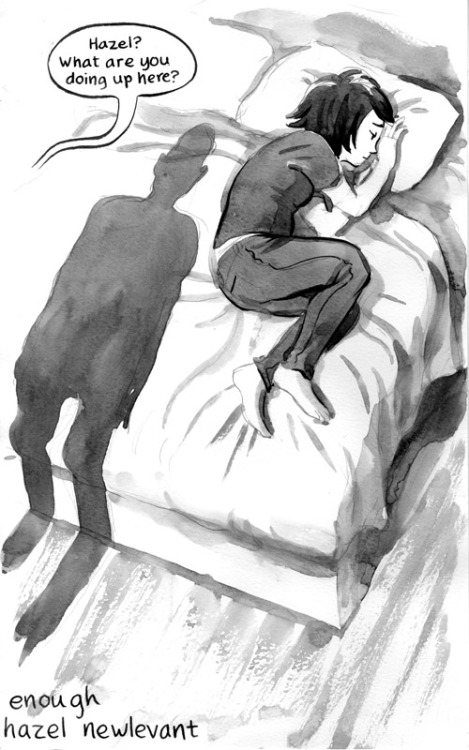
Bad Boyfriends. Edited by Laura Lannes, this is a powerful collection of stories of survival. What's really remarkable about it is how well it stands up as a work of art, not just as a work of personal expression. From decorative touches like the hand-stenciled cover and gold cardstock underlay to the large variety of visual approaches the artists used, every woman in this book contributed something remarkable. Celine Loup's art on a story from an anonymous writer makes uses negative space to create some sharp images, especially since the woman in the story was dark-skinned and her abuser was quite pale. The panel-to-panel transitions were especially devastating, as she felt shame when she orgasmed after he forced herself on her in their last encounter. Even the lettering contributed to that feeling of being shattered, which was later contrasted against her grim, silent resolve. Hazel Newlevant took a different tact; rather than recall the entirety of the relationship with her ex, she instead noted one particular incident that not only encapsulated her feelings about being used but also revealed how little her ex understood her feelings.
Lannes takes a minimalist approach in not only recalling the details of her abusive relationship, but other events that primed her for such abuse. Her use of negative space to represent the depth of her pain and astonishment is especially stark. Julia Gfroerer's two-page spread depicting the nine levels of hell a la Dante is especially devastating, as she turns the horrifying details of her abuse into the events experienced at each level. Her abuser's destruction of her art is an especially grim detail. Hannah Kaplan's story, which also has an anonymous writer, has a surprisingly warm feel, thanks to the way she used pencil shading effects, something she cuts back on and replaces with negative space as the details of the abuse become more and more stark. While there's a happy ending in that the new relationship is a loving one, the scars of being made to feel worthless and undesirable are still haunting. Mariana Paraizo's epic with 24 panels per page is the most intense and suffocating piece in the book, as she intersperses black-on-white and white-on-black panels in an effort to not only separate day from night, but also to occasionally create gestalt images over the span of two or three panels. The story concerns a charming, lying man who had a way of creating intimacy and then disappearing for long periods of time. Cathy Johnson's text quote about how psychology privileges the point of view of men with an illustration is an interesting interstitial piece. Laerte's piece on having a jealous boyfriend who lied both to himself about his sexuality as well as her closes out the book on an ambiguous note. The comic is important because unless these stories are told, believed and assimilated by both men and women, the abuse will continue.
Along the same lines, Lannes' own The Basil Plant is a modern fable that takes an unexpected turn midway through but really follows through on it. The story begins with Lannes trying to find ways to ameliorate her crippling anxiety. At first, eating a pear outside helped, but when the weather turned, she tried to start a garden. When that failed, she started pulling out her hair, which alienated her roommates and boyfriend. That hair was a signifier of her femininity and female identity, and when she abandoned it, she was abandoned in her relationships. When she realizes that it was her identity as a woman that was causing her anxiety, she became a hulking muscleman with a gigantic penis, and luxuriated in all the benefits that masculinity gave her in a patriarchal society. Concluding "I peed on the world", this beautifully stripped-down and frequently restrained story went all the way over the top at the end, cleverly satirizing the difficulties she faced.
Friday, October 18, 2013
Minicomics: Barnett, Henderson, Brunton, Tablegeddon
The Magic Whistle #13, by Sam Henderson. A new issue of Magic Whistle is always cause for celebration, and it's good to see that this is going to be a regularity with the newly-revived Alternative Comics. This is my favorite format for Henderson's work, because it allows him to display his full range as a humorist. There are single-panel gags, longer narratives, long-form callbacks, long-running serial gag features, conceptual jokes, scatological jokes and even funny anecdotes. Henderson excels in all of these areas and is perhaps the most versatile humorist in comics as a result, even as his deliberately crude visual stylings remain the same from strip to strip. This issue's highlights include a very meta Gunther Bumpus strip, wherein he doesn't get stuck in his cat flap and thus doesn't leave his ass hanging, leading to all sorts of angst and the eventual, ineffective intervention of Pickles the Exploding Dog (one of Henderson's best-ever jokes, especially thanks to the very serious and determined expression on the face of the dog). There's also a great Dirty Danny strip, a typically demented Lonely Robot Duckling strip, and a story about a bizarre encounter on a subway. Henderson also features work from the delightfully wacked-out Lizz Hickey, whose diary comics and jokes about being peed on fit right into the proceedings. David Goldin's back cover is drawn very much in Henderson's style. I like this mini-anthology approach, as it reminds me of what Peter Bagge was doing in Hate before he closed up shop on the regular run of the series.
I'm A Horse, Bitch, by Lauren Barnett. This comic begins with a reclining horse that says "Pleased to meet you. I'm a horse. Don't worry, the jealousy you're feeling is normal." Things pretty much go from there, as Barnett takes this concept and runs a mile with it, playing up the hilarious vanity of the horse ("I read books that would confuse you. I'm smart as fuck."; said books include Gravity's Rainbow, Twilight and Ecrits). Every page has a great joke on it, leading to a solid finish. What makes this a big step forward for Barnett is that this comic isn't just conceptually funny, but the drawings themselves lend a lot to the jokes as well. She sells a joke about how embarrassing ponies are with a really cutesy drawing of a pony, for example. From beginning to end, it's a perfectly-realized bit of humor.
Second Banana, by Tessa Brunton. This is a funny story centering around Brunton's relationship with her brother regarding belief and influences. As the youngest member of her family, Brunton was susceptible to her brother's tendency to pontificate. Sometimes this led to him sharing "the good stuff" with her, like comics, HP Lovecraft, ghost stories and other unexplained phenomena. However, it also led to his point of view being the only correct one, which made it especially tough because he was precociously intelligent and Brunton struggled academically. This was a power imbalance, and Brunton sadly relates how it came between them, even as her brother meant well. This especially came to light when he abandoned his love of the supernatural for rationalism, a move that essentially cut Brunton off from her steady supply of wonder. Brunton's character work is expressive and loose but grabs the reader's eye because of her attention to detail and decorative aspects of her work. She's careful to add hatching and background details like wallpaper patterns and imaginative details like monsters and haunted woods. Her line weight is thin to the point of fragility, a quality that carries over to the emotional qualities of her work, which combines nostalgia and sadness in equal measure.
Tablegeddon, edited by Rob Kirby. Kirby's one of the best editors in comics, and this zine sees him quietly putting together a comic filled with some intriguing names from the world of alt-comics as well as queer comics, two camps that are rapidly converging and sharing energy these days. Everyone who is an exhibitor at a comics or zine festival can certainly sympathize with the stories told here. Beyond the simple fact that everyone featured here is a cartoonist, many of the creators tend to write about how introverted they are and how tough it is for them to deal with crowds. Max Clotfelter's densely-hatched comic is a nice introduction to the anthology, as it details his first friend in comics, his first (awful) show and his first disappointing experience with comics. Sally Carson and Cara Bean's jam comic about meeting & bonding at a CCS workshop and then tabling together at various shows is inspiring and revealing, especially in how they are able to help each other through shared insecurities and encourage the other to work through it. Their lines mesh well, with Bean's stubby self-caricature and Carson's cute, bespectacled figure making a great visual duo. Bean's line is slightly thicker than Carson's which works to help differentiate their figures a bit more, but both are careful to avoid spotting blacks.
Kelly Froh and Carrie McNinch both write about the downside of tabling: a lack of an audience, a room that's too cold or a table that's too windy, and crippling shyness. Along the same lines, Aron Nels Steinke relates a story (told in his anthropomorphic style of drawing) of tabling with a guy he got into making comics who was suddenly getting TV deals and the relentlessness of certain kinds of fans. Kirby, Mark Campos and Justin Hall all talk about specific experiences, as Kirby relates a difficult time at TCAF, Hall talks about a brutal 20 minutes wearing down a customer until he made a sale, and Campos talks about a "mystery comic" he made that had an amusing punchline. The centerpiece of the comic, Gabby Gamboa's depiction of a family of neanderthals having a picnic discussing their comics, is hilarious, as she really gets at the conversations and pettiness that can take place at these sorts of events. John Porcellino's comic about how any theories predicting a show's success or failure tend to be specious at best. Tony Breed and Jason Martin both did strips about the ups and downs of tabling and the feeling of connection one seeks out at events like this. The seriousness and sincerity of those comics is then paired against the weirdness of Matt Moses recalling a belligerent fan at TCAF, a show held at a library and the sweet hilarity of Rick Worley relating his crush on Dash Shaw at one show. In the former strip, drawn by Jess Worby, the bulging eyes of the patron made everyone think that he was surely going to snap and murder them. In the latter, Worley builds up a fantasy of getting married to Shaw until he's brought down to earth by being told that Shaw was attached...to a woman. Worley's "Bottomless Belly Button...bit overrated, don't you think?" made me laugh out loud. It was one of many such moments in this anthology, one designed to entertain fans and draw nods of understanding from other cartoonists regarding experiences both positive and negative interacting with the public and selling one's art.
Labels:
lauren barnett,
rob kirby,
sam henderson,
tessa brunton
Monday, April 15, 2013
Personal Stories: MariNaomi, Rob Kirby, Virginia Paine
What's New Pussycat?, by MariNaomi. With small, spare drawings done on big pages, MariNaomi gives this story time to breathe, build and develop a certain uncomfortable rhythm. It's about her history with a particular dorky guy who awkwardly flirted with her over a period of years as they encountered each other at various work spaces. Each little vignette is separated by raindrops, with the rain getting heavier until the final vignette, when we learn the guy has met a tragic end. There's no real moral here, nor is this an excuse for the author to beat herself up for not seeing how deeply depressed the guy (Herbert) was. It's simply a solemn, respectful and honest appraisal of his behavior (he made her uncomfortable with mildly sexist remarks and actions), her behavior (she felt she overreacted when she finally rebuked him, years later) and the ways in which depression can lead us to dark territories. The images are spare, stark and beautiful, with some of her best-ever drawing. In particular, her figure drawing is simple but highly expressive, capturing MariNaomi's naivete as a younger woman and Herbert's complex mixture of despair, wit and desperation to connect. The author's epilogue provided interesting background information but wasn't really necessary for understanding or relating to the story.
Rob Kirby's Snack Pak #1, by Rob Kirby. Kirby is just a solid cartoonist overall with a light, fanciful touch. This grab-bag comic contains gags, diary strips, drawings and vignettes. Kirby leads a relatively quiet, successful and contented life, with most of his anxiety being directed at his career as a cartoonist. His self-caricature is one of the most charming in comics, complete with a slightly-upturned pickle nose. Kirby enjoys playing up his more embarrassing moments for laughs, like the time he felt sick and fainted on a plane or puked on a Mexican vacation. His daily strips can take on a slightly poetic tone, as he does his best work when commenting on how he interacts with his environment outside and how it makes him feel physically. He also has an ear for an anecdote, especially when he starts talking about the always-reliable comics convention stories. Then there are times when he's just plain funny, like his "Middle Age" strip about having a six-pack, drinking six packs and then having a bun in the oven and "junk in mah trunk" set to a funky beat heard only in his own mind. It's a great bit of exaggerated cartooning and a nice joke at a his own expense. Kirby's the kind of artist who can do just about any type of storytelling, and minis like this are clearly a way for him to stay nimble and loose while he's between longer projects, with results that are delightful for the reader.
MilkyBoots #14, by Virginia Paine. This comic represents a big step forward for Paine as both a writer and cartoonist. Though mostly a series of vignettes, drawings, profiles and other small pieces, it's all surrounding Paine's feelings regarding a rough break-up. What's remarkable about this comic is the way that Paine eschews that path of simple lamentation and instead tries to gain insight into her own emotional and existential points of view. It really looks like Paine put a great deal of effort into both the quality of her drawings and the design of the piece; it seems clear that she did a lot of drawing from life. Many of the vignettes experiment with all sorts of different layouts, with her use of negative space adding a lot of clarity and power to her individual images. Paine also spends time to establish her daily routines and support system in the form of her friends who sit out on the porch with her, all while examining deeper questions about herself: her sexual identity, her identity regarding relationships (polyamorous vs monogamous) and how to handle emotionally needy friends. It's a beautiful, powerful and altogether cohesive mini that's greater than the sum of its parts.
Wednesday, July 18, 2012
New Comics From Rob Kirby: Three #3 and Ginger
Rob Kirby really went all-out in producing the third issue of his queer anthology Three.While the past two issues contained three stories by three different artists, the format of this issue is a bit different. There are still three features but also a number of shorter pieces that manage to incorporate threes in some manner. For example, the opening page is a 3 x 3 grid, with each panel featuring art by a different cartoonist. Mari Naomi contribute an image of a woman in three successive moments in time, eating a piece of fruit. It's a beautiful, evocative drawing, as she is nude and being watched by a prone figure. Marian Runk did a one-page bird strip featuring three different backyard birds.About the only cartoonists who don't fall into this pattern are Matt Runkle and Janelle Hessig, in their delightful strip about making a pilgrimage to see Dolly Parton in concert and discuss why she's so inspiring.
Those features are nice little changes of pace for the feature stories, all of which are dramatically different from each other. "Oh No!", a jam "where something bad happens every three panels" is entirely self-explanatory and quite silly. Borrowed from what was going to be content from an upcoming volume of Jennifer Camper's anthology Juicy Mother, an all-star lineup of queer creators passes the narrative baton every three panels and cycles back through one more time to each artist. The story is nonsense, as a one-legged, one-eyed African-American lesbian is struck by a struck in the first strip by Ivan Velez Jr, and it gets crazier from there as exorcisms occur, we view donkey's getting blown in hell, Paris Hilton being born to the devil, dead characters rising up and killing their creators, a demented Peanuts pastiche, etc. Camper, Kirby, Ellen Forney, Diane DiMassa, Joan Hilty, and Howard Cruse all obviously have a fun time, and the strip looks great in color.
The real highlights of the issue are Carrie McNinch's "Fly Like An Eagle, her story of spending a year in a Christian middle-school; as well as Ed Luce's "Love Lust Lost". I count Luce's Wuvable Oaf as one of my comics blind spots (just haven't gotten around to picking it up yet) and I'm sure some of the nuances of this strip were lost on me, but there's no doubting the absolute command he has over a comics page. This ingeniously designed and paced story of three "bears" draws the reader in from the first image, even as the silent nature of Luce's imagery is quite bizarre at times. One man with red eyes and a fearsome beard plays endlessly with his tiny kitty-cats, a second does some kind of fetish cosplay/furry play with a group of men dressed as pigs, while a third man with a bunny-eared motorcycle helmet zips through traffic on a mountainside in order to deliver flowers at a spot where a former loved one died. This story is cute, touching and bizarre all at once as it plays upon the theme of "three" in a number of different ways. It's one of the best short stories I've read all year.
McNinch's story is in that same league. It's one of her longest stories, and one written in her voice as a teenager. It's an account of struggling to deal with life in a restrictive Christian school, the fellow burn-out girls that she befriends, and the creeping realization that she's gay. It's a story that goes from isolation to the understanding that she's not alone, that there's a community waiting out there for her to join. Seeing McNinch's simple line in color is lovely, as the color really adds a lot to the emotional content of the story as well as assisting in evoking the era (late 70s/early 80s). As always with McNinch's work, it's her strong attention to tiny details that makes this comic come alive, from the fashions and drugs of choice to the ways in which she is able to grasp and comprehend her own thoughts and emotions. It's certainly the strongest story I've read from this long-time comics and zine veteran.
I also wanted to highlight Ginger, a short collection of strips about Kirby's dog. She's a beautiful, affectionate chocolate lab, and it's Kirby's skill at drawing her that makes these stories so much fun. From the poem "Birch" (written by Karen Shepard) that is an image of Ginger asking "You gonna eat that?" to a story about a squirrel falling out of a tree and straight into the waiting dog's mouth, Kirby evokes the joys and occasional headaches of owning a strong-willed, energetic dog. I'd love to see an expanded version of this at some point.
Labels:
carrie mcninch,
ed luce,
janelle hessig,
jennifer camper,
matt runkle,
rob kirby
Thursday, December 29, 2011
Minicomics Round-Up: Spina, Robinson, Solomon, Kirby, Ullman/Brown
This batch of minicomics is a true grab-bag and is hard to pin down to any one particular genre:

Fight, by Sam Spina. This comic won a Xeric grant for Spina and is not unlike a slightly gentler version of Johnny Ryan's Prison Pit. While Spina's diary strip may be prosaic at times, his fiction has always been extra-crazy in response. He comes up with wacky premises, carries them through to their logical extremes, and then bombards the reader with uncomfortable gags along the way. Fight features a world where certain creatures have been bioengineered for specific tasks. This comic focuses on humanoid creatures bred only to fight for entertainment. The plot follows a creature called Fight, his downfall and eventual triumph over the female Super Fight that defeats him via trickery, her psychopathic offspring that forms as a result of their brief coupling, and lots of battles along the way. Spina loves gross-out gags, like when Super Fight gives birth to a bounding creature or the truly revolting Boobstadon, a sort of walking set of teats with a brain that is forcibly milked. The scene where an overeager farmer fondles it lasciviously is hilariously uncomfortable, but Spina tops it with Super Fight's child unexpectedly ripping it (and everything else in its path) to shreds. Spina's line is simple and energetic, and the mini-sized format helps add a density and urgency to each page. It's definitely an interesting step for an artist still developing his voice as a humorist.

Box Office Poison #78, by Alex Robinson. This minicomic represents Robinson's failed attempt to revive his first comics series, as he was looking for a new direction after some false starts. He has said that he thought it might be easy and fun to see what his characters were up to a few years after the conclusion of the series (which of course was collected by Top Shelf in one massive tome), but he abandoned this path as well. This mini represents a few pages from that attempt, packaged as though Robinson had never stopped doing the series as minicomics. It's clever and a delightful little gift for fans of the series. All of the BOP trademarks are there: interstitial stories focusing on one character, character surveys, a guest pin-up, a letters page, and a page from another abandoned Robinson project, a sequel to Lower Regions. Seeing some of Robinson's tricks like temporarily abandoning a realistic style for cartoony anger or filling up pages with thought balloons was also quite welcome. That said, I can understand why he abandoned the project: he wasn't saying anything new. He had a fairly definitive ending for BOP, and while it might have been tempting to see if protagonist Sherman Davies could be rescued from a hellish existence with his girlfriend Dorothy and find a healthy relationship, I thought that originally downbeat ending was a more appropriate way to leave the character. It was still nice to see the sprawl of characters even in this short minicomic; this is where Robinson has always excelled as a writer. That's why I prefer BOP and especially Tricked! over Too Cool To Be Forgotten; being able to explore a number of different emotional states and personae seems to be precisely the kind of challenge that pushes Robinson to evolve.

Our Fantastic Universe, by Lizzee Solomon. This odd little comic is the black & white version of a story that's going to be published in a collection dedicated to extraterrestrial sex. This version puts the emphasis on Solomon's grotesque linework, balanced against the amusingly sedate and even detached narration of the "host" of this "series" about alien sexuality. The story details the mating habits of cactus-like creatures called Milchigs and tiny, airborne creatures called Fleart, as the two species have a synergistic relationship. In pulsating, undulating and throbbing detail, Solomon shows us both the typical, nature-show style side of their sexuality as well as some unexpected aspects of their lives. The Fleart, once ingested by the Milchigs, engage in frottage. The Milchigs, once engorged by having ingested Fleart, engage in an extreme form of S&M that not all of them survive. The effect is a variation on body horror, where instead of physical transformation being a source of fear or dread, it's a source for pleasure. For the reader, it's no less strange an experience to read and just as unsettling.

King For A Day, by Rob Kirby. This comic is an interesting departure for comics veteran Kirby, best known for his slice-of-life relationship comics as well as for helming the queer-themed anthology Three. This is a silent comic about a man who is literally shat upon who then finds a crown. That suddenly inspires instant worship and admiration from everyone he happens to come upon. Of course, this sad sack character can't quite end up with a happy ending, even in his own dreams, and Kirby takes great delight in piling on a series of catastrophes, humiliations and general physical comedy. His art is simple and classically cartoony, with rubbery character design that expands into full-out exaggeration during certain scenes. The way he varies line thickness is a big key to the success of the comic; a thicker line usually indicates something significant happening, but that slight variation also makes the lines comprising his characters pop out on the page. The result is a delightfully charming comic that makes the most of a thin premise thanks to funny drawings on nearly every page.

Old-Timey Hockey Tales, by Rob Ullman & Jeffrey Brown. This is a comics rarity: a straightforward series of stories about sports. It helps that cartoonists Brown & Ullman chose to write about the most visceral of major sports, ice hockey and that its early participants were kind of crazy. The design of this mini is typically handsome, thanks to Ullman's eye for detail. Ullman selected items that were more anecdotes than narratives, like a strip about Maurice "Rocket" Richard being banned from the NHL and the ensuing series of riots, or a tight-fisted owner resisting the league mandate to put the names of players on the back of jerseys and protesting with names that were the same color as the uniforms themselves. Brown favored more sustained narratives, like when how the Detroit Red Wings wound up playing a group of prisoners; how one player got revenge on a coach who tried to trade him; and why anyone who messed with Gordie Howe was an idiot. Ullman's story about the great goalie Terry Sawchuk (originally published years ago in an SPX anthology) is still one of his best, documenting Sawchuk's skill as a player and how awful he was as a person. At 28 pages, this mini left me wanting more, especially because the two cartoonists have art styles and approaches to narrative that are so different. I'd love to see an all-sports comics anthology; Dan Zettwoch has done interesting work about basketball & baseball (if I had a million dollars, I'd commission Zettwoch to create an illustrated version of the book Loose Balls, an oral history of the ABA), while Dennis Eichorn has written a number of stories about football. This would be truly "mainstream" work, given America's love of sports.

Fight, by Sam Spina. This comic won a Xeric grant for Spina and is not unlike a slightly gentler version of Johnny Ryan's Prison Pit. While Spina's diary strip may be prosaic at times, his fiction has always been extra-crazy in response. He comes up with wacky premises, carries them through to their logical extremes, and then bombards the reader with uncomfortable gags along the way. Fight features a world where certain creatures have been bioengineered for specific tasks. This comic focuses on humanoid creatures bred only to fight for entertainment. The plot follows a creature called Fight, his downfall and eventual triumph over the female Super Fight that defeats him via trickery, her psychopathic offspring that forms as a result of their brief coupling, and lots of battles along the way. Spina loves gross-out gags, like when Super Fight gives birth to a bounding creature or the truly revolting Boobstadon, a sort of walking set of teats with a brain that is forcibly milked. The scene where an overeager farmer fondles it lasciviously is hilariously uncomfortable, but Spina tops it with Super Fight's child unexpectedly ripping it (and everything else in its path) to shreds. Spina's line is simple and energetic, and the mini-sized format helps add a density and urgency to each page. It's definitely an interesting step for an artist still developing his voice as a humorist.

Box Office Poison #78, by Alex Robinson. This minicomic represents Robinson's failed attempt to revive his first comics series, as he was looking for a new direction after some false starts. He has said that he thought it might be easy and fun to see what his characters were up to a few years after the conclusion of the series (which of course was collected by Top Shelf in one massive tome), but he abandoned this path as well. This mini represents a few pages from that attempt, packaged as though Robinson had never stopped doing the series as minicomics. It's clever and a delightful little gift for fans of the series. All of the BOP trademarks are there: interstitial stories focusing on one character, character surveys, a guest pin-up, a letters page, and a page from another abandoned Robinson project, a sequel to Lower Regions. Seeing some of Robinson's tricks like temporarily abandoning a realistic style for cartoony anger or filling up pages with thought balloons was also quite welcome. That said, I can understand why he abandoned the project: he wasn't saying anything new. He had a fairly definitive ending for BOP, and while it might have been tempting to see if protagonist Sherman Davies could be rescued from a hellish existence with his girlfriend Dorothy and find a healthy relationship, I thought that originally downbeat ending was a more appropriate way to leave the character. It was still nice to see the sprawl of characters even in this short minicomic; this is where Robinson has always excelled as a writer. That's why I prefer BOP and especially Tricked! over Too Cool To Be Forgotten; being able to explore a number of different emotional states and personae seems to be precisely the kind of challenge that pushes Robinson to evolve.

Our Fantastic Universe, by Lizzee Solomon. This odd little comic is the black & white version of a story that's going to be published in a collection dedicated to extraterrestrial sex. This version puts the emphasis on Solomon's grotesque linework, balanced against the amusingly sedate and even detached narration of the "host" of this "series" about alien sexuality. The story details the mating habits of cactus-like creatures called Milchigs and tiny, airborne creatures called Fleart, as the two species have a synergistic relationship. In pulsating, undulating and throbbing detail, Solomon shows us both the typical, nature-show style side of their sexuality as well as some unexpected aspects of their lives. The Fleart, once ingested by the Milchigs, engage in frottage. The Milchigs, once engorged by having ingested Fleart, engage in an extreme form of S&M that not all of them survive. The effect is a variation on body horror, where instead of physical transformation being a source of fear or dread, it's a source for pleasure. For the reader, it's no less strange an experience to read and just as unsettling.

King For A Day, by Rob Kirby. This comic is an interesting departure for comics veteran Kirby, best known for his slice-of-life relationship comics as well as for helming the queer-themed anthology Three. This is a silent comic about a man who is literally shat upon who then finds a crown. That suddenly inspires instant worship and admiration from everyone he happens to come upon. Of course, this sad sack character can't quite end up with a happy ending, even in his own dreams, and Kirby takes great delight in piling on a series of catastrophes, humiliations and general physical comedy. His art is simple and classically cartoony, with rubbery character design that expands into full-out exaggeration during certain scenes. The way he varies line thickness is a big key to the success of the comic; a thicker line usually indicates something significant happening, but that slight variation also makes the lines comprising his characters pop out on the page. The result is a delightfully charming comic that makes the most of a thin premise thanks to funny drawings on nearly every page.

Old-Timey Hockey Tales, by Rob Ullman & Jeffrey Brown. This is a comics rarity: a straightforward series of stories about sports. It helps that cartoonists Brown & Ullman chose to write about the most visceral of major sports, ice hockey and that its early participants were kind of crazy. The design of this mini is typically handsome, thanks to Ullman's eye for detail. Ullman selected items that were more anecdotes than narratives, like a strip about Maurice "Rocket" Richard being banned from the NHL and the ensuing series of riots, or a tight-fisted owner resisting the league mandate to put the names of players on the back of jerseys and protesting with names that were the same color as the uniforms themselves. Brown favored more sustained narratives, like when how the Detroit Red Wings wound up playing a group of prisoners; how one player got revenge on a coach who tried to trade him; and why anyone who messed with Gordie Howe was an idiot. Ullman's story about the great goalie Terry Sawchuk (originally published years ago in an SPX anthology) is still one of his best, documenting Sawchuk's skill as a player and how awful he was as a person. At 28 pages, this mini left me wanting more, especially because the two cartoonists have art styles and approaches to narrative that are so different. I'd love to see an all-sports comics anthology; Dan Zettwoch has done interesting work about basketball & baseball (if I had a million dollars, I'd commission Zettwoch to create an illustrated version of the book Loose Balls, an oral history of the ABA), while Dennis Eichorn has written a number of stories about football. This would be truly "mainstream" work, given America's love of sports.
Labels:
alex robinson,
jeffrey brown,
lizzee solomon,
rob kirby,
rob ullman,
sam spina
Wednesday, September 7, 2011
Small Press Anthologies: Three #2, Candy Or Medicine, The Sorry Entertainer
Let's take a look at three anthologies of various shapes and sizes:
Three #2, edited by Rob Kirby. Nothing in this issue of the queer-themed anthology of Three matches Eric Orner's story from the first issue, which earned an Ignatz nomination. That said, there's a certain sweetness and vulnerability to be found in each of the three stories in this issue. "Dragon", written by Sina Evil and drawn by Jon Macy, is the least compelling of the three. It's about a young man who meets a cartoonist he admires and feels close to on the basis of his familiarity with his material. They have a romantic encounter during which the young man is coerced into doing things that made him somewhat uncomfortable, yet are rationalized away because of the connection he imagines between them. The "dragon" metaphor (and insertion into the story), however, is a painfully obvious metaphor, especially when something dramatic happens. It's annoyingly "cinematic", adding little to a story that's already a bit bland to look at.
Things pick up with "Help Wanted", a jam between Jennifer Camper and Michael Fahy. This is a delightful little comedy of misunderstandings with a distinct romance comic flair. What's surprising is that even though Fahy and Camper alternate panel tiers, there's a remarkable sense of continuity in terms of both story and art between the two. This is quite unusual for a jam comic, which usually tend to be huge messes. I don't know if the two improvised from tier to tier or if they wrote it beforehand, but the smooth result speaks for itself. I like the way that Camper and Fahy play up the romance comic tropes, down to lines like "Happy, darling?" being followed by "Oh yes! A thousand times yes!" coming after a man's FTM transexual boyfriend reveals that he's pregnant and once had a fling with his sister.
The best of the three stories is "Nothin' But Trouble", a collaboration between Craig Bostick & David Kelly. It's a story of a closeted country-western singer who picks up a prostitute after a gig but falls in love with him. There's a clever narrative trick where the story is told first by the singer (Jimmy, drawn by Bostick) and the prostitute (Butch, drawn by Kelly), alternating every couple of pages. The trick comes in terms of coloring: the red-toned pages belong to Jimmy and the green-toned pages belong to Butch, allowing the cartoonists to make whip-crack transitions with a minimum of narrative disruption. Bostick has always had an appealingly clear line, and the cartoony quality of his line is a nice counterpoint to the low-key melodrama of this story. There's no easy happy ending to be found to this story, yet both characters wind up having a surprising and positive effect on the other. It's a pitch-perfect slice of life story, with the two artists meshing remarkably well despite portraying two different but complementary narratives.
Candy Or Medicine: The Compleat First Year, and Candy Or Medicine #14 & #15, edited by Josh Blair. Blair decided to reprint the first four issues of his all-comers minicomics anthology which has a lower hit-to-miss ratio than virtually any other anthology, yet always yields some gems. As Blair notes in his introduction, this is a deliberate strategy. He's less an editor than an "OE", to use APAzine parlance. That is, he serves to collected and publish material sent to him, with the money he earns from sales (at just a dollar an issue, it can't be much) to support collating and copying each issue. His hope is that every story will appeal to at least some readers, even if they aren't necessarily the stories that he likes most. From the very beginning, Candy or Medicine attracted people who could barely draw or conceive of a coherent narrative as well as great cartoonists with no other print outlets. Brad W Foster (a Newave era stalwart) and Matt Feazell (the DaVinci of stick-figure minicomics) make early appearances with drawings instead of comics. The strip has also drawn an unusual number of international cartoonists eager for any kind of exposure to American artists, like Greek artist Kostis Tzortzakasis and Briton Kel Winser.
The most recent volumes (#14 and #15, sold as a two-pack for two dollars) show that the anthology is both much the same but has also started to attract a better quality of cartoonist. #14 is a particularly strong issue, with a strange and beautifully drawn story about how the mold in a kitchen spawned a new ecosystem and saved a marriage as its centerpiece. Emi Gennis contributed one of her "Wikipedia List of Unusual Deaths" comics, this time about an old man who was exercised to death by his wife, who happened to be a MTF transsexual and who also happened to be the child of old family friends thirty years his junior. Gennis' line just gets sharper and sharper, matching her wit as well. Lauren Barnett's absurd scribble is typically funny, especially in the way it makes fun of her own limited draftsmanship. Issue #15 doesn't feature any stand-out strips but is still interesting for publishing short comics from Lithuania and Guatemala. I love that Blair is so committed to this anthology, giving cartoonists the opportunity to get better in public.
The Sorry Entertainer, edited by Simon Moreton & Nick Soucek. This is a cheap newsprint anthology from the UK that includes contributors from Ireland, the US and Argentina, based around the theme of performing and performers. The results are a mixed bag, as some of the artists don't really rise to the occasion of using the space in an interesting manner. On the other hand, there's plenty to like here from a number of artists who have been making some noise in the UK and US scenes the past couple of years. Moreton's own strip follows a schoolboy persecuted by his peers who slips into fantastic reveries, acting as a sort of prologue for the kinds of stories that follow.
The tone of the anthology slips from light-hearted to the contemplative. Paddy Lynch, for example, submits a wispily-drawn story about a man going to a park musing about how difficult it is us for to live in and enjoy small moments while listening to a guitar player, only to have a policeman come by and shoo the guitarist away. Jason Martin's adaptation of Mike Watt's tour diary is hilarious, with his rough style a perfect match for Watt's whole demeanor. Another example of that swing is David Z. Greene's full-page wrestling strip that winds up with a silly (if bloody) punchline. Greene's one of the few artists in the whole broadsheet who really makes use of the space, filling up the page with big images that go a long way in selling his gag. Rol Hirst and Andrew Cheverton's "Face For Radio", on the other hand features an ex-DJ with a new gig: introducing records at a retirement home.
The ubiquitous Noah Van Sciver contributes a story about a four-eyed man shunned by society who joins a traveling freak show, grows embittered and kills his audience and the circus. Van Sciver crams the story into fifteen panels, yet nothing feels cramped and his drawings carry the story. The bitterness of performing is ground that's covered by Richard Worth & Jordan Collver as well as Chris Fairless. The former story is a detailed character portrait about a magician who first waxes nostalgic about his career, and then when the page is flipped, complains bitterly about it. Its outer border is that of a playing card, and his story is supported by a lightly penciled series of figures in the background. It's a clever bit of cartooning. Fairless' story is about a young immigrant who performs in a park by speaking truth to power until he gets busted, and then simply performs as a statue. Fairless uses shadow and light contrasts to tell his story, and the modulation of these tones is what gives the story its emotional power.
Other highlights include a typically goofy strip by Lauren Barnett about a sad clown who performs for Jesus, a funny strip about a comedian with a particularly lowest common denominator for a gimmick by Sam Spina, Peter Batchelor's story about a psychic with a horrible secret, Soucek's account of a story about a rock band who got the greatest gig of their lives under dubious circumstances, and of course an epic bit of full-page lunacy from the inimitable Rob Jackson. His account of an entertainer who recalls his life's story is full of hilarious non sequiturs, with his typically rough style somehow accentuating the effect of his silliness. While there were no true duds in the anthology, none of the rest really registered after an initial reading. That said, this broadsheet was an interesting alternative to the typical minicomics anthology, allowing artists the opportunity to go big with a theme vague enough to allow them to tell the sort of story they wanted.
Three #2, edited by Rob Kirby. Nothing in this issue of the queer-themed anthology of Three matches Eric Orner's story from the first issue, which earned an Ignatz nomination. That said, there's a certain sweetness and vulnerability to be found in each of the three stories in this issue. "Dragon", written by Sina Evil and drawn by Jon Macy, is the least compelling of the three. It's about a young man who meets a cartoonist he admires and feels close to on the basis of his familiarity with his material. They have a romantic encounter during which the young man is coerced into doing things that made him somewhat uncomfortable, yet are rationalized away because of the connection he imagines between them. The "dragon" metaphor (and insertion into the story), however, is a painfully obvious metaphor, especially when something dramatic happens. It's annoyingly "cinematic", adding little to a story that's already a bit bland to look at.
The best of the three stories is "Nothin' But Trouble", a collaboration between Craig Bostick & David Kelly. It's a story of a closeted country-western singer who picks up a prostitute after a gig but falls in love with him. There's a clever narrative trick where the story is told first by the singer (Jimmy, drawn by Bostick) and the prostitute (Butch, drawn by Kelly), alternating every couple of pages. The trick comes in terms of coloring: the red-toned pages belong to Jimmy and the green-toned pages belong to Butch, allowing the cartoonists to make whip-crack transitions with a minimum of narrative disruption. Bostick has always had an appealingly clear line, and the cartoony quality of his line is a nice counterpoint to the low-key melodrama of this story. There's no easy happy ending to be found to this story, yet both characters wind up having a surprising and positive effect on the other. It's a pitch-perfect slice of life story, with the two artists meshing remarkably well despite portraying two different but complementary narratives.
Candy Or Medicine: The Compleat First Year, and Candy Or Medicine #14 & #15, edited by Josh Blair. Blair decided to reprint the first four issues of his all-comers minicomics anthology which has a lower hit-to-miss ratio than virtually any other anthology, yet always yields some gems. As Blair notes in his introduction, this is a deliberate strategy. He's less an editor than an "OE", to use APAzine parlance. That is, he serves to collected and publish material sent to him, with the money he earns from sales (at just a dollar an issue, it can't be much) to support collating and copying each issue. His hope is that every story will appeal to at least some readers, even if they aren't necessarily the stories that he likes most. From the very beginning, Candy or Medicine attracted people who could barely draw or conceive of a coherent narrative as well as great cartoonists with no other print outlets. Brad W Foster (a Newave era stalwart) and Matt Feazell (the DaVinci of stick-figure minicomics) make early appearances with drawings instead of comics. The strip has also drawn an unusual number of international cartoonists eager for any kind of exposure to American artists, like Greek artist Kostis Tzortzakasis and Briton Kel Winser.
The most recent volumes (#14 and #15, sold as a two-pack for two dollars) show that the anthology is both much the same but has also started to attract a better quality of cartoonist. #14 is a particularly strong issue, with a strange and beautifully drawn story about how the mold in a kitchen spawned a new ecosystem and saved a marriage as its centerpiece. Emi Gennis contributed one of her "Wikipedia List of Unusual Deaths" comics, this time about an old man who was exercised to death by his wife, who happened to be a MTF transsexual and who also happened to be the child of old family friends thirty years his junior. Gennis' line just gets sharper and sharper, matching her wit as well. Lauren Barnett's absurd scribble is typically funny, especially in the way it makes fun of her own limited draftsmanship. Issue #15 doesn't feature any stand-out strips but is still interesting for publishing short comics from Lithuania and Guatemala. I love that Blair is so committed to this anthology, giving cartoonists the opportunity to get better in public.
The Sorry Entertainer, edited by Simon Moreton & Nick Soucek. This is a cheap newsprint anthology from the UK that includes contributors from Ireland, the US and Argentina, based around the theme of performing and performers. The results are a mixed bag, as some of the artists don't really rise to the occasion of using the space in an interesting manner. On the other hand, there's plenty to like here from a number of artists who have been making some noise in the UK and US scenes the past couple of years. Moreton's own strip follows a schoolboy persecuted by his peers who slips into fantastic reveries, acting as a sort of prologue for the kinds of stories that follow.
The tone of the anthology slips from light-hearted to the contemplative. Paddy Lynch, for example, submits a wispily-drawn story about a man going to a park musing about how difficult it is us for to live in and enjoy small moments while listening to a guitar player, only to have a policeman come by and shoo the guitarist away. Jason Martin's adaptation of Mike Watt's tour diary is hilarious, with his rough style a perfect match for Watt's whole demeanor. Another example of that swing is David Z. Greene's full-page wrestling strip that winds up with a silly (if bloody) punchline. Greene's one of the few artists in the whole broadsheet who really makes use of the space, filling up the page with big images that go a long way in selling his gag. Rol Hirst and Andrew Cheverton's "Face For Radio", on the other hand features an ex-DJ with a new gig: introducing records at a retirement home.
The ubiquitous Noah Van Sciver contributes a story about a four-eyed man shunned by society who joins a traveling freak show, grows embittered and kills his audience and the circus. Van Sciver crams the story into fifteen panels, yet nothing feels cramped and his drawings carry the story. The bitterness of performing is ground that's covered by Richard Worth & Jordan Collver as well as Chris Fairless. The former story is a detailed character portrait about a magician who first waxes nostalgic about his career, and then when the page is flipped, complains bitterly about it. Its outer border is that of a playing card, and his story is supported by a lightly penciled series of figures in the background. It's a clever bit of cartooning. Fairless' story is about a young immigrant who performs in a park by speaking truth to power until he gets busted, and then simply performs as a statue. Fairless uses shadow and light contrasts to tell his story, and the modulation of these tones is what gives the story its emotional power.
Other highlights include a typically goofy strip by Lauren Barnett about a sad clown who performs for Jesus, a funny strip about a comedian with a particularly lowest common denominator for a gimmick by Sam Spina, Peter Batchelor's story about a psychic with a horrible secret, Soucek's account of a story about a rock band who got the greatest gig of their lives under dubious circumstances, and of course an epic bit of full-page lunacy from the inimitable Rob Jackson. His account of an entertainer who recalls his life's story is full of hilarious non sequiturs, with his typically rough style somehow accentuating the effect of his silliness. While there were no true duds in the anthology, none of the rest really registered after an initial reading. That said, this broadsheet was an interesting alternative to the typical minicomics anthology, allowing artists the opportunity to go big with a theme vague enough to allow them to tell the sort of story they wanted.
Subscribe to:
Posts (Atom)