Stewbrew #5, by Kelly Froh and Max Clotfelter. This is the duo's zine that they work on together, and in this case it's comics and collage from a trip between Wisconsin and their home in Seattle. Froh's mother gifted her a car, but she had to drive it back. There are menus, receipts and all sorts of weird ephemera. There's annotated ephemera which included amusing advertisements, as well. Froh and Clotfelter switch off doing comics on the trip. Froh starts off the comics with a strip about her parents, who rarely showed her affection as a child but surprised her on this visit. Froh and Clotfelter contrast nicely in terms of style, as Froh keeps things simple with her line and Clotfelter employs a scratchy, ink-heavy style.
The couple is determined to see as much Americana as possible on the trip, so they stop off in places like Bible Land and stay in the Frontier Cabin Motel. In the Badlands, they encounter prairie dogs and are told that the dogs have the plague and must be avoided. In the style of John Porcellino, there's lists of music they listened to and the kinds of (mostly awful) foods they ate. A highlight is an atlas doodled all over by the artists. The pace of the comics quicken as they get closer to Seattle. Clotfelter doesn't like to linger on details as much as Froh does to begin with, as Clotfelter drinks in the scenery while driving and draws things in dense but readable style. The comic is at its best in depicting quiet moments with awe and affection, like when the two are briefly stranded in a town that feels abandoned, as though they were in a zombie film that was just getting started. The punchline of the comic is Froh noting that despite driving a couple of thousand miles through strange territory, driving in Seattle was going to be much worse, thanks to the general unfriendliness of the city. Everything about their styles and sensibilities stands in sharp relief to the other, but they complement each other nicely. Both their comics and the fun little nuggets of text they incorporate into the issue add to that strange road trip reality they were living in.
The Big Me Book, by Tom Van Deusen. Van Deusen took his formula of the ultra-revolting male autobiographical cartoonist to a new, awful, and hilarious level in this comic. Not only is each individual strip designed to make the reader despise him like he was an expert wrestling heel, Van Deusen has created a subtle continuity between strips that escalates that loathing, creating callbacks that give a base to the exponentially increasing over-the-top quality of each strip. From the author's statement that kicks the book off that satirically wonders why everyone wouldn't want to know everything about him and the (tastefully) nude photo of him sunbathing in a park (which I hope was done specifically for this purpose), Van Deusen immediately sets the reader against him.
The first strip is a nasty takedown of cartoonists and social media, in that he wanted to get a lot more likes from his facebook post of having dinner with his parents back home. That likes have become a kind of currency, especially for artists, is a crystalization of the desire to be validated by popular demand. The fact that the reality is that he berates and insults his poor parents just lays the illusion bare. That's just a warm-up for the comic's real doozy of a strip, in which Tom feeds a stray cat who happens to be a magical talking cat who grants him wishes. Van Deusen wishes for a room full of Nazi memorabilia, to be able to wear a SS uniform in public and finally to be able to fuck a plastic vagina in public with no repercussions. The sheer awfulness combined with the utter banality of these wishes is what makes this story so funny, along with the disgusted but obligated cat's comments and awful, eventual fate. Van Deusen doubles and then triples down in this story, and drawing himself with a leering, crazed look on his face throughout reinforces his awfulness.
Van Deusen then takes that to another level in what starts off as a "I'm bombing at a con story" into something far stranger. In trying to trick a woman into thinking that he's not a misogynist ("It's satire", he repeatedly notes, again hitting on the go-to excuse for many a misogynistic cartoonist's work). Then Van Deusen returns to the realm of the ridiculous, as it becomes apparent that his thought balloons have somehow become apparent to everyone, a fourth-wall gag that Van Deusen really exploits with phrases like "It's not satire, I'm totally a Nazi." That leads to a wacky visit to the doctor, a call-back to his relationship with his parents (of course he still calls his mother "Mommy") and an explosive sight gag to end it. Throw in an homage to Dr Seuss on the cover, and you have Van Deusen firing on all cylinders: conceptually, narratively and visually. The fact that he does it in such a concise manner is what really sets it apart from his past work. What makes a further impact is just how much detail he's able to cram into strips that move so quickly, and how interesting his drawings are. Consider the cat granting a wish in the page above: its sunken eyes and the hypnotic spiral emanating from it indicate a creature that is ancient and powerful.
Showing posts with label kelly froh. Show all posts
Tuesday, January 16, 2018
Tuesday, January 3, 2017
Minis: E.Davis, L.Nichols, K.Froh, A.Shrestha, S.Lautman
Libby's Dad, by Eleanor Davis. This Retrofit release is further proof of Davis' versatility. Her issue of Frontier ("BDSM") showed off her black & white chops, while this comic looks like it was done entirely in colored pencils. Davis' comics are usually pointed in terms of her themes and the emotions she wants to explore, but she deflects away from hammering that point home through a series of interesting strategies. This comic is about the complexities surrounding emotional spousal abuse and how its fallout affects children. Davis' strategy was to tell this story entirely through the daughter of that estranged couple (Libby) and her friends during the course of a sleepover. The essential conflict of the story is that one of the members of the group was forbidden to come over to over by her mother because Libby's father had threatened to shoot Libby's mom. The rest of the story (told from the perspective of Libby's friend Alex) is essentially a debate as to whether or not that could possibly be true.
The genius of the book is Davis' unfailingly accurate depiction of children and the way they interact, with all the innocence and casual cruelty that implies. Davis' character design and her use of colored pencil gives the book the feel of a children's book, with exaggerated facial expressions, cheery colors and uncannily precise body language that gets across the energy that kids generate when they're in this kind of environment--especially since Libby's dad bought a house with a swimming pool and bought them all lunch. A running theme in Davis' comics is the way that adults try to keep secrets from children and fail to trust their ability to understand difficult situations. What the adults fail to understand is that children hear and understand far more than they might realize, only without context that knowledge can be warped. That's certainly the case here, as Libby's friends debate whether or not Libby's dad was nice or a monster and whether Libby's mom was a potential victim or a liar (there was no middle ground). The comic comes to a head when night falls and the colors turn from friendly greens, yellows and light blues to dark and oppressive midnight blue. There's another color whose presence is a constant in the book: blood red. It becomes especially prominent in the slumber party scene, especially when a spilled bottle of nail polish splatters the carpet like blood. Suddenly, jokes about Libby's dad and his gun turn into pure fear, as the white image of a gun against the dark blue background is a clear indicator of their mutual panic.
An exasperated Libby, who has been mostly silent up until this point, gets up and tells her weeping friends to shut up, and declares that her dad's not scary. There's a chilling two-page spread where her friends are in the bottom left corner of one page and Libby goes out the foreboding door in the upper-right hand corner of the next page, indicating a gulf between them as well as a sense of things not ever being the same when she returns from her dangerous quest. Their fears peak as the next two pages are devoid of backgrounds as they imagine her dead shooting all of them, shrouded in shadows. Davis comes back from that image with Libby's dad cheerfully cleaning up the mess in a room with the light on, bathed in a comforting yellow. That act is "proof" to Alex that "Libby's mom is crazy and a liar", and the girls are now free to have a carefree good time. Of course, what Davis is getting at is how women are made to feel crazy for responding to abuse, for people assuming they are lying or exaggerating and in general doubting the stories of survivors. There's also a larger question of complexity: Libby's dad may treat her well, but that doesn't mean that he wasn't abusive toward his mom, even if that threat was an empty one. The way the girls react can be explained in part because they are just children, but Davis' larger point is that it wasn't just them who reacted that way, as the parents of the other children had no problem with them spending time at Libby's dad's house. This is a story about abuse and the ways in which so many people prefer to believe that it doesn't happen, and Davis' use of color masterfully takes us through every element of the narrative, modulating emotion along the way.
Senior Time, by Kelly Froh. If one of Davis' special skills as a cartoonists is portraying children, then one of Froh's is portraying the elderly. This mini is about failing upwards, beginning with Froh fervently hoping she was going to get laid off because her desk job was debilitating her, both mentally and physically. Coming to terms with the idea as someone over forty that they weren't ever going to make a lot of money is difficult in a society driven by financial success as a measure of overall success. Froh struggles with that idea but counters it by embracing her role in the arts as well as time spent helping the elderly and teaching comics. Each page features a single image, some typeset text and Froh's own cursive script. The latter was especially important in establishing an intimate line of communication with the reader, but it also represented the kinds of relationships she was having with her clients.
Froh balances the tremendous respect she has for her elderly clients with her cartoony and slightly grotesque character design, and the gentle humor she records in this comic is modulated by her thoughtful and gentle voice as a narrator. Above all else, she listens, and she responds with respect but also humor. The variety of mental and emotional states among those living in retirement homes dictates some of Froh's work here, as one woman who kept asking "Then what?" whenever Froh would tell her what came next led to Froh expounding on what was really her own life goal: a full life, meaningful relationships, love and happiness. When the reply to that was "Then what?", what else could Froh say but, "Then, you die". I'm not sure if that last conversation happened verbatim, but that's not really important; what was important was the way Froh was encouraging and optimistic but also realistic and accepting of our ultimate fate. This comic is about process, and for Froh, it's processing the richness she feels in her current role, even as she is just barely able to piece things together.
Macrogroan #7, by Sara Lautman. Lautman has slightly refined her scratchy, sloppy scribbly line just enough to make her comics more easily intelligible but not so much as to lose their spontaneity and pure beauty. Simply as a personal aesthetic preference, I love artists who have mastered the ability to create characters using expressive scribbles because that spontaneity is key to making the characters come alive. They have a wobbly, vibratory quality to them that creates a sense of motion and energy on the page, even when the images themselves depict a silent character sitting on a stoop. Like Jules Feiffer, both Lautman's line and her handwritten lettering are beautifully sloppy in an inspiring way. It also helps that she has a sharp sense of humor, ranging from self-deprecation to crafting a shaggy dog story for the sake of a pun. The way she draws herself as frequently slumped over, with a pointy nose and messy hair, only adds to the sheer pleasure I get from looking at her drawings. When she uses grayscale, she often just uses her pencil to gray-out some backgrounds so as to give her drawings some more weight. There's also a great deal of charm in her strips, like one in which she enthuses about a "classic date spot" in New York (The Cloisters), which turns out to be from a banned lesbian young adult novel from the early 80s--which her friend calls her on. Lautman's autobio reminds me a bit of Sophie Yanow's, only less angular and less political. Lautman's comics explore comic and quotidian aspects of city life with occasional forays into surrealism. She's become a much better storyteller, especially in terms of panel-to-panel transitions. It's pretty clear that she could do something long form or collect strips thematically, much like Gabrielle Bell does. She's certainly hit on a winning formula.
Genus, by Anuj Shrestha. This batch of one to two page stories and illustrations is separate from the body horror/conspiracy series of the same name, but the aesthetic is very much the same. In this zine, that aesthetic of people slowly having their faces completely subsumed by a wriggling, plant-like growth is entirely ignored, especially in terms of the narratives that Shrestha spins. The first story is about a young girl's experiences in school as an avid participant--almost too avid. In this and other strips, the growths seem to be a visual metaphor for a kind of inner ugliness made external, except that everyone experienced it the same way. It's a stripping away of innocence and a reflection of the parasitic or codependent nature of our relationships. The more materially and financially accomplished a person became, as in the story "Company Dinner", the more disfigured and inhuman each person became, until their heads stopped being recognizable as human. The illustrations are all of fashionable, hip looking people whose faces have become entirely transformed into that mass of writhing tentacles/stalks. The final strip, "Genus Company Policy" reveals that the system is rigged from the start. Shrestha's line drawings are exquisite as always, as they add a level of chilly distance to the everyday activities they depict.
Flocks, Chapter Five, by L.Nichols. Nichols' incredibly empathetic and humane autobio series about the various groups that have had an impact on their life reaches an almost unbearable point of agony and then resolves in an unexpected but remarkably hopeful way. Growing up in rural Louisiana as a queer kid led to all sorts of feelings of self-hatred, even as the local church community often provided her tremendous support and encouragement. Nichols rejects all binary arguments and instead embraces the contradictions that surround us. It was possible for people in their church and their family to support them in some ways but make them inadvertently feel like a sinner in others. They were often a shield for them and encouraged their budding academic talents in the face of bullying from the other kids at school. Their parents were another set of contradictions, simultaneously encouraging Nichols and making them feel worthless. This volume follows up on hints laid down in earlier volumes, as Nichols' father asks for a divorce, leading Nichols' mom to leave the house with all the prescription drugs. Nichols details the ways in which their parents put them in the middle, each attacking the other.
Nichols depicts themself as a rag doll in their autobio comics buffeted by the inexorable forces of physics. This is an especially apt metaphor given the way Nichols felt pushed and pulled, reducing them to a pile of stuffing. Nichols details the ways in which their church helped them and their mother out, no questions asked: food, clothes, shelter, etc. Even with the weight of being queer bearing down on them as a young teen, Nichols' faith was still a comfort in the face of extreme anxiety. Nichols finally gets relief when they're accepted into the state Science, Math & The Arts high school. Here, Nichols meets a new flock. No longer an outsider due to their intellect and interests, Nichols finds unconditional support for the first time in their life. There's a remarkable scene when one of Nichols' friends basically tells them to come out, that everyone knew they were interested in girls--and it was OK. The pressure arrows bearing down on Nichols disappeared as the one thing they thought they'd never get and didn't deserve--true acceptance--was freely given. After extending empathy, compassion, understanding and the benefit of the doubt to everyone else, Nichols finally gave it to themself. The joy and radiance in Nichols' line at this point fairly bursts off the page as they were able to extend and receive the trust that had been broken with their parents.
The genius of the book is Davis' unfailingly accurate depiction of children and the way they interact, with all the innocence and casual cruelty that implies. Davis' character design and her use of colored pencil gives the book the feel of a children's book, with exaggerated facial expressions, cheery colors and uncannily precise body language that gets across the energy that kids generate when they're in this kind of environment--especially since Libby's dad bought a house with a swimming pool and bought them all lunch. A running theme in Davis' comics is the way that adults try to keep secrets from children and fail to trust their ability to understand difficult situations. What the adults fail to understand is that children hear and understand far more than they might realize, only without context that knowledge can be warped. That's certainly the case here, as Libby's friends debate whether or not Libby's dad was nice or a monster and whether Libby's mom was a potential victim or a liar (there was no middle ground). The comic comes to a head when night falls and the colors turn from friendly greens, yellows and light blues to dark and oppressive midnight blue. There's another color whose presence is a constant in the book: blood red. It becomes especially prominent in the slumber party scene, especially when a spilled bottle of nail polish splatters the carpet like blood. Suddenly, jokes about Libby's dad and his gun turn into pure fear, as the white image of a gun against the dark blue background is a clear indicator of their mutual panic.
An exasperated Libby, who has been mostly silent up until this point, gets up and tells her weeping friends to shut up, and declares that her dad's not scary. There's a chilling two-page spread where her friends are in the bottom left corner of one page and Libby goes out the foreboding door in the upper-right hand corner of the next page, indicating a gulf between them as well as a sense of things not ever being the same when she returns from her dangerous quest. Their fears peak as the next two pages are devoid of backgrounds as they imagine her dead shooting all of them, shrouded in shadows. Davis comes back from that image with Libby's dad cheerfully cleaning up the mess in a room with the light on, bathed in a comforting yellow. That act is "proof" to Alex that "Libby's mom is crazy and a liar", and the girls are now free to have a carefree good time. Of course, what Davis is getting at is how women are made to feel crazy for responding to abuse, for people assuming they are lying or exaggerating and in general doubting the stories of survivors. There's also a larger question of complexity: Libby's dad may treat her well, but that doesn't mean that he wasn't abusive toward his mom, even if that threat was an empty one. The way the girls react can be explained in part because they are just children, but Davis' larger point is that it wasn't just them who reacted that way, as the parents of the other children had no problem with them spending time at Libby's dad's house. This is a story about abuse and the ways in which so many people prefer to believe that it doesn't happen, and Davis' use of color masterfully takes us through every element of the narrative, modulating emotion along the way.
Senior Time, by Kelly Froh. If one of Davis' special skills as a cartoonists is portraying children, then one of Froh's is portraying the elderly. This mini is about failing upwards, beginning with Froh fervently hoping she was going to get laid off because her desk job was debilitating her, both mentally and physically. Coming to terms with the idea as someone over forty that they weren't ever going to make a lot of money is difficult in a society driven by financial success as a measure of overall success. Froh struggles with that idea but counters it by embracing her role in the arts as well as time spent helping the elderly and teaching comics. Each page features a single image, some typeset text and Froh's own cursive script. The latter was especially important in establishing an intimate line of communication with the reader, but it also represented the kinds of relationships she was having with her clients.
Froh balances the tremendous respect she has for her elderly clients with her cartoony and slightly grotesque character design, and the gentle humor she records in this comic is modulated by her thoughtful and gentle voice as a narrator. Above all else, she listens, and she responds with respect but also humor. The variety of mental and emotional states among those living in retirement homes dictates some of Froh's work here, as one woman who kept asking "Then what?" whenever Froh would tell her what came next led to Froh expounding on what was really her own life goal: a full life, meaningful relationships, love and happiness. When the reply to that was "Then what?", what else could Froh say but, "Then, you die". I'm not sure if that last conversation happened verbatim, but that's not really important; what was important was the way Froh was encouraging and optimistic but also realistic and accepting of our ultimate fate. This comic is about process, and for Froh, it's processing the richness she feels in her current role, even as she is just barely able to piece things together.
Macrogroan #7, by Sara Lautman. Lautman has slightly refined her scratchy, sloppy scribbly line just enough to make her comics more easily intelligible but not so much as to lose their spontaneity and pure beauty. Simply as a personal aesthetic preference, I love artists who have mastered the ability to create characters using expressive scribbles because that spontaneity is key to making the characters come alive. They have a wobbly, vibratory quality to them that creates a sense of motion and energy on the page, even when the images themselves depict a silent character sitting on a stoop. Like Jules Feiffer, both Lautman's line and her handwritten lettering are beautifully sloppy in an inspiring way. It also helps that she has a sharp sense of humor, ranging from self-deprecation to crafting a shaggy dog story for the sake of a pun. The way she draws herself as frequently slumped over, with a pointy nose and messy hair, only adds to the sheer pleasure I get from looking at her drawings. When she uses grayscale, she often just uses her pencil to gray-out some backgrounds so as to give her drawings some more weight. There's also a great deal of charm in her strips, like one in which she enthuses about a "classic date spot" in New York (The Cloisters), which turns out to be from a banned lesbian young adult novel from the early 80s--which her friend calls her on. Lautman's autobio reminds me a bit of Sophie Yanow's, only less angular and less political. Lautman's comics explore comic and quotidian aspects of city life with occasional forays into surrealism. She's become a much better storyteller, especially in terms of panel-to-panel transitions. It's pretty clear that she could do something long form or collect strips thematically, much like Gabrielle Bell does. She's certainly hit on a winning formula.
Genus, by Anuj Shrestha. This batch of one to two page stories and illustrations is separate from the body horror/conspiracy series of the same name, but the aesthetic is very much the same. In this zine, that aesthetic of people slowly having their faces completely subsumed by a wriggling, plant-like growth is entirely ignored, especially in terms of the narratives that Shrestha spins. The first story is about a young girl's experiences in school as an avid participant--almost too avid. In this and other strips, the growths seem to be a visual metaphor for a kind of inner ugliness made external, except that everyone experienced it the same way. It's a stripping away of innocence and a reflection of the parasitic or codependent nature of our relationships. The more materially and financially accomplished a person became, as in the story "Company Dinner", the more disfigured and inhuman each person became, until their heads stopped being recognizable as human. The illustrations are all of fashionable, hip looking people whose faces have become entirely transformed into that mass of writhing tentacles/stalks. The final strip, "Genus Company Policy" reveals that the system is rigged from the start. Shrestha's line drawings are exquisite as always, as they add a level of chilly distance to the everyday activities they depict.
Flocks, Chapter Five, by L.Nichols. Nichols' incredibly empathetic and humane autobio series about the various groups that have had an impact on their life reaches an almost unbearable point of agony and then resolves in an unexpected but remarkably hopeful way. Growing up in rural Louisiana as a queer kid led to all sorts of feelings of self-hatred, even as the local church community often provided her tremendous support and encouragement. Nichols rejects all binary arguments and instead embraces the contradictions that surround us. It was possible for people in their church and their family to support them in some ways but make them inadvertently feel like a sinner in others. They were often a shield for them and encouraged their budding academic talents in the face of bullying from the other kids at school. Their parents were another set of contradictions, simultaneously encouraging Nichols and making them feel worthless. This volume follows up on hints laid down in earlier volumes, as Nichols' father asks for a divorce, leading Nichols' mom to leave the house with all the prescription drugs. Nichols details the ways in which their parents put them in the middle, each attacking the other.
Nichols depicts themself as a rag doll in their autobio comics buffeted by the inexorable forces of physics. This is an especially apt metaphor given the way Nichols felt pushed and pulled, reducing them to a pile of stuffing. Nichols details the ways in which their church helped them and their mother out, no questions asked: food, clothes, shelter, etc. Even with the weight of being queer bearing down on them as a young teen, Nichols' faith was still a comfort in the face of extreme anxiety. Nichols finally gets relief when they're accepted into the state Science, Math & The Arts high school. Here, Nichols meets a new flock. No longer an outsider due to their intellect and interests, Nichols finds unconditional support for the first time in their life. There's a remarkable scene when one of Nichols' friends basically tells them to come out, that everyone knew they were interested in girls--and it was OK. The pressure arrows bearing down on Nichols disappeared as the one thing they thought they'd never get and didn't deserve--true acceptance--was freely given. After extending empathy, compassion, understanding and the benefit of the doubt to everyone else, Nichols finally gave it to themself. The joy and radiance in Nichols' line at this point fairly bursts off the page as they were able to extend and receive the trust that had been broken with their parents.
Labels:
anuj shrestha,
eleanor davis,
kelly froh,
l.nichols,
sara lautman
Wednesday, June 29, 2016
Mini-Anthologies: What's Your Sign, Girl?, Bad Boyfriends, Trailer Blaze
What's Your Sign, Girl? This is the latest ambitious anthology from Rob Kirby, who as per usual invited a fascinating collection of artists to contribute to this specifically limited comic. Kirby has an uncanny sense of how to assemble his line-ups, which is a tribute to his skills as a networker and editor in order to have a wide array of artists to choose from as well as an idea of who would fit in best with a particular theme. This time around, the theme is the zodiac, and each sign in the comic is represented by a different cartoonist. Each cartoonist has a different level of knowledge and/or belief in their celestial sign, which is one of the elements that makes it so interesting. Like many, my interest is a passing one, finding it interesting to think about but not necessarily putting much stock into it. That point of view is shared by a number of cartoonists in the book, but they all find different ways to express it. Others talk about their signs and how they seem to relate directly to their personalities and lives. That's true of Delaine Derry Green, for example, rattling off her Aries traits in her upbeat, stripped-down style. Whit Taylor takes on her Gemini sign in a similar manner, but only Green's white-on-black, cluttered approach, Taylor prefers a more wide-open design and clarity above all else. She really gets at the duality of this sign, and depicts the internal struggle of feeling like two contradictory people. Taylor does this with a great deal of wit, as either her illustrations or the captions/dialogue for same all have amusing gags.
Tyler Cohen and Kirby himself talk about their difficulties accepting their own signs, which are Capricorn and Virgo, respectively. For Cohen, a big part of that resistance was related to the sexist and patriarchal "reading" that her sign was given by a famous astrology book. Upon getting a professional reading, she kept in mind what it said regarding her future, and it landed some pretty solid hits. Her vowing to "keep walking sideways" is a perfect metaphor for how she as a crab navigates life. Kirby's strip is typically chatty and upbeat, with that rubbery quality to his line giving every character a little extra bounce. For Kirby, being a Virgo means being fussy, a worker, and an analyzer, lacking the dreamier or more visionary quality of other signs. While he identifies with these labels to an extent, it seems like for him the Zodiac hits certain surface qualities but can't cover everything, as one's individual qualities always stand out.
Cara Bean and Eric Kostiuk Williams both embraced their signs fully as they encountered the animal forms of their signs in their stories. Bean gets advice from a Leo that comes out of the clouds to lead the pack but to be careful how one's actions are interpreted. Williams drew a psychedelic, ritualistic story about how Scorpio came to fully adopt and prepare him as one of its own: an enigmatic, bold, ambitious searcher. The density and mystical quality of Williams' story sticks out in this anthology, as most of the guests opted to to keep things simpler.
Marnie Galloway and Rick Worley flat-out reject the validity of the zodiac while still sympathizing with those who find it useful. Worley, using his typical anthropomorphic approach, turns the strip over to his severe OCD and contextualizes it as an attempt to make order and balance out of chaos--which winds up being a typical Libra trait. Galloway is an atheist with a degree in philosophy, but she came from a religious background where she tried to fit in. She was struck by the essential core of existentialism--that we one day will cease to exist-- and haunted by it until she realized that because death was unknowable, the only thing we can know is life. Thus, focusing on our day-to-day lives is the only thing we can do to make them better in this regard. Religion and astrology are simply attempts at making our lives easier to understand. This remarks comes as part of a conversation with a person who's devoted to the Zodiac, and after making her final proclamation, her friend rattles off a bunch of Galloway's character traits and declares "You are such a Pisces!", to which Galloway hilariously draws herself grimacing. Galloway's thin, graceful line and her unerring sense of how and when to use negative space gives the comic elaborate decorative qualities as well as her own narrative concerns.
Dan Mazur talks about having his own chart done and feeling ambivalent about it. On the one hand, he felt like the chart was sometimes contradictory (both selfish and generous?) and designed to flatter its recipient. On the other, he saw its value in providing a structure, framework and even measuring stick. Aron Nels Steinke related a funny anecdote where his Aries wife helped him break out of his typical, rigid Aquarian behavior. Kevin Budnik cleverly overlaid text from an astrology book with a header describing particular Taurean character traits (stubborn, independent, practical, fearing of change, etc.) underneath each panel on each page. That allowed him to create an entire narrative that showed how each descriptor fit his life without it feeling forced or artificial. Budnik's skill as a diarist is really on display here, as his different formal approaches to doing autobio comics made him an ideal fit for the anthology. Speaking of well-suited, Annie Murphy is once again an anthology MVP with a fascinating, thorough and well-researched history of her sign of Capricorn. Murphy's greatest skill as a writer is connecting historical data with her personal experiences. Going back into mythology for the origin of Capricorn's nature as a goat-fish, she makes connections with the god Pan and concepts like pantheism and pansexuality. It's not just that Capricorns have a number of contradictory traits (happy/sad, driven/playful, earth/water) that must be justified, but rather that the contradictions themselves are illusory. Murphy notes that Capricorns must understand that it's OK to be more than one thing at the same time and accept this rather than resist it. Working with a white-on-black setting, there's a richness to the images that Murphy chooses that make it easy to understand why she was so successful as one of the creators The Collective Tarot. Like Budnik with autobio, talking about symbols in a meaningful way is entirely in Murphy's wheelhouse. Kirby's ability to pick out cartoonists who would work well with the material makes this perhaps his best small press anthology to date.
Trailer Blaze. Spearheaded by Kelly Froh & Eroyn Franklin, this anthology neatly demonstrates just how deep a bench there is for cartoonists in the Pacific Northwest and Seattle in particular. This anthology is a snapshot of some of the work done at an all-women comics residency called Trailer Blaze, organized by Seattle's indispensable Short Run festival. About a dozen women went to the Sou'Wester trailer park and lodge for around a week. One of the things that stuck out in this anthology is that this arrangement not only gave the cartoonists a chance to bond and share ideas, but it also gave them an equal amount of time for solitude out in nature. Liz Prince, in her diary comics included here, discusses how long walks centered her and made her better company, especially when conflict was concerned. For Robyn Jordan, the week gave her an opportunity to work on her watercolors, with the nearby beach serving as inspiration. Megan Kelso drew portraits of her and her friends at a restaurant, posing them so as to look similar to an old photograph of a group eating and drinking there. Janelle Hessig was her usual wacky self, drawing a hilarious take on the old joke "Everyone is getting laid except for you." While Kelly Froh zeroed in a couple of images and blew them up, Emilie Bess and Gillian Rhodes created what were essentially lists of interesting or funny details about their experience. Finally, Sarah Leavitt did a manifesto about finding ways to work around writer's block and other delays by working slowly and steadily every day, seeking out new inspirations and learning how to finish small tasks and celebrate them. I'll be curious to see if the residency spawned more expansive work later in the future, but this mini served as an advertisement for the experience as much as it did a working diary.
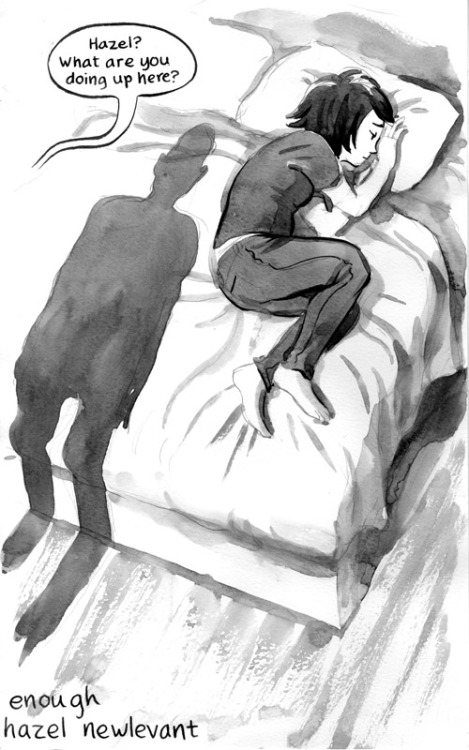
Bad Boyfriends. Edited by Laura Lannes, this is a powerful collection of stories of survival. What's really remarkable about it is how well it stands up as a work of art, not just as a work of personal expression. From decorative touches like the hand-stenciled cover and gold cardstock underlay to the large variety of visual approaches the artists used, every woman in this book contributed something remarkable. Celine Loup's art on a story from an anonymous writer makes uses negative space to create some sharp images, especially since the woman in the story was dark-skinned and her abuser was quite pale. The panel-to-panel transitions were especially devastating, as she felt shame when she orgasmed after he forced herself on her in their last encounter. Even the lettering contributed to that feeling of being shattered, which was later contrasted against her grim, silent resolve. Hazel Newlevant took a different tact; rather than recall the entirety of the relationship with her ex, she instead noted one particular incident that not only encapsulated her feelings about being used but also revealed how little her ex understood her feelings.
Lannes takes a minimalist approach in not only recalling the details of her abusive relationship, but other events that primed her for such abuse. Her use of negative space to represent the depth of her pain and astonishment is especially stark. Julia Gfroerer's two-page spread depicting the nine levels of hell a la Dante is especially devastating, as she turns the horrifying details of her abuse into the events experienced at each level. Her abuser's destruction of her art is an especially grim detail. Hannah Kaplan's story, which also has an anonymous writer, has a surprisingly warm feel, thanks to the way she used pencil shading effects, something she cuts back on and replaces with negative space as the details of the abuse become more and more stark. While there's a happy ending in that the new relationship is a loving one, the scars of being made to feel worthless and undesirable are still haunting. Mariana Paraizo's epic with 24 panels per page is the most intense and suffocating piece in the book, as she intersperses black-on-white and white-on-black panels in an effort to not only separate day from night, but also to occasionally create gestalt images over the span of two or three panels. The story concerns a charming, lying man who had a way of creating intimacy and then disappearing for long periods of time. Cathy Johnson's text quote about how psychology privileges the point of view of men with an illustration is an interesting interstitial piece. Laerte's piece on having a jealous boyfriend who lied both to himself about his sexuality as well as her closes out the book on an ambiguous note. The comic is important because unless these stories are told, believed and assimilated by both men and women, the abuse will continue.
Along the same lines, Lannes' own The Basil Plant is a modern fable that takes an unexpected turn midway through but really follows through on it. The story begins with Lannes trying to find ways to ameliorate her crippling anxiety. At first, eating a pear outside helped, but when the weather turned, she tried to start a garden. When that failed, she started pulling out her hair, which alienated her roommates and boyfriend. That hair was a signifier of her femininity and female identity, and when she abandoned it, she was abandoned in her relationships. When she realizes that it was her identity as a woman that was causing her anxiety, she became a hulking muscleman with a gigantic penis, and luxuriated in all the benefits that masculinity gave her in a patriarchal society. Concluding "I peed on the world", this beautifully stripped-down and frequently restrained story went all the way over the top at the end, cleverly satirizing the difficulties she faced.
Saturday, June 11, 2016
Mini-Comics: Lautman, Whitaker, Boyce, Froh
Creation of Manson, The We Be Jammin' Tee and Grape-Nuts, by Sara Lautman (Ray Ray Books). Lautman's scribble comics can go from quotidian to grotesque on a moment's notice, often creating a jarring, unsettling reading experience. Grape-Nuts, for instance, follows three women cleaning out a garage, until a man comes out and makes mention of them eating cereal. As the trio mock him, he piles up lawn chairs and frames, sets them on fire, and walks right into them and then back out, horrifically burned. It felt like he was going to extreme lengths to prove a point or make an impact, and that final blocky, bulky figure is rendered with a great deal of detail that's unusual for Lautman. The We Be Jammin' Tee is a reflection of Lautman's absurd sense of humor, as a ratty t-shirt is rescued and given life by the T-Shirt Magic Fairy, becoming a headless and limbless torso. It's simultaneously sweet and deeply weird. Creation of Manson is along the lines of the prior comic, as it imagines Marilyn Manson's origin story in all its viscerally obscene and hilarious detail. The way Lautman varied her approach with regard to line thickness and overall rendering contributed to the story's mythological qualities. Lautman's sensibilities and approach are unlike virtually any cartoonist working today, with the possible exception of Josh Bayer--and even then, their styles seem like distant cousins.
The Weeknight Casserole Collection, by Kelly Froh. This is a collection of work done for a wide variety of anthologies, and Froh points out in an introduction that while anthologies are often uneven, they've provided her with structure and deadlines that have helped keep her productive. Froh's comics have always had a mix of the sweet and the slightly grotesque, both in terms of her drawing style and the subjects she covers. Her comics about her childhood often feature her in unflattering eyeglasses and hairstyles, and she plays those up for laughs, to be sure. At the same time, her stories about people often acting cruel have a remarkable amount of sympathy for all parties involved; the people in her stories are all human, and she has an acute understanding that everyone is capable of kindness and cruelty. "The Wrong Eric" is a good example of this, as it features Froh's disappointment that a boy she liked wasn't interested in her, but she showed a similar disinterest in a different boy further down the social food chain--which perhaps indirectly led to future bad behavior on his part. Froh is also great at drawing humor out of social awkwardness, like when she didn't realize a friend of hers was in a band that she was waiting to see, or the incredibly strange situation of her boyfriend's best friend possibly hitting on him in front of her. Froh also has a knack for writing open-ended stories that have disturbing components, like "The Rake", which is about the night terrors she has had since she was a child that involve feeling like someone is looking at her as she's asleep, someone dark and shadowy. The warm and inviting nature of Froh's narrative style and line results in a reading experience where one can see multiple sides of a story and where even unsettling experiences are depicted in a manner that's somehow less threatening--as though they were all ingredients in the same dish.
Bangs and Beard Diary, by Melinda Tracy Boyce and Aaron Whitaker. This is a sweet, clever idea: a flip-book comics diary, with a couple each doing their own separate diary of the same days. Boyce, the "Bangs" part of the couple, uses an open page format with no lines around her panels. While there is a clear differentiation between panels thanks to shading, it's her use of negative space that's key to making these comics works. When depicting time passing and panel-to-panel transitions that reflect that, she uses a lot of negative space. When each image is more discrete, there's a harder delineation between panels, with decorative markings or simple grey-scaling doing the job. Her drawing and writing style remains similar to that of Vanessa Davis, only Boyce employs a more cartoony style. Boyce shares the same overall cheeriness but is also willing to delve into troublesome emotions and situations, like her strips about body image. Whitaker's comics are denser and use a more traditional grid set-up. In part because some of the strips were done during shows where only Boyce was participating, Whitaker's strips are a bit more introspective, as he expounds on a variety of observations. The two cross over twice: once on a meaningful walk in Los Angeles and once in a tender moment spent alone at the end of a trip. The resulting collaboration of sorts paints a picture of two artists confident in their own skins who greatly benefit from the presence of the other.
Globes, by Aaron Whitaker. This comic is a sort of a second cousin to The Little Prince, as the story's protagonist starts the story atop a globe, in search of meaning and happiness in his life. The story diverges from Saint-Exupery in that the hero has his 3D printer create a son for him, one full of questions that the protagonist is not ready to answer. The story spins further as his son grows up, moves out (full of teenage energy and certainty) and then visits again with his own family. The tone of the comic ranges from absurd and cynical to sweet and heartbreaking, sometimes all in the same page. Whitaker nonetheless manages to convey a real sense of what it's like to chase meaning and how one's mistakes as a parent carry over to a child begging for guidance. Whitaker heightens these conflicts, of course, and his cartoony character designs (not unlike Adventure Time creations) allow him to keep the stakes high while still keeping the overall mood of the comic light. What I liked best about this comic was Whitaker's willingness to strategically clutter every page with all sorts of detritus, charts, maps, etc. The way he pokes fun at his stand-in's quest for meaning and his overall pompousness doesn't detract from the emotional content of the comic, which is an impressive trick for Whitaker.
Labels:
aaron whitaker,
kelly froh,
melinda tracy boyce,
sara lautman
Subscribe to:
Posts (Atom)