What's Your Sign, Girl? This is the latest ambitious anthology from Rob Kirby, who as per usual invited a fascinating collection of artists to contribute to this specifically limited comic. Kirby has an uncanny sense of how to assemble his line-ups, which is a tribute to his skills as a networker and editor in order to have a wide array of artists to choose from as well as an idea of who would fit in best with a particular theme. This time around, the theme is the zodiac, and each sign in the comic is represented by a different cartoonist. Each cartoonist has a different level of knowledge and/or belief in their celestial sign, which is one of the elements that makes it so interesting. Like many, my interest is a passing one, finding it interesting to think about but not necessarily putting much stock into it. That point of view is shared by a number of cartoonists in the book, but they all find different ways to express it. Others talk about their signs and how they seem to relate directly to their personalities and lives. That's true of Delaine Derry Green, for example, rattling off her Aries traits in her upbeat, stripped-down style. Whit Taylor takes on her Gemini sign in a similar manner, but only Green's white-on-black, cluttered approach, Taylor prefers a more wide-open design and clarity above all else. She really gets at the duality of this sign, and depicts the internal struggle of feeling like two contradictory people. Taylor does this with a great deal of wit, as either her illustrations or the captions/dialogue for same all have amusing gags.

Tyler Cohen and Kirby himself talk about their difficulties accepting their own signs, which are Capricorn and Virgo, respectively. For Cohen, a big part of that resistance was related to the sexist and patriarchal "reading" that her sign was given by a famous astrology book. Upon getting a professional reading, she kept in mind what it said regarding her future, and it landed some pretty solid hits. Her vowing to "keep walking sideways" is a perfect metaphor for how she as a crab navigates life. Kirby's strip is typically chatty and upbeat, with that rubbery quality to his line giving every character a little extra bounce. For Kirby, being a Virgo means being fussy, a worker, and an analyzer, lacking the dreamier or more visionary quality of other signs. While he identifies with these labels to an extent, it seems like for him the Zodiac hits certain surface qualities but can't cover everything, as one's individual qualities always stand out.

Cara Bean and Eric Kostiuk Williams both embraced their signs fully as they encountered the animal forms of their signs in their stories. Bean gets advice from a Leo that comes out of the clouds to lead the pack but to be careful how one's actions are interpreted. Williams drew a psychedelic, ritualistic story about how Scorpio came to fully adopt and prepare him as one of its own: an enigmatic, bold, ambitious searcher. The density and mystical quality of Williams' story sticks out in this anthology, as most of the guests opted to to keep things simpler.

Marnie Galloway and Rick Worley flat-out reject the validity of the zodiac while still sympathizing with those who find it useful. Worley, using his typical anthropomorphic approach, turns the strip over to his severe OCD and contextualizes it as an attempt to make order and balance out of chaos--which winds up being a typical Libra trait. Galloway is an atheist with a degree in philosophy, but she came from a religious background where she tried to fit in. She was struck by the essential core of existentialism--that we one day will cease to exist-- and haunted by it until she realized that because death was unknowable, the only thing we can know is life. Thus, focusing on our day-to-day lives is the only thing we can do to make them better in this regard. Religion and astrology are simply attempts at making our lives easier to understand. This remarks comes as part of a conversation with a person who's devoted to the Zodiac, and after making her final proclamation, her friend rattles off a bunch of Galloway's character traits and declares "You are
such a Pisces!", to which Galloway hilariously draws herself grimacing. Galloway's thin, graceful line and her unerring sense of how and when to use negative space gives the comic elaborate decorative qualities as well as her own narrative concerns.

Dan Mazur talks about having his own chart done and feeling ambivalent about it. On the one hand, he felt like the chart was sometimes contradictory (both selfish and generous?) and designed to flatter its recipient. On the other, he saw its value in providing a structure, framework and even measuring stick. Aron Nels Steinke related a funny anecdote where his Aries wife helped him break out of his typical, rigid Aquarian behavior. Kevin Budnik cleverly overlaid text from an astrology book with a header describing particular Taurean character traits (stubborn, independent, practical, fearing of change, etc.) underneath each panel on each page. That allowed him to create an entire narrative that showed how each descriptor fit his life without it feeling forced or artificial. Budnik's skill as a diarist is really on display here, as his different formal approaches to doing autobio comics made him an ideal fit for the anthology. Speaking of well-suited, Annie Murphy is once again an anthology MVP with a fascinating, thorough and well-researched history of her sign of Capricorn. Murphy's greatest skill as a writer is connecting historical data with her personal experiences. Going back into mythology for the origin of Capricorn's nature as a goat-fish, she makes connections with the god Pan and concepts like pantheism and pansexuality. It's not just that Capricorns have a number of contradictory traits (happy/sad, driven/playful, earth/water) that must be justified, but rather that the contradictions themselves are illusory. Murphy notes that Capricorns must understand that it's OK to be more than one thing at the same time and accept this rather than resist it. Working with a white-on-black setting, there's a richness to the images that Murphy chooses that make it easy to understand why she was so successful as one of the creators
The Collective Tarot. Like Budnik with autobio, talking about symbols in a meaningful way is entirely in Murphy's wheelhouse. Kirby's ability to pick out cartoonists who would work well with the material makes this perhaps his best small press anthology to date.
Trailer Blaze. Spearheaded by Kelly Froh & Eroyn Franklin, this anthology neatly demonstrates just how deep a bench there is for cartoonists in the Pacific Northwest and Seattle in particular. This anthology is a snapshot of some of the work done at an all-women comics residency called Trailer Blaze, organized by Seattle's indispensable Short Run festival. About a dozen women went to the Sou'Wester trailer park and lodge for around a week. One of the things that stuck out in this anthology is that this arrangement not only gave the cartoonists a chance to bond and share ideas, but it also gave them an equal amount of time for solitude out in nature. Liz Prince, in her diary comics included here, discusses how long walks centered her and made her better company, especially when conflict was concerned. For Robyn Jordan, the week gave her an opportunity to work on her watercolors, with the nearby beach serving as inspiration. Megan Kelso drew portraits of her and her friends at a restaurant, posing them so as to look similar to an old photograph of a group eating and drinking there. Janelle Hessig was her usual wacky self, drawing a hilarious take on the old joke "Everyone is getting laid except for you." While Kelly Froh zeroed in a couple of images and blew them up, Emilie Bess and Gillian Rhodes created what were essentially lists of interesting or funny details about their experience. Finally, Sarah Leavitt did a manifesto about finding ways to work around writer's block and other delays by working slowly and steadily every day, seeking out new inspirations and learning how to finish small tasks and celebrate them. I'll be curious to see if the residency spawned more expansive work later in the future, but this mini served as an advertisement for the experience as much as it did a working diary.

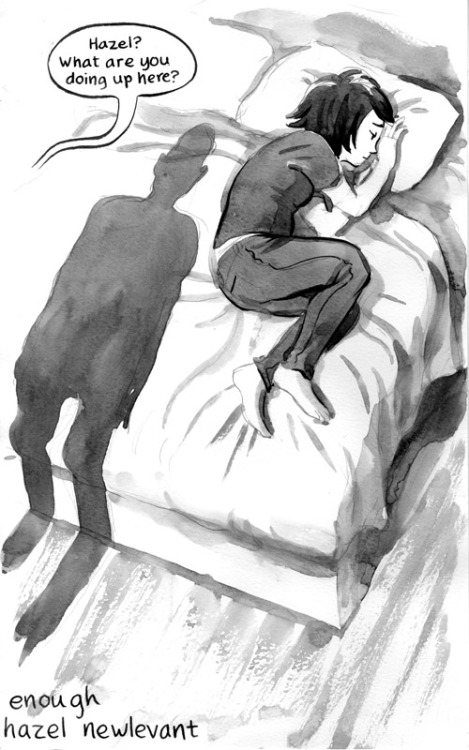
Bad Boyfriends. Edited by Laura Lannes, this is a powerful collection of stories of survival. What's really remarkable about it is how well it stands up as a work of art, not just as a work of personal expression. From decorative touches like the hand-stenciled cover and gold cardstock underlay to the large variety of visual approaches the artists used, every woman in this book contributed something remarkable. Celine Loup's art on a story from an anonymous writer makes uses negative space to create some sharp images, especially since the woman in the story was dark-skinned and her abuser was quite pale. The panel-to-panel transitions were especially devastating, as she felt shame when she orgasmed after he forced herself on her in their last encounter. Even the lettering contributed to that feeling of being shattered, which was later contrasted against her grim, silent resolve. Hazel Newlevant took a different tact; rather than recall the entirety of the relationship with her ex, she instead noted one particular incident that not only encapsulated her feelings about being used but also revealed how little her ex understood her feelings.

Lannes takes a minimalist approach in not only recalling the details of her abusive relationship, but other events that primed her for such abuse. Her use of negative space to represent the depth of her pain and astonishment is especially stark. Julia Gfroerer's two-page spread depicting the nine levels of hell a la Dante is especially devastating, as she turns the horrifying details of her abuse into the events experienced at each level. Her abuser's destruction of her art is an especially grim detail. Hannah Kaplan's story, which also has an anonymous writer, has a surprisingly warm feel, thanks to the way she used pencil shading effects, something she cuts back on and replaces with negative space as the details of the abuse become more and more stark. While there's a happy ending in that the new relationship is a loving one, the scars of being made to feel worthless and undesirable are still haunting. Mariana Paraizo's epic with 24 panels per page is the most intense and suffocating piece in the book, as she intersperses black-on-white and white-on-black panels in an effort to not only separate day from night, but also to occasionally create gestalt images over the span of two or three panels. The story concerns a charming, lying man who had a way of creating intimacy and then disappearing for long periods of time. Cathy Johnson's text quote about how psychology privileges the point of view of men with an illustration is an interesting interstitial piece. Laerte's piece on having a jealous boyfriend who lied both to himself about his sexuality as well as her closes out the book on an ambiguous note. The comic is important because unless these stories are told, believed and assimilated by both men and women, the abuse will continue.

Along the same lines, Lannes' own
The Basil Plant is a modern fable that takes an unexpected turn midway through but really follows through on it. The story begins with Lannes trying to find ways to ameliorate her crippling anxiety. At first, eating a pear outside helped, but when the weather turned, she tried to start a garden. When that failed, she started pulling out her hair, which alienated her roommates and boyfriend. That hair was a signifier of her femininity and female identity, and when she abandoned it, she was abandoned in her relationships. When she realizes that it was her identity as a woman that was causing her anxiety, she became a hulking muscleman with a gigantic penis, and luxuriated in all the benefits that masculinity gave her in a patriarchal society. Concluding "I peed on the world", this beautifully stripped-down and frequently restrained story went all the way over the top at the end, cleverly satirizing the difficulties she faced.




 Posts
Posts


