I Feel Weird, Haleigh Buck's continuing series about "depression, anxiety and hopefully getting over it!" is about as raw and real as it gets. That's both in terms of talking about those feelings as well as the long, hard process of therapy. Buck sharing about what brought her to bottoming out in previous issues was certainly harrowing, but that's a narrative that is a familiar one in a sense. Lots of attention is paid in mental health narratives to "this is where I was, I needed help, and I got help" (which is valid and important, certainly), but much less is paid to the long, incremental process of getting better. That's especially true thanks to how frequently difficult it is to actually get therapy in a time when getting health insurance in general is so difficult, especially if one doesn't have the means to do so.
Issue three is her most ambitious, centered and focused effort to date. It must first be said that her level of craft is just outstanding. She can go cartoony to hyperrealistic naturalism and it all fits together. Her page design choices are consistently interesting, using blacks as a way of overpowering the reader and getting across that sense of anxiety that permeates every bit of her work. Buck jams a lot of words onto each page and even makes that crowding a decorative aspect of her work. With dense hatching and cross-hatching to add detail and depth to her work, Buck just likes slinging ink and makes it work for her. In the Will Elder tradition, she also adds a lot of funny eye pops to each page. Indeed, while Buck's work is visually dense, by no means is it dour. She's a funny writer who can take the darkest topic and make it funny. For example, the back cover has a bunch of comics and a coffin with an interesting and particular shape that's captioned "Thanks for keeping me out of life's longbox." It's a great image, and Buck's attention to detail, as always, is important in getting the joke to land.
In the rest of the issue, Buck goes back and forth from the psychotherapy session that began in the previous issue and other stories. The first story is about a New Year's Eve hookup that disappoints because the guy she's with announces that he doesn't want a relationship the next day. She tries to laugh it off in the story itself while informing the reader that she is upset. There's a brief strip about the sort of responses one gets when others learn that you've tried to commit suicide, which is scorched-earth on-point and darkly hilarious at the same time. There's an anecdote about Buck's especially dysfunctional younger sister who had just had a baby--and Buck's other sister was understandably concerned for the baby's welfare. The anecdote concerns some psychopathic behavior evinced by their younger sister as a child, and it's an understandable concern. The art here slides between caricature and near-photorealism, and the effect is astounding.
Of course, the main attraction in this issue is the therapy session, with a therapist who's using a prescribed method (including tagging patients as being a particular kind of tree?) and is not exactly the essence of empathy. The therapy session runs in a narrow row of panels at the top of the page, and the rest of the page is taken up by the history of depression and its treatment from antiquity to now. It's a sobering reminder of just how primitive medicine was (and still is, in some ways), especially with regard to mental health. Buck's illustrations are funny and weird, giving the reader a lot to look at. In the next therapy chapter, her anxiety is addressed, and there's an amazing page where her therapist asks her what makes her anxious. Buck replies, "Everything" and then spends an entire page, with white lettering atop a black page, listing dozens and dozens of triggers. It's page that doesn't even need to be read from top to bottom--the simple acknowledgment of the scope of her triggers makes it a powerful image, with a small self-caricature in the bottom left-hand corner of the page. Incredibly, the story ends with the therapist asking how often Buck prays. What separates this issue from the earlier two is Buck's focus is much sharper, allowing her to really zero in on key issues and render them in the form of a narrative. There's no question that she's a major talent, as this comic shows off her storytelling, drawing and writing chops.
Showing posts with label haleigh buck. Show all posts
Wednesday, October 24, 2018
Tuesday, June 6, 2017
Ten Artists To Seek Out At CAKE 2017
I will be attending the Chicago Alternative Comics Expo (CAKE) this Saturday and Sunday, June 9th & 10th. I'm excited to meet a number of Chicago-area artists for the first time, and of course will be looking for comics for review. On Sunday at 3pm, I will be moderating a panel titled "Place As Character", featuring the artists Emil Ferris, Laura Knetzger, Sophie Goldstein and Mita Mahato. All panels will take place on the third floor of the Hoover-Leppen Theatre. CAKE has a tremendous amount of talent, perhaps the most per capita of any American art festival. This is a show with special guests like Gary Panter, the explosively popular Emil Ferris, Simon Hanselmann, Kevin Budnik and many more. Here are ten artists you might be less familiar with that you should consider visiting if you attend the show.
1. Haleigh Buck (Table 315). This autobiographical cartoonist from Baltimore is making some of the rawest, densest comics about dealing with mental illness as part of everyday life, including how she dealt with an enormous breakdown. Her naturalistic style has a surreal edge to it and she maintains a wicked sense of humor throughout.
2. Chris Cilla (Table 205). His book The Heavy Hand is one of my favorite comics of all time, fusing a variety of styles together seamlessly to create a psychedelic, hilarious journey that defies all of the genre conventions that the book explores. His minis are also excellent, creating his own brand of underground comics that acknowledge all of their forebears without being beholden to any one in particular.
3. Cathy Hannah (Table 410). Hannah is another autobio cartoonist who writes about the intersection of the personal and political in interesting ways. She spills a lot of ink in delving deep into her own mental illness issues, her feelings about relationships and documenting her own therapeutic breakthroughs in real time. She uses an inviting, cartoony style to tell her stories.
4. Sophie McMahan (Table 403). Ever since one of her comics appeared in my mailbox, I've been astounded by the sophistication of her critiques of beauty, image and the male gaze through the use of body horror and distorted versions of 1950s-style advertising illustrations. Every one of her comics is both aesthetically beautiful and thematically challenging.
5. Carolyn Nowak (Table 505). She's doing some fantastically funny comics about sex, gender identity, culture and intimacy, with her recent Diana's Electric Tongue especially notable. A winner of the Ignatz award last year, her comics have a sense of lived-in warmth that's part of her sharp critiques. Her work is questing, curious, warm, funny and extremely smart.
6. Ben Passmore (Table 307). He just earned an Eisner nomination for his breakthrough short comic Your Black Friend, a pointed meditation on racial alienation. However, his other comics, like his postapocalyptic-autobio series Daygloayhole, are every bit as provocative, dealing with issues like addiction, isolation and connection, told with a weary sense of humor and razor-sharp intellect.
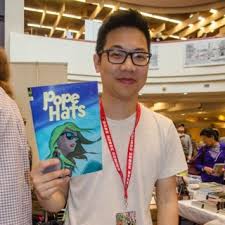
7. Ethan Rilly (Table 405). Rilly's Pope Hats series is one of the best things going in comics. Its serialized storyline about a law clerk named Frances features characterizations that rarely found in comics, gorgeous character design and an unerring ability to use stillness and pauses as a key part of his storytelling. His comics are subtle, beautiful and immensely satisfying.
8. Yumi Sakugawa (Table 220). This is an artist whose sharply-observed observations about art and gender dovetail beautifully with her sense of composition that makes extensive use of negative space. There's also a slightly exaggerated sense of reality to be found in her comics, often mediated through her frequent use of a reserved or deadpan narrative voice. UPDATE: Yumi Sakugawa has cancelled.
9. Eric Kostiuk Williams (Table 510). Williams' gained a lot of notice with his Hungry Bottom Comics series, a comic that mixed autobiographical essays about being young and queer in Toronto with surreal dreamscapes. Williams' potent mix of incredibly fluid draftsmanship and a probing mind helped get an Eisner nomination with his recent Babybel Wax Bodysuit, and his recent Heartbreak Condo Disco from Koyama Press.
10. Jenny Zervakis (Table 105). It's a conflict of interest to suggest that her debut collection of Strange Growths could very well be the book of the show, given the fact that I interviewed her for a section at the end of it. However, I'm not the only one eagerly awaiting this book that collects the first 13 issues of her minicomic, mostly from the 90s when she was a publishing mainstay. That John Porcellino had been planning to do this kind of collection for years speaks to the respect he has for her work. Her thin, penciled line tells stories that are poetic, still, funny and sharply observed.
1. Haleigh Buck (Table 315). This autobiographical cartoonist from Baltimore is making some of the rawest, densest comics about dealing with mental illness as part of everyday life, including how she dealt with an enormous breakdown. Her naturalistic style has a surreal edge to it and she maintains a wicked sense of humor throughout.
2. Chris Cilla (Table 205). His book The Heavy Hand is one of my favorite comics of all time, fusing a variety of styles together seamlessly to create a psychedelic, hilarious journey that defies all of the genre conventions that the book explores. His minis are also excellent, creating his own brand of underground comics that acknowledge all of their forebears without being beholden to any one in particular.
3. Cathy Hannah (Table 410). Hannah is another autobio cartoonist who writes about the intersection of the personal and political in interesting ways. She spills a lot of ink in delving deep into her own mental illness issues, her feelings about relationships and documenting her own therapeutic breakthroughs in real time. She uses an inviting, cartoony style to tell her stories.
4. Sophie McMahan (Table 403). Ever since one of her comics appeared in my mailbox, I've been astounded by the sophistication of her critiques of beauty, image and the male gaze through the use of body horror and distorted versions of 1950s-style advertising illustrations. Every one of her comics is both aesthetically beautiful and thematically challenging.
5. Carolyn Nowak (Table 505). She's doing some fantastically funny comics about sex, gender identity, culture and intimacy, with her recent Diana's Electric Tongue especially notable. A winner of the Ignatz award last year, her comics have a sense of lived-in warmth that's part of her sharp critiques. Her work is questing, curious, warm, funny and extremely smart.
6. Ben Passmore (Table 307). He just earned an Eisner nomination for his breakthrough short comic Your Black Friend, a pointed meditation on racial alienation. However, his other comics, like his postapocalyptic-autobio series Daygloayhole, are every bit as provocative, dealing with issues like addiction, isolation and connection, told with a weary sense of humor and razor-sharp intellect.
7. Ethan Rilly (Table 405). Rilly's Pope Hats series is one of the best things going in comics. Its serialized storyline about a law clerk named Frances features characterizations that rarely found in comics, gorgeous character design and an unerring ability to use stillness and pauses as a key part of his storytelling. His comics are subtle, beautiful and immensely satisfying.
8. Yumi Sakugawa (Table 220). This is an artist whose sharply-observed observations about art and gender dovetail beautifully with her sense of composition that makes extensive use of negative space. There's also a slightly exaggerated sense of reality to be found in her comics, often mediated through her frequent use of a reserved or deadpan narrative voice. UPDATE: Yumi Sakugawa has cancelled.
9. Eric Kostiuk Williams (Table 510). Williams' gained a lot of notice with his Hungry Bottom Comics series, a comic that mixed autobiographical essays about being young and queer in Toronto with surreal dreamscapes. Williams' potent mix of incredibly fluid draftsmanship and a probing mind helped get an Eisner nomination with his recent Babybel Wax Bodysuit, and his recent Heartbreak Condo Disco from Koyama Press.
10. Jenny Zervakis (Table 105). It's a conflict of interest to suggest that her debut collection of Strange Growths could very well be the book of the show, given the fact that I interviewed her for a section at the end of it. However, I'm not the only one eagerly awaiting this book that collects the first 13 issues of her minicomic, mostly from the 90s when she was a publishing mainstay. That John Porcellino had been planning to do this kind of collection for years speaks to the respect he has for her work. Her thin, penciled line tells stories that are poetic, still, funny and sharply observed.
Monday, November 7, 2016
Minis: Haleigh Buck
Haleigh Buck's minis are raw, honest and hilarious, even when delving into the darkest of impulses. Her Cretin Comix is a good place to start, as we get to see a broad range of autobiographical stories explored. "My First" is a gross, grotesque and horrifyingly funny account of Buck's revolting first boyfriend, who was the typical man-baby layabout who preferred playing video games with her little brother than spending time with her. He preyed on her lack of self-esteem until one hilarious night where she finally realized she could simply leave him--and he did, at a convenience store, shouting "I think we should see other people!" as she drove off. There are strips about having to deal with customers taking photos at the bookstore she worked at, complaining about other people's PDA, sleeping too much, sleeping too little, her obsession with buying a recreational vehicle, and the struggles she has with her anthropomorphized brain. She hints at her larger struggles with "Just Your Average Panic Attack", detailing (with almost manic hatching and cross-hatching) the precise physical and mental symptoms that precipitate and make up her debilitating panic attacks.
Buck prefers a dense, detail-rich style that is mostly naturalistic, but also uses a lot of Will Elder-style "eye pops" and little side-jokes. She makes a lot of use of spotting blacks, and there's rarely a space that isn't filled in. That gives her art a dense and occasionally suffocating quality, especially since she crams it all into nine or ten panels on a page. This style works for her, especially since she makes most of her stories short enough to not wear the reader out and give them natural rest points. There's also a "Herman the Hot Dog" story, about an anthropomorphic hot dog going on a camping trip in the woods and getting kidnapped by aliens. It's a silly, grotesque story that makes great use of her skill for exaggerated naturalism and her underground comics-influenced, anything-goes sense of humor.
Her best work, however, is in her two issues of I Feel Weird. It's a narrative of sorts told in vignette form, detailing the way she sought intervention for her mental breakdown and suicidal ideations. What's harrowing about it, as it is in so many near-suicide stories, is how close she depicts herself as being to killing herself. She was in the process of drowning herself in her tub when she heard her dog howling to go outside, and that simple act flipped a switch. All throughout, Buck's acerbic, self-deprecatory sense of humor adds a different layer of tension as she pokes through the maudlin aspects of her story with quotes like, "God damn it! Why is my life and near-death a fucking sideshow?" The panel where she pauses and looks off to the side and (in huge, hand-scripted letters) says "Ok. Fine! I will call for help" is as real as it gets. She even jokes around with the person she asks for help.
What is distinctive and awful about her story is just how little people were willing to actually try to help. The ER clerk was utterly nonchalant. Her mother, when she called her earlier, simply suggested getting a boyfriend to solve her problems. The intake nurse accused her of being a pill-seeker and incredibly told her to leave, which inspired an epic rant from Buck, as she talked about how she wanted to live and make everyone in that hospital suffer. Other vignettes feature Buck talking about moving in with her best friend in an effort to recover, absurd "anxiety cures" that had been foisted on her, the camaraderie she felt with her fellow employees at Atomic Books, the total absurdity of a mental-illness themed rock music show called the "Kooky, Crazy Flashback Hour" and the continuing conflict she feels with her own brain and the way it puts her down. In the notes at the end of the comic, she said that the comics were drawn on her "good days", and it shows, because her art went to another level in I Feel Weird. It's sharper, crisper and more emotionally powerful. She was able to access and express her pain like few artists I've seen, and do it in a way that still somehow managed to be funny in a lot of places.
I Feel Weird #2 comes at the reader with more of the same sort of vignettes, like Buck starting to cry for no reason now (a side-effect of the medication, she wonders?), an anxiety attack in a grocery store after she tried to face her fears, a moment of peace spent outdoors, and some moments of deep connection felt at a New Year's Eve party when a friend drunkenly reached out to her. Her work is not quite as sharp here, as one got the sense that she was trying to simply get as much information on the page as possible, like on one page where she crammed in seventeen panels, each one about a third full of text. When Buck let the page breathe a bit more, like in the astounding "Psychyotherapy Session One", it lets her facility with body language and emotion really jump off the page. The session she describes is jaw-dropping in terms of the surprising lack of empathy and overall cluelessness of the therapist. Buck goes into a lot of detail regarding not just her feelings of worthlessness, but also genuine confusion as to how other people seem to have their act together. The method at the clinic, creating a "personal healing tree" for patients, results first in a stare of disbelief and a cry of "Are you fucking kidding me?" The therapist coldly responds that this is a mandated program, and it's revealed that Buck can't afford other treatment. Toward the end, Buck's brain character is telling her to leave, as the therapist manages to repeatedly screw up getting Buck's name spelled correctly, then he computer froze, and then the session ran out of time. What's remarkable about the end is that despite the anger and frustration welling up in her, she agrees to come back. That last panel is a full page worthy of Phoebe Gloeckner in terms of it simultaneous fidelity to naturalism and its unerring ability to get across a wide variety of emotions.
It's obvious that these comics are an important part of Buck's recovery, which makes how visually accomplished they are all the more remarkable. These comics are a howl, not just on her behalf, but on behalf of everyone who feels so alienated from society and mental health that it's impossible to conceive what living free of anxiety might even look like. Part of Buck's resistance to actually ending her life may lie in her (quite healthy) fear of death, but a larger part of it is an anger at not being able to live her life the way she wants, and these comics are a way of expressing that righteous anger as well as depicting the small moments of clarity an calm. Finally, the fact that her pitch-black sense of humor knows no bounds, especially with regard to her own feelings, makes reading these comics undeniably entertaining, despite all of the pain underlying it. Buck is simply a great storyteller with sharp observational skills who is allowing herself to tell her own story her own way.
Buck prefers a dense, detail-rich style that is mostly naturalistic, but also uses a lot of Will Elder-style "eye pops" and little side-jokes. She makes a lot of use of spotting blacks, and there's rarely a space that isn't filled in. That gives her art a dense and occasionally suffocating quality, especially since she crams it all into nine or ten panels on a page. This style works for her, especially since she makes most of her stories short enough to not wear the reader out and give them natural rest points. There's also a "Herman the Hot Dog" story, about an anthropomorphic hot dog going on a camping trip in the woods and getting kidnapped by aliens. It's a silly, grotesque story that makes great use of her skill for exaggerated naturalism and her underground comics-influenced, anything-goes sense of humor.
Her best work, however, is in her two issues of I Feel Weird. It's a narrative of sorts told in vignette form, detailing the way she sought intervention for her mental breakdown and suicidal ideations. What's harrowing about it, as it is in so many near-suicide stories, is how close she depicts herself as being to killing herself. She was in the process of drowning herself in her tub when she heard her dog howling to go outside, and that simple act flipped a switch. All throughout, Buck's acerbic, self-deprecatory sense of humor adds a different layer of tension as she pokes through the maudlin aspects of her story with quotes like, "God damn it! Why is my life and near-death a fucking sideshow?" The panel where she pauses and looks off to the side and (in huge, hand-scripted letters) says "Ok. Fine! I will call for help" is as real as it gets. She even jokes around with the person she asks for help.
What is distinctive and awful about her story is just how little people were willing to actually try to help. The ER clerk was utterly nonchalant. Her mother, when she called her earlier, simply suggested getting a boyfriend to solve her problems. The intake nurse accused her of being a pill-seeker and incredibly told her to leave, which inspired an epic rant from Buck, as she talked about how she wanted to live and make everyone in that hospital suffer. Other vignettes feature Buck talking about moving in with her best friend in an effort to recover, absurd "anxiety cures" that had been foisted on her, the camaraderie she felt with her fellow employees at Atomic Books, the total absurdity of a mental-illness themed rock music show called the "Kooky, Crazy Flashback Hour" and the continuing conflict she feels with her own brain and the way it puts her down. In the notes at the end of the comic, she said that the comics were drawn on her "good days", and it shows, because her art went to another level in I Feel Weird. It's sharper, crisper and more emotionally powerful. She was able to access and express her pain like few artists I've seen, and do it in a way that still somehow managed to be funny in a lot of places.
I Feel Weird #2 comes at the reader with more of the same sort of vignettes, like Buck starting to cry for no reason now (a side-effect of the medication, she wonders?), an anxiety attack in a grocery store after she tried to face her fears, a moment of peace spent outdoors, and some moments of deep connection felt at a New Year's Eve party when a friend drunkenly reached out to her. Her work is not quite as sharp here, as one got the sense that she was trying to simply get as much information on the page as possible, like on one page where she crammed in seventeen panels, each one about a third full of text. When Buck let the page breathe a bit more, like in the astounding "Psychyotherapy Session One", it lets her facility with body language and emotion really jump off the page. The session she describes is jaw-dropping in terms of the surprising lack of empathy and overall cluelessness of the therapist. Buck goes into a lot of detail regarding not just her feelings of worthlessness, but also genuine confusion as to how other people seem to have their act together. The method at the clinic, creating a "personal healing tree" for patients, results first in a stare of disbelief and a cry of "Are you fucking kidding me?" The therapist coldly responds that this is a mandated program, and it's revealed that Buck can't afford other treatment. Toward the end, Buck's brain character is telling her to leave, as the therapist manages to repeatedly screw up getting Buck's name spelled correctly, then he computer froze, and then the session ran out of time. What's remarkable about the end is that despite the anger and frustration welling up in her, she agrees to come back. That last panel is a full page worthy of Phoebe Gloeckner in terms of it simultaneous fidelity to naturalism and its unerring ability to get across a wide variety of emotions.
It's obvious that these comics are an important part of Buck's recovery, which makes how visually accomplished they are all the more remarkable. These comics are a howl, not just on her behalf, but on behalf of everyone who feels so alienated from society and mental health that it's impossible to conceive what living free of anxiety might even look like. Part of Buck's resistance to actually ending her life may lie in her (quite healthy) fear of death, but a larger part of it is an anger at not being able to live her life the way she wants, and these comics are a way of expressing that righteous anger as well as depicting the small moments of clarity an calm. Finally, the fact that her pitch-black sense of humor knows no bounds, especially with regard to her own feelings, makes reading these comics undeniably entertaining, despite all of the pain underlying it. Buck is simply a great storyteller with sharp observational skills who is allowing herself to tell her own story her own way.
Subscribe to:
Posts (Atom)