Carolyn Nowak's first collection of short stories, Girl Town, points to an artist whose comics operate on a number of levels. First and foremost, she's writing stories about women and women's relationships to each other in particular. There are crushes, there are partnerships, there are romances, there are friendships and there are people who are emotional supports for each other. There is also conflict, jealousy and fear. Nowak has a confident, inviting line that invites the reader in with its warmth and wit. Her narratives are light on plot and heavy on character interaction, with a certain playfulness at work in each story. Nowak makes her work seem lighthearted and even breezy on the surface, but the reality is that her work is emotionally and intellectually dense.
Take the collection's title. It's the title of the first story, of course, but it also encompasses the other stories as well: her book is an environment entirely devoted to the stories of women and girls. The cover image is an homage to the 1896 painting by Jean-Léon Gérôme, Truth Coming Out Of Her Well Armed With A Whip To Chastise Mankind, only the figure here is Betsy from "Girl Town". Betsy is very much a force of nature in that story, but what is she chastising mankind about? I would say that it's the one common theme in every story: trauma.
How each of the women deals with trauma, or rather, how most of them don't actively process their trauma, forms the underpinning of each emotional narrative. "Girl Town" is about a group of women who are kicked out of astronaut school because they are too beautiful and a group of weird women who are their next-door neighbors and putative antagonists. Each story also has an absurd or fantastical premise as a kind of humorous smokescreen for the darker events and emotions that lie underneath. There's a character in the story who loses an arm for unspecified reasons, a trauma whose origin is never explored. The story's narrator never really goes into detail regarding how being tossed out of astronaut school made her feel. That trauma is wrapped up in the narrator humiliating Betsy by fat-shaming her, despite her attraction to her. It's something she doesn't specifically respond to; instead, her friend gets revenge by taking a comfort object. Every move here is a passive-aggressive one, attacking unspoken vulnerabilities and traumas. At the end, the conflicts are revealed to be artificial, allowing for moments of affection and intimacy.
In "Radishes", a story with a fantasy setting, teen friends Beth and Kelly skip school in order to go to the town's market. Body image is another theme Nowak addresses, from Betsy on the cover in a crop-top shirt to Beth's clear insecurity with her body a part of her overall shyness. Kelly is thin and gregarious. The story is a series of funny anecdotes that reveal how each of them care for each other emotionally. In this story, Beth's trauma is hinted at but not directly stated, but Nowak uses a clever device to get at a crucial moment of healing. The girls are eating magical fruit: some of it causes them to levitate and some of it causes hair to disappear. The titular radishes create a magical, mute double whose only ambition is to hug you. For Kelly, accepting this kind of self-love wasn't difficult. When Beth hugged her double, there was a profound moment of sadness as she could only apologize over and over to herself. At the same time, it was a moment of catharsis that Kelly tried to laugh off as she left with her friend. Once again, the brightness of the story's colors, the cheerful nature of the market, and Nowak's polished and expressive character designs mask all of this until the moment of truth, making that moment all the more powerful.
"Diana's Electric Tongue" focuses on the titular character's "companion robot", an intelligent model designed for friendship as well as sex. Diana is getting over a bad break-up with a famous actor/scientist, and she uses the robot Harbor as a way of combating her loneliness. The narrative follows the fumbling, sweet awkwardness of their interactions as Harbor is able to figure out Diana's needs, even composing a poem for her. With every bit of sweetness, however, there's a barb, and the last line of the poem is "I will be with her until she doesn't want me anymore." Harbor has no agency or free will of his own; he wouldn't be there unless Diana paid for him. He wouldn't be there if she hadn't paid for him, in precisely the same way being with a sex worker or a therapist buys you their time and attention.
The reality is that Harbor is really a therapeutic device for Diana, whose titular electric tongue was installed when she was in a horrible accident. That accident, and the requisite needs she had afterward, are what caused the break-up. Her celebrity boyfriend could only keep her in his life insofar as he didn't need to do any labor, emotional or otherwise. The story's title refers to the tongue, not the robot, because it is that physical and emotional trauma that drives every decision of Diana. She downplays it throughout the story, even playing up how cool her new tongue is until she reveals that it doesn't work very well with regard to taste. Both physical and emotional traumas were debilitating, and her relationship with Harbor allowed her to talk out her feelings and heal. Nowak drew a parallel between Diana's relationship with Blue, the celebrity, and with Harbor. Diana didn't feel like Blue's equal at any time, especially with regard to her agency within the relationship. Similarly, Harbor had no agency with Diana, something that clearly made her uncomfortable at times. She treated him as well as she could, but as sweet as the story is, Nowak made it clear that this wasn't actual love. That said, Blue is portrayed as kind of an awful person, one whose own short attention span and sheer whims could destroy lives. Truth emerges to indirectly chastise him.
"The Big Burning House" is a masterpiece of narrative complexity in the way it incorporates social media culture and its technological aesthetic. It's also a hilarious parody of that culture, as two young women start a podcast about an obscure movie that's nevertheless gained a cult following because it's impossible to find, the force of personality of its director, and the multiple endings that were filmed. What the story was really about was the kind of symbiotic, protective friendship that blossoms between the two into a collaborative, creative project and sense of identity. The story gets at a root trauma and how her friend protected her, creating a long-lasting bond through a piece of culture that mirrors some of their own lives. Interestingly, Nowak alternates between traumas incurred during adulthood vs traumas suffered during childhood in her stories.
"Please Sleep Over" is an interesting mix of the two, as one of the characters recalls some childhood trauma but is also dealing with a divorce. She spends time at her parents' old house with her new girlfriend trying to process their judgment as well as the bewildering state she's in being divorced. There's a wacky neighbor who comes over uninvited who they later see pouring out her heart during karaoke. It's a reminder that you never know what someone else has been through. The story culminates in a dream where she is looking for her girlfriend and/or her ex-husband in the house, finding her girlfriend hiding in the bathroom. When her frightened girlfriend says that there's someone else in there with them, the main character looks blankly in the mirror and says, "I can see her." That's the last panel of the last story of the book. The "someone else" is her past self that she clearly fears but comes to terms with at the end. The truth emerges here not to chastise, but to shed light and provide comfort.
In nearly every story, Nowak provides one or more hilarious segues that do nothing to advance the story but do everything to make the reader understand why the people in question are close. Laughter binds us, and the jokes told or situations negotiated show the reader why the women in question are close. Indeed, each story hints at the ways in which trauma can be isolating but provides the reader with a counterexample as to why it's important to reach out anyway. Each woman doesn't let her trauma from preventing her from acting; indeed, at the point we meet them, they've already reached out to others in order to help effect their own change. In Girl Town, Nowak creates a world of bold women who have already made a decision to change their fates; the reader is there to help them see things through.
Showing posts with label carolyn nowak. Show all posts
Wednesday, November 28, 2018
Monday, October 23, 2017
Minis: K.Short, C.Nowak
Doors Closing, by Kelsey Short. What I most enjoyed about this curious little urban fantasy tale is that Short does not bother to tell the reader what's going. The nature of the quest or mission is unrevealed, as is the origin of its magic. Instead, Short immerses the reader in one very specific aspect of the classic fantasy quest, or to put it in Joseph Campbell's terms, this story comes right after "the refusal of the call" and starts with "supernatural aid" and ends with "crossing the first threshold". The story features a young woman getting on a subway car and encountering a chicken-sized bird with her face! This mini looks like it was printed on a Risograph, with soft oranges and blues providing much of the background and foreground coloring, respectively. The linework is clear and unfussy, but she makes the sheer weirdness of the supernatural characters quite obvious.
Short uses a classic fantasy device where real world concerns are slowly subverted into something hidden and secret. She's given certain magical tools (a bird cloak, a magic flashlight, etc) and told to wait, as the denizens of the subway car start to shift and become creatures. She's told to jump out of the car at a certain point, a literal leap of faith, and her bird-friend flies in to save her, chiding her for jumping out of a moving train just because she told her to! It's a funny but pointed meta-comment; why obey any instructions when going on a quest? Why go on a quest at all? Short doesn't bother trying to explain that here. Instead, she was clearly interested in exploring that entirely irrational behavior linking the old life and the new, and calling it what it truly is: irrational.
No Better Words, by Carolyn Nowak. (Published by Silver Sprocket.) Sex, sexuality and desire have always been running themes in Nowak's comics, but this is her first explicitly pornographic comic. And it's about desire as an almost reified structure: she makes the reader feel it, thanks both to her evocative writing and her lush, warm art that uses color in a restrained manner and makes excellent use of negative space. It follows the thoughts and desires of Mallory, as she's got it bad for Theo, who will be at the house party she is about to attend. Nowak leads Mallory and the reader through a series of funny metaphors, imagining Theo as a planet, then imagining her desire as her chasing him through a maze made out of cheap sheets (where everything is pink, naturally); she even apologizes for not chasing him through something more interesting! Nowak's awareness of cliches and knowing which to lean on and which to ridicule make this especially effective in conveying true desire.
Interestingly, Nowak's comic had something in common with Short: there was a point of no return that both of their main characters crossed that changed the nature of all of their subsequent interactions. For Mallory, it was seeing Theo in the kitchen, and after some small talk, she told him she had a dream about him. She made the decision to be daring when he inevitably asked what it was about; perhaps he even guessed that it would be vaguely flirtatious. Instead: she went all the way: she told him that he made her come. Subsequently, Nowak's sense of pacing was used for exquisitely painful comedic purposes, as after a few panel beats of silence and blushing, there were ten agonizing panels of a housemate busting in, asking about marshmallows. The subsequent page, where Theo moves from right to left in order to be in front of her, was interesting because most action on comics pages is from left to right; this indicated how unusual the nature of this interaction was, how it was sort of like swimming upstream. One panel has Theo right underneath a lamp, giving him a halo effect as he was still so far away--and it disappeared as he drew closer and therefore real, and not idealized.
The sex scene is absolutely perfect: funny, fumbling, heated, sweaty, hot. The decision to show actual penetration was important to the story precisely because it took away the fantasy element: it was real, physical, immediate, powerful. On top of all of this, after they have sex, she considers one more metaphor: of Theo as a book that she doesn't want to even crack open for fear of ruining it, but not being able to help herself. The book knows it's being read, but only she knows how important he is in helping her to delineate the difference between wanting and that state of desire and actually being able to enjoy an experience and be present in it. Her figure drawing is picture-perfect, precisely because the bodies look like bodies, with all of their oddities, slight disfigurations and irregularities, the beauty of being unique and embodied. It's another outstanding entry in the body of work that Nowak is building about relationships of various kinds.
Short uses a classic fantasy device where real world concerns are slowly subverted into something hidden and secret. She's given certain magical tools (a bird cloak, a magic flashlight, etc) and told to wait, as the denizens of the subway car start to shift and become creatures. She's told to jump out of the car at a certain point, a literal leap of faith, and her bird-friend flies in to save her, chiding her for jumping out of a moving train just because she told her to! It's a funny but pointed meta-comment; why obey any instructions when going on a quest? Why go on a quest at all? Short doesn't bother trying to explain that here. Instead, she was clearly interested in exploring that entirely irrational behavior linking the old life and the new, and calling it what it truly is: irrational.
No Better Words, by Carolyn Nowak. (Published by Silver Sprocket.) Sex, sexuality and desire have always been running themes in Nowak's comics, but this is her first explicitly pornographic comic. And it's about desire as an almost reified structure: she makes the reader feel it, thanks both to her evocative writing and her lush, warm art that uses color in a restrained manner and makes excellent use of negative space. It follows the thoughts and desires of Mallory, as she's got it bad for Theo, who will be at the house party she is about to attend. Nowak leads Mallory and the reader through a series of funny metaphors, imagining Theo as a planet, then imagining her desire as her chasing him through a maze made out of cheap sheets (where everything is pink, naturally); she even apologizes for not chasing him through something more interesting! Nowak's awareness of cliches and knowing which to lean on and which to ridicule make this especially effective in conveying true desire.
Interestingly, Nowak's comic had something in common with Short: there was a point of no return that both of their main characters crossed that changed the nature of all of their subsequent interactions. For Mallory, it was seeing Theo in the kitchen, and after some small talk, she told him she had a dream about him. She made the decision to be daring when he inevitably asked what it was about; perhaps he even guessed that it would be vaguely flirtatious. Instead: she went all the way: she told him that he made her come. Subsequently, Nowak's sense of pacing was used for exquisitely painful comedic purposes, as after a few panel beats of silence and blushing, there were ten agonizing panels of a housemate busting in, asking about marshmallows. The subsequent page, where Theo moves from right to left in order to be in front of her, was interesting because most action on comics pages is from left to right; this indicated how unusual the nature of this interaction was, how it was sort of like swimming upstream. One panel has Theo right underneath a lamp, giving him a halo effect as he was still so far away--and it disappeared as he drew closer and therefore real, and not idealized.
The sex scene is absolutely perfect: funny, fumbling, heated, sweaty, hot. The decision to show actual penetration was important to the story precisely because it took away the fantasy element: it was real, physical, immediate, powerful. On top of all of this, after they have sex, she considers one more metaphor: of Theo as a book that she doesn't want to even crack open for fear of ruining it, but not being able to help herself. The book knows it's being read, but only she knows how important he is in helping her to delineate the difference between wanting and that state of desire and actually being able to enjoy an experience and be present in it. Her figure drawing is picture-perfect, precisely because the bodies look like bodies, with all of their oddities, slight disfigurations and irregularities, the beauty of being unique and embodied. It's another outstanding entry in the body of work that Nowak is building about relationships of various kinds.
Monday, June 19, 2017
Comics by Carta Monir and Carolyn Nowak
I'll admit to being mischievous when I decided to review the comics of friends and faux-rivals Carta Monir and Carolyn Nowak in the same column, but any sense of self-amusement quickly faded when I engaged with their beautiful, heart-rending work.
Secure Connect, by Carta Monir. I've read many, many comics about the experience of trans people.. Some were direct, personal and informative. Some were funny as well, using humor as a way to defuse some of the pain of the transition process (and life before transition). No comic has given me the opportunity to crawl inside the brain and heart of a trans person the way that Monir's comic did. The conceit is simple: a trans woman is given a computer program by her therapist that will connect her with a highly intimate, virtual support group. It's one where raw honesty is its most important aspect. The comic follows one such session, two months after she received the program.
The support session was divided into three activities: share an image, share a fear, wear an image. One of the keys to the success of the comic was Monir's open-page layout that was designed to replicate the emotional and first-person experience of being in such a session as opposed to the reality (a person sitting at a computer screen). As such, there are close-ups of her eyes, zoom-ins on screens, fractured and iconographic imagery, imagery that repeats as the protagonist imagines and re-imagines them in her mind that looks like pop-up screens, and then more conventional page layouts when there's a sudden narrative aspect to the nature of their interactions. There are a lot of interesting formal elements at work here, but the reader doesn't really notice the scaffolding unless specifically looking for it. Monir's narrative is so compelling and immersive that the reader is simply taken along on the journey.
The first activity featured the women sharing highly erotically charged images that had different meanings. One shared an image of an ex, spread-eagle and masturbating--not as a deliberately provocative act, but to relate her own feelings of disgust and worthlessness. That said, Monir revealing has the protagonist react with desire when she sees each of the sexualized images. It's an interesting juxtaposition, even as the protagonist lies to the others on the call about certain things, Monir lays bare her every emotion, fear and desire for the reader. That especially plays out when the image the protagonist uploads is of herself from six years ago (complete with beard), but she cops out and says it's her ex. She even repeatedly says "I'm sorry" out loud. What I found fascinating about this and a later panel where someone (a potential date) calls, she declines the call and texts to say she'll call back and gets told "don't bother" is the way Monir depicts the push-pull nature of this kind of therapeutic relationship. It's not all hearts and flowers and empowerment. It's messy, raw and makes her frequently feel ambivalent, scared and awkward.
The fears section was entirely verbal, which made it far less intense and visceral than the other two sections but no less difficult. The protagonist talks about her fear of change, or rather a fear of making a big and irrevocably wrong change. I love the sense of antagonism she feels toward the moderator of the group, even as she comes to feel sympathy for her. The last section, "wear your image", was when the comic ironically turned into a more typically-composed page. Monir made sure not to make it a grid so as to keep the reader a little off-balance, but there are regular panels and gutters here. One person sees herself as a super-confident, sexual being. One wears the skin of a guy who essentially asserts the limits of his patriarchal power: the power of life and death. One is a horrible, insensitive beast. The protagonist is a slutty, creepy girl who deserves punishment, and the moderator presents an image of a baby with its hands chopped off, which the protagonist views as "tragedy porn" even as the moderator says it's "to raise awareness". The brilliance of the end is that there is no end; there was an outburst of emotion from the protagonist and kindness from the moderator in return, urging everyone to vent and feel in this space. The final pages are a meditation on the group's mantra: "I will remake myself in my own image", as the protagonist imagines stacked windows being reduced to a simple, blank slate that is in the end, a positive expression of self. It's not an ending, but a first step. Monir not only beautifully expresses her own individual issues as a trans woman, she also brings the reader into the experience of therapy itself, of confronting and evading one's issues, of learning how to be honest with oneself and others. The innovation of her page composition mixed with her clear-line approach makes the book both immersive and entirely clear.
Radishes and Diana's Electric Tongue, by Carolyn Nowak. I first encountered the quirky, gentle and genre-inflected work of Nowak in an issue of the anthology Irene. I was immediately impressed by the way she depicted the push-pull of aggression and attraction and the way she treated each character with humanity and empathy, even as they sometimes did bad things to each other. Beneath the flip and fantastical surface of the comic was a deep well of emotion. That was certainly true for her Ignatz-winning comic Radishes, which is about two high-school age girls in a sort of fantasy setting. They decide to skip school one day and go to the big local market, where they have their run of the place because no one's there yet. One of the friends (Kelly) is tall, thin and confident, while her best friend (Beth) is shorter, plumper and passive. In a series of amusing anecdotes, the real story Nowak tells is how they take care of each other emotionally. Halfway through the story, they find a magical fruit stand whose produce causes them to float, lose their hair and eventually create a double. Kelly laughs off her own friendly double but Beth has a profound experience with hers, weeping as her double embraces her and Beth apologizes to her. It's a moment of profound self-actualization and forgiveness, of gaining a moment of self-acceptance and self-love. Everything Nowak does in the comic leads up to that one moment, and when it's over, the comic quickly ends. It was a powerful metaphor that didn't act as a blunt force object because of how seamlessly it was incorporated into the rest of the comic.
Diana's Electric Tongue takes on more complex themes. There's not much in the way of plot in this story, as Nowak's comics are more character pieces than anything. Instead, Nowak has the reader follow three distinct threads: 1) The fact that the titular character suffered a severe accident that saw her bite off her own tongue in the process, only to be replaced with a cybernetic version. The understated nature of the trauma of that event is a key part of the story. 2) Diana buys a companion robot that's attuned to each individual user; more than a sex robot (though that's part of ), it acts as best friend and confessor as well. 3) Diana is invited to a wedding where her famous ex will be present and decides to bring her robot, Harbor, to the event. Let's break down each thread.
One of the themes of the story is the intersection between physical and emotional trauma. One never gets the sense throughout the story that Diana has actually process her physical trauma. She has a new, fancy tongue, but it doesn't quite work right with regard to taste. The ways in which she tries to downplay this make it even more obvious that this is an issue she's simply chosen not to address. This plays a role in her choice to buy Harbor, who has therapeutic value in his "vault" mode, an uncrackable database for one's deepest secrets. Diana ostensibly bought Harbor to get over the pain of being dumped by her famous ex Blue, but that's only one of the kinds of pain she processes, until the very end of the story, when we see the accident occur, presumably in Diana's mind's eye. Another theme of the story is shame. Though her friends mock her for it, buying Harbor and bringing him to a public even was a signal from Diana that she was through with shame. It wasn't just a whimsical decision, as she crossed a very specific kind of line with her choice.
Nowak also obliquely addresses another idea, which is the difference between Diana's relationships with Harbor and Blue. It's no accident that Blue does not have a present-tense speaking role in the comic. He's famous. There's a sense in which no matter what his intentions with Diana might have been, there was no chance of real, lasting intimacy between them precisely because he chose to live in the stratified air of celebrity. There are ways in which Diana was far more intimate with Harbor than she ever was with Blue in terms of being able to tell him anything, Harbor's devotion and genuine adaptability to Diana's needs. That plays out when he makes up a poem for her that's incredibly lovely in its own way. At the same time, he has no free will or agency of his own. He wouldn't be there if she hadn't paid for him, in precisely the same way being with a sex worker or a therapist buys you their time and attention. The story is open-ended, but one gets the idea that Diana was perhaps on the way to healing by the end.
The story works well because of Nowak's skill and clear delight in drawing bodies. Diana is big-hipped, her roommate has big legs and everyone in the story has their own particular physical and real-feeling presence. The composition of her panels is frequently quite clever, with not just open page formatting but cutaways where the roof has been lifted off. She keeps the reader off-balance with big splash pages, using negative space to highlight a single panel on a page, and lots of close-ups on faces. Her use of color was spectacular, adding context to the futuristic world she created to make it inviting, exciting, and slightly trippy. She's also great at drawing facial expressions, like the perpetual blush on Diana's face or the blank but benign expression on Harbor's face. This is ultimately a story about survival and recovery, with Nowak's humanity shining through and comforting her characters without sacrificing the pain of their struggles.
Secure Connect, by Carta Monir. I've read many, many comics about the experience of trans people.. Some were direct, personal and informative. Some were funny as well, using humor as a way to defuse some of the pain of the transition process (and life before transition). No comic has given me the opportunity to crawl inside the brain and heart of a trans person the way that Monir's comic did. The conceit is simple: a trans woman is given a computer program by her therapist that will connect her with a highly intimate, virtual support group. It's one where raw honesty is its most important aspect. The comic follows one such session, two months after she received the program.
The support session was divided into three activities: share an image, share a fear, wear an image. One of the keys to the success of the comic was Monir's open-page layout that was designed to replicate the emotional and first-person experience of being in such a session as opposed to the reality (a person sitting at a computer screen). As such, there are close-ups of her eyes, zoom-ins on screens, fractured and iconographic imagery, imagery that repeats as the protagonist imagines and re-imagines them in her mind that looks like pop-up screens, and then more conventional page layouts when there's a sudden narrative aspect to the nature of their interactions. There are a lot of interesting formal elements at work here, but the reader doesn't really notice the scaffolding unless specifically looking for it. Monir's narrative is so compelling and immersive that the reader is simply taken along on the journey.
The first activity featured the women sharing highly erotically charged images that had different meanings. One shared an image of an ex, spread-eagle and masturbating--not as a deliberately provocative act, but to relate her own feelings of disgust and worthlessness. That said, Monir revealing has the protagonist react with desire when she sees each of the sexualized images. It's an interesting juxtaposition, even as the protagonist lies to the others on the call about certain things, Monir lays bare her every emotion, fear and desire for the reader. That especially plays out when the image the protagonist uploads is of herself from six years ago (complete with beard), but she cops out and says it's her ex. She even repeatedly says "I'm sorry" out loud. What I found fascinating about this and a later panel where someone (a potential date) calls, she declines the call and texts to say she'll call back and gets told "don't bother" is the way Monir depicts the push-pull nature of this kind of therapeutic relationship. It's not all hearts and flowers and empowerment. It's messy, raw and makes her frequently feel ambivalent, scared and awkward.
The fears section was entirely verbal, which made it far less intense and visceral than the other two sections but no less difficult. The protagonist talks about her fear of change, or rather a fear of making a big and irrevocably wrong change. I love the sense of antagonism she feels toward the moderator of the group, even as she comes to feel sympathy for her. The last section, "wear your image", was when the comic ironically turned into a more typically-composed page. Monir made sure not to make it a grid so as to keep the reader a little off-balance, but there are regular panels and gutters here. One person sees herself as a super-confident, sexual being. One wears the skin of a guy who essentially asserts the limits of his patriarchal power: the power of life and death. One is a horrible, insensitive beast. The protagonist is a slutty, creepy girl who deserves punishment, and the moderator presents an image of a baby with its hands chopped off, which the protagonist views as "tragedy porn" even as the moderator says it's "to raise awareness". The brilliance of the end is that there is no end; there was an outburst of emotion from the protagonist and kindness from the moderator in return, urging everyone to vent and feel in this space. The final pages are a meditation on the group's mantra: "I will remake myself in my own image", as the protagonist imagines stacked windows being reduced to a simple, blank slate that is in the end, a positive expression of self. It's not an ending, but a first step. Monir not only beautifully expresses her own individual issues as a trans woman, she also brings the reader into the experience of therapy itself, of confronting and evading one's issues, of learning how to be honest with oneself and others. The innovation of her page composition mixed with her clear-line approach makes the book both immersive and entirely clear.
Radishes and Diana's Electric Tongue, by Carolyn Nowak. I first encountered the quirky, gentle and genre-inflected work of Nowak in an issue of the anthology Irene. I was immediately impressed by the way she depicted the push-pull of aggression and attraction and the way she treated each character with humanity and empathy, even as they sometimes did bad things to each other. Beneath the flip and fantastical surface of the comic was a deep well of emotion. That was certainly true for her Ignatz-winning comic Radishes, which is about two high-school age girls in a sort of fantasy setting. They decide to skip school one day and go to the big local market, where they have their run of the place because no one's there yet. One of the friends (Kelly) is tall, thin and confident, while her best friend (Beth) is shorter, plumper and passive. In a series of amusing anecdotes, the real story Nowak tells is how they take care of each other emotionally. Halfway through the story, they find a magical fruit stand whose produce causes them to float, lose their hair and eventually create a double. Kelly laughs off her own friendly double but Beth has a profound experience with hers, weeping as her double embraces her and Beth apologizes to her. It's a moment of profound self-actualization and forgiveness, of gaining a moment of self-acceptance and self-love. Everything Nowak does in the comic leads up to that one moment, and when it's over, the comic quickly ends. It was a powerful metaphor that didn't act as a blunt force object because of how seamlessly it was incorporated into the rest of the comic.
Diana's Electric Tongue takes on more complex themes. There's not much in the way of plot in this story, as Nowak's comics are more character pieces than anything. Instead, Nowak has the reader follow three distinct threads: 1) The fact that the titular character suffered a severe accident that saw her bite off her own tongue in the process, only to be replaced with a cybernetic version. The understated nature of the trauma of that event is a key part of the story. 2) Diana buys a companion robot that's attuned to each individual user; more than a sex robot (though that's part of ), it acts as best friend and confessor as well. 3) Diana is invited to a wedding where her famous ex will be present and decides to bring her robot, Harbor, to the event. Let's break down each thread.
One of the themes of the story is the intersection between physical and emotional trauma. One never gets the sense throughout the story that Diana has actually process her physical trauma. She has a new, fancy tongue, but it doesn't quite work right with regard to taste. The ways in which she tries to downplay this make it even more obvious that this is an issue she's simply chosen not to address. This plays a role in her choice to buy Harbor, who has therapeutic value in his "vault" mode, an uncrackable database for one's deepest secrets. Diana ostensibly bought Harbor to get over the pain of being dumped by her famous ex Blue, but that's only one of the kinds of pain she processes, until the very end of the story, when we see the accident occur, presumably in Diana's mind's eye. Another theme of the story is shame. Though her friends mock her for it, buying Harbor and bringing him to a public even was a signal from Diana that she was through with shame. It wasn't just a whimsical decision, as she crossed a very specific kind of line with her choice.
Nowak also obliquely addresses another idea, which is the difference between Diana's relationships with Harbor and Blue. It's no accident that Blue does not have a present-tense speaking role in the comic. He's famous. There's a sense in which no matter what his intentions with Diana might have been, there was no chance of real, lasting intimacy between them precisely because he chose to live in the stratified air of celebrity. There are ways in which Diana was far more intimate with Harbor than she ever was with Blue in terms of being able to tell him anything, Harbor's devotion and genuine adaptability to Diana's needs. That plays out when he makes up a poem for her that's incredibly lovely in its own way. At the same time, he has no free will or agency of his own. He wouldn't be there if she hadn't paid for him, in precisely the same way being with a sex worker or a therapist buys you their time and attention. The story is open-ended, but one gets the idea that Diana was perhaps on the way to healing by the end.
The story works well because of Nowak's skill and clear delight in drawing bodies. Diana is big-hipped, her roommate has big legs and everyone in the story has their own particular physical and real-feeling presence. The composition of her panels is frequently quite clever, with not just open page formatting but cutaways where the roof has been lifted off. She keeps the reader off-balance with big splash pages, using negative space to highlight a single panel on a page, and lots of close-ups on faces. Her use of color was spectacular, adding context to the futuristic world she created to make it inviting, exciting, and slightly trippy. She's also great at drawing facial expressions, like the perpetual blush on Diana's face or the blank but benign expression on Harbor's face. This is ultimately a story about survival and recovery, with Nowak's humanity shining through and comforting her characters without sacrificing the pain of their struggles.
Tuesday, June 6, 2017
Ten Artists To Seek Out At CAKE 2017
I will be attending the Chicago Alternative Comics Expo (CAKE) this Saturday and Sunday, June 9th & 10th. I'm excited to meet a number of Chicago-area artists for the first time, and of course will be looking for comics for review. On Sunday at 3pm, I will be moderating a panel titled "Place As Character", featuring the artists Emil Ferris, Laura Knetzger, Sophie Goldstein and Mita Mahato. All panels will take place on the third floor of the Hoover-Leppen Theatre. CAKE has a tremendous amount of talent, perhaps the most per capita of any American art festival. This is a show with special guests like Gary Panter, the explosively popular Emil Ferris, Simon Hanselmann, Kevin Budnik and many more. Here are ten artists you might be less familiar with that you should consider visiting if you attend the show.
1. Haleigh Buck (Table 315). This autobiographical cartoonist from Baltimore is making some of the rawest, densest comics about dealing with mental illness as part of everyday life, including how she dealt with an enormous breakdown. Her naturalistic style has a surreal edge to it and she maintains a wicked sense of humor throughout.
2. Chris Cilla (Table 205). His book The Heavy Hand is one of my favorite comics of all time, fusing a variety of styles together seamlessly to create a psychedelic, hilarious journey that defies all of the genre conventions that the book explores. His minis are also excellent, creating his own brand of underground comics that acknowledge all of their forebears without being beholden to any one in particular.
3. Cathy Hannah (Table 410). Hannah is another autobio cartoonist who writes about the intersection of the personal and political in interesting ways. She spills a lot of ink in delving deep into her own mental illness issues, her feelings about relationships and documenting her own therapeutic breakthroughs in real time. She uses an inviting, cartoony style to tell her stories.
4. Sophie McMahan (Table 403). Ever since one of her comics appeared in my mailbox, I've been astounded by the sophistication of her critiques of beauty, image and the male gaze through the use of body horror and distorted versions of 1950s-style advertising illustrations. Every one of her comics is both aesthetically beautiful and thematically challenging.
5. Carolyn Nowak (Table 505). She's doing some fantastically funny comics about sex, gender identity, culture and intimacy, with her recent Diana's Electric Tongue especially notable. A winner of the Ignatz award last year, her comics have a sense of lived-in warmth that's part of her sharp critiques. Her work is questing, curious, warm, funny and extremely smart.
6. Ben Passmore (Table 307). He just earned an Eisner nomination for his breakthrough short comic Your Black Friend, a pointed meditation on racial alienation. However, his other comics, like his postapocalyptic-autobio series Daygloayhole, are every bit as provocative, dealing with issues like addiction, isolation and connection, told with a weary sense of humor and razor-sharp intellect.
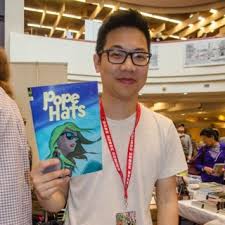
7. Ethan Rilly (Table 405). Rilly's Pope Hats series is one of the best things going in comics. Its serialized storyline about a law clerk named Frances features characterizations that rarely found in comics, gorgeous character design and an unerring ability to use stillness and pauses as a key part of his storytelling. His comics are subtle, beautiful and immensely satisfying.
8. Yumi Sakugawa (Table 220). This is an artist whose sharply-observed observations about art and gender dovetail beautifully with her sense of composition that makes extensive use of negative space. There's also a slightly exaggerated sense of reality to be found in her comics, often mediated through her frequent use of a reserved or deadpan narrative voice. UPDATE: Yumi Sakugawa has cancelled.
9. Eric Kostiuk Williams (Table 510). Williams' gained a lot of notice with his Hungry Bottom Comics series, a comic that mixed autobiographical essays about being young and queer in Toronto with surreal dreamscapes. Williams' potent mix of incredibly fluid draftsmanship and a probing mind helped get an Eisner nomination with his recent Babybel Wax Bodysuit, and his recent Heartbreak Condo Disco from Koyama Press.
10. Jenny Zervakis (Table 105). It's a conflict of interest to suggest that her debut collection of Strange Growths could very well be the book of the show, given the fact that I interviewed her for a section at the end of it. However, I'm not the only one eagerly awaiting this book that collects the first 13 issues of her minicomic, mostly from the 90s when she was a publishing mainstay. That John Porcellino had been planning to do this kind of collection for years speaks to the respect he has for her work. Her thin, penciled line tells stories that are poetic, still, funny and sharply observed.
1. Haleigh Buck (Table 315). This autobiographical cartoonist from Baltimore is making some of the rawest, densest comics about dealing with mental illness as part of everyday life, including how she dealt with an enormous breakdown. Her naturalistic style has a surreal edge to it and she maintains a wicked sense of humor throughout.
2. Chris Cilla (Table 205). His book The Heavy Hand is one of my favorite comics of all time, fusing a variety of styles together seamlessly to create a psychedelic, hilarious journey that defies all of the genre conventions that the book explores. His minis are also excellent, creating his own brand of underground comics that acknowledge all of their forebears without being beholden to any one in particular.
3. Cathy Hannah (Table 410). Hannah is another autobio cartoonist who writes about the intersection of the personal and political in interesting ways. She spills a lot of ink in delving deep into her own mental illness issues, her feelings about relationships and documenting her own therapeutic breakthroughs in real time. She uses an inviting, cartoony style to tell her stories.
4. Sophie McMahan (Table 403). Ever since one of her comics appeared in my mailbox, I've been astounded by the sophistication of her critiques of beauty, image and the male gaze through the use of body horror and distorted versions of 1950s-style advertising illustrations. Every one of her comics is both aesthetically beautiful and thematically challenging.
5. Carolyn Nowak (Table 505). She's doing some fantastically funny comics about sex, gender identity, culture and intimacy, with her recent Diana's Electric Tongue especially notable. A winner of the Ignatz award last year, her comics have a sense of lived-in warmth that's part of her sharp critiques. Her work is questing, curious, warm, funny and extremely smart.
6. Ben Passmore (Table 307). He just earned an Eisner nomination for his breakthrough short comic Your Black Friend, a pointed meditation on racial alienation. However, his other comics, like his postapocalyptic-autobio series Daygloayhole, are every bit as provocative, dealing with issues like addiction, isolation and connection, told with a weary sense of humor and razor-sharp intellect.
7. Ethan Rilly (Table 405). Rilly's Pope Hats series is one of the best things going in comics. Its serialized storyline about a law clerk named Frances features characterizations that rarely found in comics, gorgeous character design and an unerring ability to use stillness and pauses as a key part of his storytelling. His comics are subtle, beautiful and immensely satisfying.
8. Yumi Sakugawa (Table 220). This is an artist whose sharply-observed observations about art and gender dovetail beautifully with her sense of composition that makes extensive use of negative space. There's also a slightly exaggerated sense of reality to be found in her comics, often mediated through her frequent use of a reserved or deadpan narrative voice. UPDATE: Yumi Sakugawa has cancelled.
9. Eric Kostiuk Williams (Table 510). Williams' gained a lot of notice with his Hungry Bottom Comics series, a comic that mixed autobiographical essays about being young and queer in Toronto with surreal dreamscapes. Williams' potent mix of incredibly fluid draftsmanship and a probing mind helped get an Eisner nomination with his recent Babybel Wax Bodysuit, and his recent Heartbreak Condo Disco from Koyama Press.
10. Jenny Zervakis (Table 105). It's a conflict of interest to suggest that her debut collection of Strange Growths could very well be the book of the show, given the fact that I interviewed her for a section at the end of it. However, I'm not the only one eagerly awaiting this book that collects the first 13 issues of her minicomic, mostly from the 90s when she was a publishing mainstay. That John Porcellino had been planning to do this kind of collection for years speaks to the respect he has for her work. Her thin, penciled line tells stories that are poetic, still, funny and sharply observed.
Subscribe to:
Posts (Atom)