Showing posts with label colleen frakes. Show all posts

Thursday, January 1, 2026

31 Days Of CCS, #1: Colleen Frakes

Kicking off another year of reviews of alumni and students of the Center for Cartoon Studies, it's fitting that I should start with Colleen Frakes. This is the 20th anniversary of the school, which is frankly astonishing. It points to the need for and viability of a focused curriculum for comics, as comics have become a more pervasive medium in the past twenty years. Frakes was one of the first graduates of CCS, and she's maintained a steady practice even as she's had to go through a few odysseys in order to get published. I've always enjoyed her take on fairy tales and myths, as well as her autobiographical material, and she produced quite a bit in the past year. 


After a delay to finish her graphic novel Knots, Frakes finished another long-running project, Iron Scars. That was originally released as a series of short minicomics, but she finished the back half in a nearly 200-page collection. A lot of Frakes' work is informed by her unusual childhood growing up on a prison island off the coast of the state of Washington. Iron Scars reimagines that island as originally having been claimed by faeries until humans stumbled upon it and settled it without permission. In the first book, it's established that faeries were not only stealing human children and turning them into changelings, they were also making their parents forget that they even had children. Opposing them were the witches of the island, including the bizarre, doddering Sea Witch. She was one of many fun character designs, as she was essentially a humanoid pile of seaweed and fish. 

The action of this book starts with some kids who managed to open a portal to the Faerie realm in order to rescue their missing siblings. The more interesting part of the story is the multi-generational conflict among the witches, especially as it's revealed that a war between Faerie and the witches traumatized the family and led to a couple of deaths. Frakes did some very clever world-building in setting up how each witch was different: a sky witch and a wood witch, but also a book witch and a math witch. Frakes never skimps on putting her characters in danger and creates some stakes that have teeth, and the action sequences in Faerie are harrowing and unpredictable. The changelings really play to Frakes' strengths as an artist, as their simplicity is amplified by essentially being little piles of black ink. 


Possibly due to the delay in finishing the book, Frakes' style noticeably changes about halfway through, as she refines her normally chunky line weight into something thinner. The lettering also changes from all caps to mixed-case, and it's also thinner and clearer. The change is a little jarring, and I don't think it was an improvement. Indeed, that chunky line was one of the things I liked best about her art. Iron Scars has a lot of characters, and they're sometimes hard to keep track of, but Frakes keeps the narrative pretty steady even with such a large cast. I'm glad she finished it, especially as it touched on a lot of images from her old Tragic Relief minicomics series. 


Frakes' new series is called Cursed, appearing on her Patreon. You can see her new style in its full form here, no doubt influenced by making Knots. This is in full color, and that thinner line makes a lot more sense with color. The first chapter finds Baba Yaga (a recurring character in Frakes' comics) turning a village girl into a horse after she revealed the girls went to the nearby city to have children.  The second finds a witch rejecting a local woman for fear of what a romance between them might bring, as well as various talking animals and some odd quests. This one's just getting warmed up, but I really like Frakes' use of decorative touches and her use of color. Cursed also feels a little lighter and more whimsical than many of her fantasy stories. 


How Are You Doing? is Frakes' latest catch-up memoir. I've said it before, and it's still true--Frakes' self-caricature is one of my favorites in all of comics. There's a slightly rubbery quality to the way she draws limbs that's perfectly cartoony and fits snugly with her mix of sincerity and cynicism. There's also a sense of how profoundly upsetting and awful the world has become--how does one react? Make comics, raise your kid, try to teach others. There's also a bit of family drama in there, which is rare since Frakes rarely writes about her family in the present tense. As always, I prefer her heavier line weights, and there's plenty of these comics in there. 

Finally, there's Hourly Comics: 2020-2025. I find such comics gimmicks often have limited long-term appeal, but the aforementioned virtues of Frakes' line paired with year-to-year changes and similarities make for a surprisingly cohesive package. For example, one highlight each year was going on a walk with a friend and her dog with a gloriously lustrous coat. We also get to see Frakes & family deal with COVID and watch her daughter jump from being a newborn to a toddler. Frakes has worked on her line, her cartooning, and her storytelling relentlessly for well over 20 years now, and her commitment to her craft and joy in her storytelling are apparent on every page. 


Saturday, December 14, 2024

45 Days Of CCS, #14: Colleen Frakes

One has to admire Colleen Frakes' persistence. One of the original CCS students from the class of 2007, Frakes is one of the few from the class who has continued to do comics since graduating. Knots represents her first book with a big-sandbox publisher after many attempts. It's interesting that it's a quasi-autobiographical book, considering that much of her output throughout her career has been fantasy comics with a feminist edge. The main exception was Island Brat, about spending part of her childhood on a prison island where her parents were guards. I've always loved Frakes' self-caricature, thanks in part to her pen-and-ink mastery and use of gesture. 


With Knots being a book from a big publisher, it's not surprising that it was in full color, which was done by Mercedes Campos López. I've read several comics from López in color that looked great, but the color in this book feel perfunctory at best, and a lot of it drowns out Frakes' linework. Indeed, her line weight feels a tad thinner than in her other work, leading to a sketchy spareness that is ill-served by the color filling up space in the blank backgrounds. Considering that the plot follows a disaster when Frakes' stand-in character dyes her hair, the use of color for hair looks surprisingly flat because of the variety of background color fills. I wish this book had a 2-color wash or used brighter spot colors to emphasize hair. 

That said, Frakes' cartooning was still top-notch and the story was so surprisingly raw. Most middle-grade memoirs tend to focus on friendships and/or romances, but Knots is a story about a family going through a difficult time. Frakes was wise to make this quasi-biographical, because it allowed her to smooth over certain narrative elements to make the story flow well, while still retaining key elements from her own experience. The story follows Norah, entering into sixth grade, who is trying to find ways to express herself. She lives her parents and hellraising younger sister Lark, and it's established that her family has had to move multiple times because they kept getting transferred in their employment as prison guards. 

The plot device of Norah giving herself a bad dye job and wrecking it a few times is the story's visual hook. The real story comes when Norah's mom is transferred yet again, which leads to her parents deciding to split the family up. Her tempestuous mother would take Lark with her to their new city, while Norah would remain with her easygoing father. Frakes completely sidestepped predictable formula work here with a tremendously vulnerable, revealing, and frequently absurd portrayal of a family that was trying to do its best but was struggling. In this portrayal, there are no villains; however, there is a major critique of both parents who don't listen and Norah, who is afraid to speak up and express her needs. 


Frakes does a marvelous job in portraying Norah's anxiety and fears surrounding her parents' jobs working in law-enforcement, often in hilarious ways. At one point, Norah has a nightmare that her teacher calls the cops on her, her parents divorce as a result, and she goes to prison with her quarrelsome younger sister. When she's told it's a spider prison (a huge fear), Norah bolts awake and wonders "What is wrong with my brain?" Norah's awkwardness is as relatable as her wanting to expand her horizons and get out of her comfort zone. The intense loneliness she feels after her mother leaves, with her father working constantly, is portrayed in an almost palpable way. Hooking the narrative into a classmate who was sent to live with his grandparents after a casual admission of neglect in class added another level of very real pain in a way that is unusual for this kind of book. In the end, Norah is able to express herself more clearly when her parents want to move again, and they finally start to listen. That said, she noted that things didn't magically change, either--everyone just tried a little harder, but at least they were together. It's that sense of authenticity, even in a work of (mostly) fiction, that sets Knots apart. 

On top of that, Frakes' catch-up mini So What's New With You? talks about Knots, her husband and daughter, video games, and doing an event with cartoonist Laura Knetzger where she affirms that she plans to continue to self-publish. It certainly provided that pen-and-ink fix I missed in Knots!

Thursday, December 7, 2023

45 Days Of CCS, #7: Colleen Frakes, Coco Fox, Mary Shyne, Carl Antonowicz

Today's entry features short reviews of very short minis by a number of creators. Most of them are in the middle of longer projects, and these minis represent something they can have at shows. 


Starting off with Colleen Frakes, she's from the first CCS graduating class and is still at it. Her first major-publisher book, Knots, will be coming out in September of 2024. For SPX 2023, she did a mini called Where Have You Been?, and it's a funny little autobio comic that talks about the past few years. While Frakes usually does variations on fantasy stories, her self-caricature has long been one of my favorite in comics, and I enjoy the exasperated body language in these comics. Frakes flashes back to how the past few years have felt lost for a lot of people. During this period, Frakes had a kid (who is nearing kindergarten age) and had a book dropped from a publisher. There's a hilarious anecdote where an editor told her that the book was dropped not because Frakes got pregnant, but because her "art was bad." Frakes' pen line remains a joy to look at; she has a keen understanding of the in-between spaces in drawing big scenes. 

Another artist working on a longer book is Mary Shyne. Her brief but funny mini Robbing O'Hare's Weed Box features the main characters from her upcoming book, Graduation Day. It's a time loop story involving two best friends in high school on their graduation day. This fragment is about their wanting to rob the Cannabis Amnesty Box in Chicago's O'Hare Airport, and the various shenanigans they get up to in order to do it. Shyne loves crazy page composition, and even here, she uses a page with slanted panel lines (including the rare trapezoidal panel in the middle of a page) and an open page layout. That doesn't detract from her winning character design, because even in the span of these four pages, Shyne gets across a strong sense of self for both of them. 

Coco Fox also has a book coming out titled called Let's Go, Coco! Fox has leveled up as a cartoonist as much as anyone I've ever seen from CCS, and she did a quick mini for SPX called Just Kitten'. It's a beautifully designed mini with a bunch of cat puns that are awful, but Fox milks each joke with an elaborate visual set-up and doubles down on the pun. The one about "Caturday Night Live" is especially well-done, as she layers three levels of puns in the punchline. 


Carl Antonowicz is an artist who is fascinated by multimedia presentations of comics with performance and music. He did a performance of his upcoming book The Ardent (full disclosure: it's coming from Fieldmouse Press and I'm editing it) at SPX in 2023, with a full array of props and sound effects. His brief mini Open Casket Soundsystem: The Great Beast is paired with a set of musical pieces that can be found on Bandcamp or his patreon. It's the usual sort of Antonowicz comic and it continues to follow his extensive interest in cults and how they operate on a psychological level. Here, the cult in a postapocalyptic setting is following the Great Beast, a monstrous creature indifferent to their presence. He is unthinking and unyielding, devouring all of the detritus of a former civilization that's in his path, with his followers eating his waste. It's bleak and once again points out the utter uselessness of rigid belief systems in the face of a nihilistic and uncaring world. Antonowicz's ratty line is perfect for depicting charred, decaying flesh and piles of bones. 

Tuesday, December 20, 2022

31 Days Of CCS, #20: Sam Held, Isabella M. Hall, Colleen Frakes


Attercop, by Sam Held. Anyone who's ever read The Hobbit knows that an attercop is a sort of insulting term for a spider, as it holds a double meaning as a disagreeable person. In Held's comic, there is a monstrous giant spider who wears an adorable straw hat who is kind and polite. Held's use of color makes this comic sing, as the spider goes about its day in the forest, being careful not to hurt smaller creatures as it looks around. The spider finds a book on gardening and is able to deduce its meaning from the images in it, and sets out to make their own garden, complete with scarecrow. This is just a delightful story that isn't much in terms of plot but still gives the reader some stakes as the spider is on a quest to make things beautiful. It seems like a perfect introduction for a wider series of adventures. 


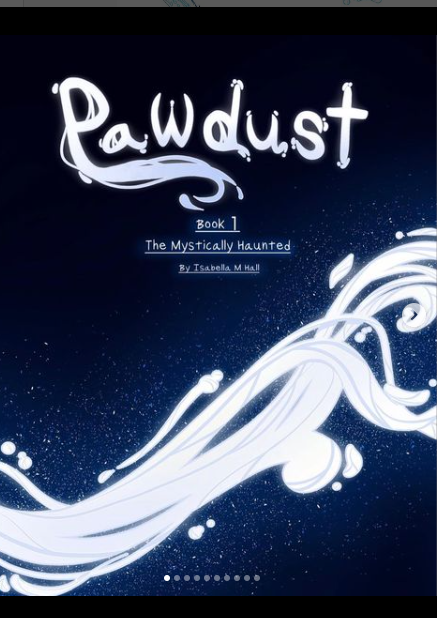
Life With Diabetes! and Pawdust by Isabella M. Hall. Hall works in a clearly manga-inspired style; I'm not sure I could name the specific influences, but it's obvious this is the subgenre she's comfortable drawing in. Her Life With Diabetes! comic is presented as a rant, but it's honestly more of an entirely reasonable set of facts about type 1 and 2 diabetes, along with some very mild complaints about not feeling seen. (The irony is that this is actually the third minicomic I've seen from CCS grads on this very subject as living with type 1 diabetes; Sam Gaskin's Sugarcube and Nomi Kane's Sugar Baby are the others.)

So the comic revolves around seeing a social media post about the movie Turning Red and seeing one of the young characters wearing a diabetes patch. Hall goes into detail about how diabetes works, including the symptoms as well as the science behind it. Hall then goes back to the reference in Turning Red, and how few instances of a patch are in media. Hall says some other interesting things, as she regards being diabetic as part of her identity, and that if there were some catch-all cure, she wouldn't take it. In part, it's because she wants to be a visible role model--hence, this comic. The problem with this comic is that it's neither fish nor fowl; there's a tenuous personal narrative that is only really emphasized toward the very end. There's fairly basic graphic medicine content that's not really connected to any other narrative. There are instances of personal connections, like the diabetic teddy bear children receive to practice given injections on, but it's yet another fragment, not part of something bigger. It's a rant in the sense that it feels spontaneous and all over the place, but it feels restrained as well. There's a disconnect with Hall's dynamic art style, which makes it feel like more should be happening on a given page. 


If graphic medicine doesn't quite seem to be Hall's bag just yet, it's clear that their comic Pawdust shows off what they excels at. This is only the first book of a much longer story, From the very first play of this mother-son story, Hall's command over color is arresting but tasteful. She doesn't sacrifice her line to color, as the first scene is beautifully composed. The story blurs from black and white to blurs of color, with highly expressive characters in this story of a boy who has a connection to dying animals. Finding a dying bird on the seashore, his mom comforts him and tells him about how everything goes in cycles, and death is part of this. When they do a little ritual for the bird's soul, he sees it fly off, establishing a future plot point while finishing a key emotional beat. The story is set in the present, but there's something hazy about it, like there are lots of tricks of memory for the boy that flash into his mind's eye. There are plenty of visually spectacular sequences in the comic, but the key note here is Hall's overall sense of taste and restraint. 


Colleen Frakes is perhaps the most prolific of all CCS grads, considering her status as a member of its initial graduating class. She's also been one of its most consistent artists, as she long ago found a niche as someone who used fantasy genre trappings to tell stories with a deeply feminist bent. Her stories are often about families: dysfunctional families, found families, loving families, and families stretched to their limits. The perils they face are often faceless, terrifying, random, and merciless. Sometimes people are just in the way of monstrous appetites with no regard for life. Frakes can switch gears and do autobio with the best of them, however, and I've long admired her self-caricature for its expressiveness. Her line is so lively and is usually thick enough to add some real heft to her drawings. Let's take a look at her most recent minis. 


Clever Hanne Saves Her Sister From The Troll King is very typical of her work, and it was done over the span of a month in October of 2018. This is less a comic than it is a series of illustrations with captions at the bottom, telling the story of a young woman whose sister is kidnapped by trolls. As she pursues the troll to find her sister, she does various kindnesses along the way for various creatures she encounters and receives an assortment of useful items. When she reaches the troll cave, the Troll King turns her sister into a troll. The twist here is that the Troll Queen turns against her husband, turns her sister back into a human, and then later becomes part of the young woman's family. There are familiar elements from fairy tales, but the ending subverts aspects of these familiar stories. 


Iron Scars vol 6 and vol 7. Encompassing chapters 4, 5, and 6 of her epic series about a conflict between a family of witches and dark fey on an island, Frakes uses her own experiences in conveying the sense of isolation and weirdness of growing up with a bunch of other families in a remote location. The evil elves (of the Unseelie Court) are kidnapping kids from the village, including the kin of witches. These chapters represent the efforts of some of the kids to fight back by trying to learn the name of the Queen of the Unseelie Court to get power over her. There's also a chapter about the Sand Witch working to try to parley with the Unseelie Court, before they have to do something like go to war. Frakes' line is a delightful combination of thick, bold lines with sketched-out figures that allow the reader to fill in gaps. Her use of gesture in particular is a big part of what makes her comics fun to read. 


Your Mom Friend Is Not Okay is an infrequent example of Frakes doing memoir, something she only tends to do when she really has something to say. In this case, she writes about her harrowing experience giving birth. I've read a number of birthing stories in comics form (it's fantastic that it's become fairly common), but there's a sense where Frakes published this out of sheer frustration. Along the way, there are still some funny observations that have everything to do with an idealized conception of childbirth that rarely materializes. 

What's interesting is that Frakes did this using some prompts. For Hourly Comics Day in 2019, she used the mechanics of doing a comic every hour to talk about her birth experience, which was horrific. The strip serves as an introduction to the rest of the comic, as she notes that an emergency c-section incision was made before her epidural anesthetic kicked in, her midwives never listen to her, and her baby had to have an emergency blood transfusion. There was a hippie midwife who downplayed her fears, having to deal with a pain scale she didn't understand, and a friend who told her that babies freak him out and they were gross. (In other words, what NOT to say.)

Frakes also details how having a baby gave other people a sense of entitlement to her experience--especially her mom, who was angry that someone threw Frakes a baby shower but didn't think to invite a bunch of people that she wanted there. Frakes shows her mom a diagram of how to treat people in crisis; sending comfort and support to "outer rings" (friends to family to partner to patient) and move that in, and send complaints and "what about me" feelings outward. Thus the person in crisis doesn't have to deal with other feelings, and people at various stages in the circles have outlets. Frakes' strip about this is very funny, as her mom replies "Your grandma wouldn't like this," leading to a plop take. There are strips about introducing formula (always a touchy subject), her midwife's dismissal of her symptoms nearly leading to tragedy, going to the hospital anyway, and a rapid escalation of symptoms. Her mom was there to "help" and tried to walk off in a huff when she felt unappreciated. The comic concludes a year later with another hourly comic strip, shifting into a different new normal that is still stressful, right before COVID hits. Throughout it all, her line art shines, with her thick line for figures and finer line for expressions and features the bedrock of her lively cartooning. Frakes is generally a fairly serious storyteller, but this makes her moments of humor all the more effective; she's not so much trying to tell gags as she is relate the frustrating absurdity of certain situations.

Friday, December 20, 2019

31 Days Of CCS #20: Colleen Frakes, Sean Knickerbocker

Ten years ago, Colleen Frakes published her breakthrough comic, Woman King. It earned her a Promising New Talent Ignatz award, and she's been producing excellent work ever since then. Woman King came out in various minicomics forms until its final original iteration was published, and I reviewed that here. Frakes just published an expanded tenth-anniversary edition for which I wrote the introduction. The book is printed at a larger size, giving Frakes' brushwork even more of a chance to breathe. There are also two new stories. There's a full-color story that was printed in mini-comics form back in 2008 that's almost psychedelic in its construction, as Frakes forgoes line in favor of white outlines of intense color bursts. The story itself is based on the same kind of logic that drove the war in the main story: winning the war is everything, and the otherwise innocent girl must be driven to do horrible things to help win it. In this case, it's killing a dragon and having her eat its brain. Of course, the "dragon" was a car and its "brain" was its engine block.

The final story is a sort of recapitulation of the story as well as an expansion of its mythos. A young man travels to find the child who will lead them to freedom against the animal army led by the bears and its Woman King, only to see that some beasts were fighting on the child's side. There's then a long interlude as the pilgrim reads about the ways in which different cultures regarded bears and their relationships with women. It was enough to get him to distrust all bears (and eventually get chased by one). It's an interesting denouement because it essentially does two things. First, it establishes that as a result of the events of the story, a mythology was built around it. That mythology only served to further create a sense of us and them through its twisting of ideas and events. Fake news, as it were. Second, it reveals that the cycle of violence hinted at in the end of the main narrative came to pass, becoming all the more terrible in each new iteration. Trauma handed down through generations causes an exponential amount of harm, as the farther from the initial trauma and the truth around it one becomes, the more important it is to rely on myth and unreliable oral histories. When you're living in a permanent state of emergency, it becomes impossible to discern what is truly dangerous.

I've been reviewing Sean Knickerbocker's Rust Belt minis for nearly a decade now, and they were just recently collected by Secret Acres. While the individual issues and stories were quite good on their own, the collection has a poignancy that's greater than the sum of its parts. Like Chuck Forsman and Dakota McFadzean, Knickerbocker writes stories about the desperate, the hopeless, the doomed. The cover, featuring what looks like a double-wide at dusk, gives the reader a visual taste of the stories found within. The first couple of stories follow Chad, a high school loser who's picked on by assholes because they think he looks like Kurt Cobain. There's no happy ending for him, as the girl he has a crush on has to move away, he ignores the girl who clearly has a crush on him, and his posed disaffection bites him on the ass in school. When we see him again, he's a vagrant hanging out with a sketchbook in a grocery store parking lot. That sense of continuity in the book makes each individual story more effective and memorable, as the reader is interested in seeing how things are connected.

When Knickerbocker shifts to stories about adults, their fates are even grimmer. Bradley is a store assistant manager who is demoted when new ownership comes in. David is a drunk who can't get past childhood trauma. Jason is a plumber whose alt-right rants go viral and gets manipulated by media trolls. Knickerbocker presents them warts and all, as they are all deeply flawed. They lack empathy, especially for those who care about them. They blame others for their problems. They rightly bemoan a lack of resources and fairness but can't see outside their own needs. Knickerbocker seems to be arguing that "real people" have it hard in part because of the forces of global capitalism, but he also seems to be saying that personal solipsism and an inability to see from someone else's point of view are also culprits for misery. In the last chapter, Jason's wife Meghan asserts her personal agency while allowing for her husband's beliefs, but is justly angry when he gets doxxed and they have to scramble to make a living. Her own anger at how she's treated at work because she's a woman add an important element to the story. All throughout, Knickerbocker silently comments on the idea that no matter the struggles of these characters, they still don't understand their own levels of privilege, either as men or as white people. Most of the characters have the ability to alter their circumstances but are unwilling to do so, never once allowing that others might have it worse than them.

Monday, December 3, 2018

Thirty One Days of CCS #3: Colleen Frakes, Josh Lees

Iron Scars Book 1: The Changeling, and Iron Scars Vol. 5, by Colleen Frakes. Frakes is one of the first graduates of CCS and has been one of the most consistently prolific artists as well. She's always used a loose line that emphasizes gesture and expression, varying line weights depending on the situation. Most often, the typical Frakes figure is one with a heavy black line marking the outline and a relatively iconic facial expression: a few lines here, a few squiggles there. Most of the comics Frakes has done have been fractured fairy tales: dark takes on classical tropes, going back to their roots.

Iron Scars in many ways is the culmination of a decade's worth of experiments. Frakes' best work features children in conflict with terrifying, mysterious forces. She's also written extensively about her unusual childhood growing up on an island housing a prison that was fairly cut off from the outside world; it was accessible only by ferry. Iron Scars is similarly set on a small island with a few families on it, also accessible only by ferry. Frakes takes these childhood memories and fantasies and transforms them into a vivid, funny and frightening epic. Instead of a prison island, it's an island where the line between the mortal realm and faerie realm is extremely thin, and a group of witches lives there to guard over the link.

The plot revolves around the dark faeries ("the Unseelie Court") starting to kidnap the children of witches, breaking a treaty, and the efforts of some kids to get them back. There's also the matter of one of the children in this tight-knit community actually being a changeling, switched at birth with an actual human child. What separates the story from typical fantasy is Frakes' uncanny knack for writing children. There are nine different kids, all of whom are written as unique individuals. Frakes obviously has an understanding of what it's like to grow up in that kind of isolation and what effect that would have on a close-knit group of kids. She took that understanding and added the fantasy plot as an overlay, but the relationships have an authenticity born from experience.

Frakes also has a knack for alternating humor and horror in equal measure. One of the running plots is the relationship between the women in the coven, which include a sky witch, a sand witch, a sea witch, etc. They constantly squabble and are quite quirky, especially the slightly confused sea witch and her frequent offers of fish. The faerie changelings are inky creatures that look like part cat, part demon and part spider: they look like they're made out of nightmares. The Unseelie Queen is almost alien in her ability to terrorize. The most notable child is Tyee, a girl who actively resists her heritage as a witch but winds up embracing it in an effort to rescue her friends. The book is full of close friendships, betrayals, attempts at rapprochement, and kids outfoxing adults. It's a thrilling, funny story by an artist with a well-developed aesthetic, from her brush strokes to her vibrant hand lettering.

Liberty High School Detective League #2, by Josh Lees. Lees describes this as a "Teen Mystery series for fans of Nancy Drew, Disney's Fillmore! and Case Closed". The premise of this comic is clever, in that the high school that new student Ray Griego attends has its own amateur Detective League, dedicated to solving various local crimes. Lees ticks a number of boxes with this comic, including distinctive character design, varied and realistic characterizations, and a genuinely interesting mystery plot that has a satisfying and sensible conclusion. Lees also has fun with the series' premise, including the fact that the titular Liberty High has a rival that it engages in mystery contests. The only problem with this issue is that parts of it look rushed, especially scenes where characters are interacting with each other in space. There are figures here and there that just look awkward as a result. Lees also tries to cram in a lot of panels on some of the pages, and a number of them feel cramped as a result. The problems with the comic are mostly of reach exceeding grasp on a visual level, and while that kind of ambition is admirable, the comic's rough patches hurt the flow of its narrative. The Archie digest presentation was a nice look, but not for a comic as jam-packed as this one. Lees has a great concept here, and it's one that only needs some refinement.

Friday, December 1, 2017

Thirty Days of CCS #1: Sophie Goldstein, Colleen Frakes, Amelia Onorato


Anniversary/Food Chain, by Sophie Goldstein. This is a pair of horror stories from Goldstein, who really knows how to spin true drama out of genre fiction. "Anniversary" is particularly grim, as it begins with a bit of misdirection but it soon becomes quite apparent that a monstrous, spidery woman is slowly stalking a man who is courting another woman. When he walks her home and the spider woman crawls down the wall, her body bent at an impossible angle, Goldstein's use of negative space is especially startling. The contrast between the gray creature in the upper left hand corner of the page, the alabaster white skin of the woman sitting happily in the tub, and the jet-dark void in between them inspired true dread. However, the most disturbing thing Goldstein does is invert the trope of true love winning out, as she manages to trap him in her embrace (warping his appearance as he is strung up from the ceiling) forever. In just eight pages, she conjures up disturbing images and then continually manages to up the ante until the end.

"Food Chain" is even shorter, and it indulges her interest in presenting the hypocrisy of the thin veneer of civilization. The reader is presented with a scene of two quasi-humanoid creatures (part human, part sort of a spidery horse) having sex. Indeed, the female here bears a resemblance to the main character of "Anniversary", only slightly less bent. The story is a series of reveals: we first see that they are standing atop a pile of scrap; then we see her get shot for food by a group of "primitives" who are comically cartoonish; then we see that they are living in the shadow of a clearly technologically advanced city; and then we see a modern human taking notes. The pull-back is to him narrating his encounters to applause before a fancy audience, before he and his partner are served the same male beast from before, with his erect penis no longer serving its original purpose of pleasure and procreation, but rather as a sort of authentic delicacy for the upper class to devour. She manages to pack a lot into just six pages, with almost no dialogue. Goldstein makes a point of having the rich explorer/journalist and his partner look as much like the creatures as possible, demonstrating how little actually separates each of these groups except the establishment and use of force to maintain status. The starkness of the black & white contrasts here resemble her book House Of Women more than the first story does, which goes in for a lot of grays and shadows. 

The Eternal Rocks, by Amelia Onorato. Incredibly, Onorato drew this ambitious comic while recovering from wrist surgery. She spoils the premise of the comic on the back cover: "What if the movie 50 First Dates took place in the Edwardian Era between a proper English Lady and a shape-shifting, gender-fluid Sea-Monster?" What if indeed, as this comic is an excuse to draw the rolling English countryside that a sickly woman named Maude haunts. When we meet her, she's at last grown tired of being housebound with tuberculosis as she sees a rider on a horse signal to her. The rider is a monstrous centaur, its skin flayed off to reveal nothing but muscles, tendons and cartilage. This is a sly allusion to her own wrist injury, I would imagine, as the structure of the muscular system was something that was no doubt on Onorato's mind.

The comic is also Onorato's demented take on a "meet cute" romance, done as a genre mash-up. Maude is a character straight out of a Bronte novel who essentially cannot stop shrieking until she and the centaur stop riding and she discovers her long-decayed corpse. The creature, born of the ocean, has encountered Maude's ghost hundreds of times, but she can't remember any of them. With a great deal of tenderness and a bit of humor, Onorato explores the ramifications of this situation, as fear turns to sadness, which then turns to a sweet sense of affection and fulfillment. Onorato has explored interspecies romance before in her Rockall comic, which was about a man and a Selkie. Onorato's take on fantasy is always with a modern eye, especially with regard to issues of gender and gender roles, yet she never sells the original inspiration short. In this comic, one can see just how much command she has over each and every page, with an ingenious design for the creature and a series of funny, emotional expressions for the wispy Maude. Every detail works toward the story's premise, including things like lettering (upper and lower case for Maude, all caps for the creature) and the lush backgrounds in the establishing shots. One gets the sense that once Onorato had the story's premise in mind, she then attacked the story with a great deal of confidence. Every page is brimming with great drawing, fluid storytelling and an essential combination of send-up and sincerity.

Iron Scars Vol 4, by Colleen Frakes. One of the members of CCS's pioneering first class, Frakes has been extremely productive in the decade since she's graduated. Her current series may be her best work, combining autobiographical details with fantasy. Frakes' fantasy work has often been much darker and had considerably less dialogue; working with kids as the main characters has allowed her to interject much more whimsy and laughs into the story without taking away from its ultimate stakes. The central character is a girl named Tyee, the daughter and granddaughter of witches who avidly rejects her magical destiny. She lives on an island that mirrors Frakes' own experiences growing up on a prison island off the coast of Washington. With kids starting to disappear on the island, Tyee decides to try to catch another magical wishing fish, which she had thrown back in the previous issue because of her distaste for magical destinies. When she finally meets the Sea Witch, her great-grandmother (a design marvel, as she's made of seaweed and fish), she learns that the fish were meant for her as gifts and would be dangerous for anyone else. Horrified, she runs to try to catch her friend that she gave the fish to.

The next chapter finds her friend in peril, as well as her sister, as they've been captured by another witch underground. When one of the girls disappears in a puff of smoke while playing with friends, it's a moment that's both horrifying and yet strangely funny. The humor is aided by Frakes' usual dense brushwork and cartoony character design; Tyee in particular is short and all curls. Her mom is frazzled and frumpy, with unkempt hair. These chapters are essentially the establishment of the series' conflict after time spent establishing character and laying some narrative pipe in earlier chapters. It really does feel that Frakes' shorter works have paved the way for this narrative, as there are elements of her previous works as well as new directions to be found in this series. The use of humor is the most important way she's stretched herself, because she's rarely used humor unless it's autobio where she's the butt of the joke. She transferred that experience to various stand-in characters on the island, and the result is something that feels emotionally authentic. That authenticity is what allows the fantastical elements of the story to feel natural but also resonate as terrifying to characters that feel real.

Saturday, December 10, 2016

Thirty-One Days of CCS #10: Colleen Frakes

Iron Scars is the title of Colleen Frakes' new fantasy serial, and in many ways it's a departure from her past work, and in some ways it's a fascinating continuation. The story is set on a small island whose only connection to the mainland is by ferry, and there's a small community living on the island. That's a clever use of Frakes' own background of growing up on an island off the coast of Washington that housed a prison, as her parents served as staffers. It also features fantasy tropes like witches, faeries, shapechanging and magical objects & quests. Generally speaking, Frakes has tended to undermine fantasy tropes by either pointing out their sexist underpinnings or else simply reimagining them in the grimmest possible fashion. In stories Frakes has written involving children, she often taps into the idea of nightmares coming true, often in a way that's far worse than the original nightmares themselves. There is some of all of that in this story, but Frakes made one key change that altered the entire tenor of the story.

That change was setting the story in modern times. As a result, it made it easy for the story's central character, a girl named Tyee, to actively and hilariously reject magic in her life, despite being the daughter and granddaughter of witches. In Frakes' familiar, thick and brushy line (even the heavy line weight of the panels adds some heft to the narrative), Tyee rejects a magical reward from her (unknown to her) grandmother and throws back a talking fish that promises wishes. "Maybe I don't want a magical destiny", she protests. Witches are frequently seen phenomena, as the ragged Sea Witch comes ashore in a sort of effort to play with the children, whom she naturally terrorizes with her bizarre appearance. That's a nice bit of characters design on Frakes' part, who makes her a pile of seaweed and fish with a face. 

By the third chapter, Frakes reveals what the story is really about: intrafamiliar problems and the complication of mixing families and houses after divorce. The character design of Tyee's dad is wonderful, all scraggly beard and unkempt hair. This is where Tyee complains to her dad why he can't live with his partner Nils in the same house as her mom, which leads to the highly uncomfortable conversation with children about how sometimes parents no longer fit together. Frakes nails the awkwardness of that exchange. In the fourth chapter, we get a hilarious sequence where it's revealed that the witches of the island are mostly interrelated, not all of them like each other, they act as guardians of the island (and the world), and they all have other things to do. It's the last bit of narrative pipe that Frakes lays down before the action begins. Frakes ties together the family conflicts with the magical ideas in the story by having one of the teenage girls owing the faeries a favor--and that favor is to kill Tyee's mother, the witch. Frakes creates a nice atmosphere by framing that sequence with Halloween, blurring the lines between make-believe and magic even further. Frakes has certainly expanded her range and her ambition with this story, which looks like it's headed toward a graphic novel's length. 


Wednesday, November 16, 2016

The Shirley Jackson Project

Rob Kirby's anthologies are always interesting at the very least, in large part because he only takes on projects as an editor that are personally important to him. Passion alone does not a great anthology make, however, and it's Kirby's other skills as an editor that tend to make his anthologies so satisfying to read. He has an uncanny sense of which artists to use for a given project, how to get the best out of them and how to sequence their stories. Sequential flow is the most important quality of any given anthology and is easily botched by editors who don't quite understand what they're doing. Even in an anthology with more than one weak piece, Kirby manages to use them as buffers or palate-cleansers. Even when Kirby was editing anthologies featuring only queer cartoonists, he always carefully thought through the artists he asked to participate in an effort to come up with the best balance of styles, themes and visual approaches. That was especially true in his excellent Three anthology, but he's carried that through in his recent series of anthologies that smartly mixed artists from the queer comics world and the alt-comics world (a line that has thankfully become far less relevant) to provide a diversity of experiences, points of view and styles. After putting together the massive QU33R anthology, he went back to doing smaller anthologies that mixed artists as I noted to address topics like accidental, self-inflicted injuries (Pratfall) and astrology (What's Your Sign, Girl?).

Kirby will surely earn some degree-of-difficult points with his The Shirley Jackson Project, an anthology featuring "comics inspired by her life and work". Jackson has been dead for nearly fifty years, but her influence on modern psychological horror remains as strong as ever. A new biography that's just been released has also stirred up more attention to the novelist and short story writer as well. Simply put, this was a passion project for Kirby, who was delighted and surprised to find as many Jackson fans in the alt-comics world as he did who were willing to contribute to this book. I did some research on Jackson's works prior to reviewing the anthology, having only read the famous short story "The Lottery" and her hilarious book about parenting, Life Among The Savages. Most of the stories were inspired by The Haunting of Hill House (the prototypical psychological haunted house story) and We Have Always Lived In The Castle (an especially creepy family thriller). Kirby's task here was to sequence a group of stories that focused almost entirely on her horror stories in a wa that wasn't repetitive.

For the most part, he succeeded. In an anthology full of deep, personal stories with a distinctly dark tone, it was crucial that Kirby was able to lighten the mood from time to time (much as Jackson did herself in her otherwise psychologically tense writing). The major pieces in the book tend to fall into one of two categories: autobiographical reflections on Jackson's work and its relation to the lives of the artists, and fiction pieces that incorporate aspects and/or themes of Jackson's work. Kirby starts off with Annie Murphy, a mainstay in the Kirby anthology stable. This theme couldn't be any deeper in Murphy's wheelhouse, as her first major comic was about a spiritualist that wove in autobiographical details. With black backgrounds and white, cursive lettering, Murphy conjures up a story weaving in her own history of living in haunted places with Jackson's own history of both dealing with haunted places and coping with an abusive mother, elegantly addressing issues surrounding fear and guilt that drive our deepest sense of terror.

Ivan Velez and Jon Macy tell similar stories, with Velez noting how often he would see apparitions of just-deceased relatives at bedside and Macy focusing instead on how many of Jackson's characters' tendency to have rich inner lives in order to combat the world around them. He perceptively notes that this is a metaphor for dealing with abusive parents and describes his own harrowing life story of dealing with a physically and psychologically cruel parent and how he used his own fantasy worlds to escape. What I liked best about Macy's story is its sense of restraint; there was a sense of quiet but seething fury underlining his words, while his art was crisp & smart but hinted at things more than it made things explicit. In that sense, it was very much like Jackson's work.

The husband-wife team of Asher & Lillie Craw did an analysis of Jackson's use of buildings and foods as highly charged objects in her stories. In many respects, it's a comics form of literary analysis, going straight to the original source to back up their theories regarding how Jackson turns what is comfortable and familiar into something eerie and threatening. The brightness and simplicity of their art is in direct opposition to the subject matter, creating one of many unusual juxtapositions in the book. Gabrielle Gamboa looks at food from a different perspective, addressing the ways in which Jackson turned comfort food into deadly threats and then looking at real-life events in which food has mysteriously killed others. Kirby's own imprint is all over the book, with several short pieces including another analytical story where he examines common Jackson character archetypes, illustrated in scratchy form by Michael Fahy.

In terms of the fictional pieces, the two show-stoppers use radically different approaches. Maggie Umber's "The Tooth" is an adaptation of the short story told entirely in shadowy images. Considering that the original story is about a woman's journey to the city to get her tooth removed, only to slowly descend into total ego loss and deterioration of self, Umber cleverly begins the story with a number of concrete images and slowly starts to iconify and even abstract the visuals, as the reader is compelled to start the see the world as she does. Eric Orner's piece about the crumbling relationship between two long-distance friends is chilling in the way the narrator slowly begins to understand his own self-absorption. Orner's balance of text and image in each panel is designed to whip the reader through the story quickly, anticipating with dread what might happen in the friendship. It can be argued, I think, that Jackson's stories are about the ways in which isolation can lead to toxic behavior, which then often supersedes concepts like empathy and kindness.

The other stories act mostly as effective buffers and palate cleansers. Colleen Frakes' story about listening to a radio reading of "The Lottery" as a child and freaking out points to the ways in which some stories really strike a negative chord with their readers, and that authors just have to deal with it. Katie Fricas' gloriously scrawled drawings try to capture individual, self-destructive urges described in Jackson's stories and is a perfect transition piece as it's right between two stories drawn in a fairly naturalistic style. Kirby's own "Cabinet of Blood" is a funny but dark anecdote about Jackson that provides a short rest for the reader after long pieces by Orner and Jennifer Camper. Camper combines elements from a number of different Jackson stories to once again write about identity lost. It doesn't quite cohere, just like Dan Mazur's imagining Jackson herself as a persecuted witch in the woods feels more silly than anything else. W. Woods' imagining a character from We Have Always Lived In The Castle recovering scraps from her burned house goes on a few pages too long, and it's the only piece in the book that feels more like fan fiction than something original. Robert Triptow's adaptation of The Haunting Of Hill House, on the other hand, is clever because of its first person perspective and recapitulation of the idea of haunting as a metaphor for abuse. Triptow keeps it short and simple, moving quickly from a powerful set of frightening images to the prospect of hope and escape.

At over 120 pages, this anthology isn't as tightly edited as Kirby's best anthologies. There were several stories that could have been weeded, and even some good stories being left out might have made a stronger, more cohesive project. That said, the best pieces in the book are as good as anything I've read in any anthology this year. Umber, Murphy and Orner in particular all used radically different approaches to create stories I won't soon forget. Kirby took risks in seeing what would stick and almost pulled it off, as the book doesn't lose steam until the end. Even the misfires are interesting in their own way and every piece is reflective of the profound influence Jackson has had on them as well as the way she expressed things in her work that spoke loudly to the experience of others, be it directly related to the supernatural or else the messages behind the metaphors she employed.

Tuesday, November 3, 2015

Thirty Days of CCS #3: Colleen Frakes

Colleen Frakes is a cartoonist who generally works in the genre of darkly tinged revisionist fantasy, with a feminist slant. However, with Prison Island, she tells a personal and unusual story with a bit of awkwardness. The fact that this book has gone through several smaller iterations, both through other publishers as well as herself, speaks to the way that the story she's wanted to tell took on a life of its own. She spent much of her childhood on McNeil Island, outside of Washington state. It was a prison island, and everyone on the island that wasn't a prisoner worked for the prison. The island was only accessible by sea or by air, making events like going to school or ordering a pizza a logistical ordeal.

Each comic that Frakes has released about the island and the return (Island Brat, Island Brat 2, Ghosts and Pizza) has felt fragmented, like pieces of a larger story that Frakes hadn't quite figured out how to tell. With Prison Island (published by Zest Books), all of the pieces have finally fallen into place. Frakes began with a chapter that gives some context to the rest of the book, as well as establishing that her attitude toward prisons is more nuanced than most. She defends the inmates as not being lazy, noting that they work; she also defends the volunteer work shifts to do things like fight fires, noting that this gives them real-life experience that they could use on the outside. Frakes also gives the reader a bit of context as to her family's tendency to move around.

From there, Frakes jumps forward to when the prison was finally going to be shut down for good, and everyone who had ever lived there as an employee or island brat was invited back. Frakes, her younger sister and their parents drove around the island, exploring old haunts and walking through familiar buildings. Scenes from the past get filled with light, fuzzy pencils to indicate that they're old, while scenes from the present have a simple white background. There's a bracing honesty about the attitude Frakes and her sister had in moving there: they hated it. It was weird, and they didn't cotton to their parents' attempt at making them excited about living on an island.

Frakes spends the balance of the book jumping back and forth in time, countering the modern-day narrative of exploring an abandoned home with stories of just how odd it was to live on the island--especially as a rebellious pre-teen and teen. She gets that balance just right, as her memories and the modern-day tramping around don't necessarily hold major revelations. There are memories of birthday parties on the beach while an escaped convict was probably right near them, the balance between the work needs of a family and children craving stability and normalcy (and often craving it in a bratty manner), and the mechanics of just trying to buy groceries from the mainland without a car and by using a ferry. For a book that spends so much time reminiscing, Frakes' approach is refreshingly unsentimental. There was a lot about living on the island that was unpleasant, but it was also a unique experience. As an adult, Frakes obviously appreciated the narrative aspects of living on the island, knowing full well while it was happening that it was weird. Having the modern-day coda gives the book a sense of structure, as well as providing perspective. It's all done in Frakes' trademark brushy, cartoony style. There are few cartoonists who can get so much clear expressiveness out of so few lines, but Frakes has refined her style in such a way as to do this both in fantasy stories and autobio. Indeed, her own self-caricature remains one of my favorites in comics.

From the very beginning of her career, Frakes has been a prolific self-publisher. That includes participating in a number of fanzines. Notorious R.B.G is a zine about the Supreme Court justice Ruth Bader Ginsburg. There's a story by Amber Nelson, drawings by Neil Brideau, and a hilarious sequence by Frakes that's a parody of a song by Beyonce'. You Missed The Point Completely! is a fanzine about the band Harvey Danger, done with Steve Seck. Seck's take is direct, albeit with a ghost character in his apartment. Frakes' strip is about a road trip dealing with a fragile friendship, one that finds some common ground in the band. Her page design, influenced in part by her fantasy work, is extremely striking. Finally, Witness is a Mad Max fanzine, focusing on the more feminist aspects of the recent movie. There are a couple of Furiosa-meets-Tank Girl moments here, an interesting review by Steve Bissette, and strip by Frakes that focuses less on the movie and more on her family's odd survivalist streak. For Frakes, the apocalypse is a nice place to visit, but she doesn't want to live there.

Friday, November 7, 2014

Thirty Days of CCS, Day 7: Colleen Frakes and Sarah "Chu" Wilson


The Saint's Eyes and Tragic Relief #17, by Colleen Frakes. Frakes has long been one of the most prolific and skilled cartoonists to come out of CCS, refining her style very early in her career. Her use of the brush gives her comics a strikingly different look than most of her peers, though she was the first to take on the tropes of mythology, fairy tales and reinterpret them through the lens of gender, something that many of her peers are doing now. I've reviewed most of these stories in various places, The title story originally appeared in the old Hey Four-Eyes! anthology of old, and the reformatting the strip is given in this book makes it really pop off the page. It's about a young woman whose eyes are stabbed out by her jealous sisters, and who is given a pair of beautiful cat's eyes glasses by St Lucia. Her nobility earns her favor in the end. As always, Frakes' uses of blacks and her supple line make this strip a pleasure to read. "Cursed" doesn't end so well, as a woman cursed to become a monster until she killed the four people she loved most winds up surprising the reader at the end of the story with a neat twist. The two-panels per page approach give the story a storybook quality, and the way she gives the lettering a visual and decorative prominence makes each panel also look a bit like a poster.

"Jerks" gives her a chance to draw children, an area in which she excels because she doesn't draw the child so much as she draws the child in motion. The drawings are always a little bit looser, a little more out of control and frenzied when she draws kids arguing and fighting, like in this strip that has a satisfying punchline. "Late For Tea" is a different kind of family strip, one that interlaces mysticism with sheer desperation, as a skeleton woman and her children bemoan the absence of the father, and the mother makes a fateful and heart-breaking decision regarding their future. The final page reveals the true reality of the situation before the metaphor takes over once again. Once again, Frakes invests monsters and mythology with humanity that makes it especially tragic when they meet their fates.


Witch has the trappings of the supernatural but it based on historical and tragic events. It takes gender on directly, as it relates the story of two women who passed as male witch-hunters in Scotland. The inevitable story of them making money rooting out "witches" and feeling slightly bad when their victims are put to death is given a remarkable twist at the end. Years later, one of the women tells the other that they did what they had to survive, but that they knew full well that what they did was wrong. What was fascinating was the reaction of the other woman, who fully internalized their narrative to such a degree that anyone challenging it must be destroyed. That betrayal is made all the more striking when compared to the early, intimate scenes of the two women rising to go about their day as men. Frakes really nails the landing on this comic, which is short enough to make an impact on the reader but never drags.


Heart Burn and When Life Gives You Lemoranges, by Sarah "Chu" Wilson. When reviewing the work of a young cartoonist for the first time, I always find it helpful to look at as wide a range of work as possible. Wilson's two comics here are a prime example as to why. Heart Burn looks like scratch board work, and it's about a society of creatures and building fires as a form of expression. The comic is all about the narrator's feelings of insecurity about her work and the jealousy she feels of others. It's about Lynda Barry's Two Questions that plague artists: "Is this good? Does this suck?" The ending of this particular story is a grim one, as the fires of creativity and destruction are uncomfortably alike. This is a smart, bleak comic about what can happen when the Two Questions take over your life.

On the other hand, When Life Gives Your Lemoranges is a funny, light-hearted sci-fi furry comic drawn with a lively, lightweight line. There's a visual gag in there about awful drink mix loaded with scare quotes that had me laughing out loud, for example. Wilson has obviously looked at a lot of manga and lots of funny animal comics, but the weird sci-fi touches and storytelling style are distinctly her own. Wilson also goes out of her way to vary page layouts and visual flourishes, even pulling a couple of tricks out of Wally Wood's "22 Panels That Always Work" with a couple of silhouettes. Wilson graduates in 2015, and it's clear that she's built up a strong toolbox of cartooning and drawing tricks to go with her strong fundamentals and storytelling sense.


Wednesday, November 20, 2013

Thirty Days of CCS #20: Beth Hetland, Colleen Frakes


Beth Hetland has slowly, subtly refined her line and storytelling through sheer hard work. The first chapter of a longer story that she's doing with writing partner Kyle O'Connell, Half Asleep, is easily the best work of her career. It's the first time that Hetland has seemed to be in control of her line on a panel-to-panel basis, particularly in the way she draws her characters. It's the second time she and O'Connell have collaborated on a major project (their first such project was Cycles), and this time around, O'Connell left a lot more room for Hetland to tell the story visually. That's generally the biggest problem with writer-artist collaborations, that the writer over-writes and doesn't trust the artist to tell the story, but it's O'Connell's sense of restraint as a writer that allows Hetland to reveal details through body language. The story involves an unusual university and a brilliant professor whose research in "Hypnology", a science that basis its neurological and engineering insights on dream symbols, makes her a campus celebrity. Conflict is set up between her and her eleven-year-old daughter, whose preciousness made her the youngest-ever undergraduate at the university. However, it also introduced tension between her hyper-focused mother and her status as a daughter. Hetland and O'Connell cover a lot of ground and background detail in the form of a campus tour given to a visiting dignitary, as the reader is slowly introduced to this world and the unusual technology that's come about as a result of the professor's research. By the end, the artists have laid down a lot of narrative pipe, and I'm eager to see how the conflict is further explored.


Colleen Frakes continues to mine her childhood spent growing up on an isolated prison island off the coast of Washington, and Ghosts & Pizza is in some ways the purest distillation of that experience so far. I noted in her earlier attempts at writing about McNeil Island that she seems to have a book's worth of stories and memories about the experience, and they seem to be seeping out, slowly but surely. This minicomic features both of her approaches to telling her story. "Ghosts" is written from a present-day perspective looking over the past, as Frakes employs a thick, brushy line on single-page panels to illustrate various buildings on the island and recall their status as either haunted or not haunted, wondering if ghosts only haunt old places. In "Pizza", Frakes uses present-tense story structure to describe she and her sister attempting to get a pizza from the mainland and the comic obstacles that get in their way. Here, Frakes uses a thinner line weight to reflect the "present-ness" of the story, as life lived in everyday moments rather than a more isolated look back at images. That's also reflected in the way she crams as many as eight panels into the small pages, once again reflecting time passing quickly. It was also a good move on Frakes' part not to worry too much about explaining the backstory of the island and how she wound up there once again; those who had read the other comics would certainly know what's going on, while the story was still perfectly intelligible for someone who hadn't. Frakes still seems to have barely scratched the surface of her experiences growing up there, and these stories seem to work best in bite-sized doses that are less reflective than they are immersive.