Showing posts with label sage clemmons. Show all posts

Wednesday, January 10, 2024

45 Days Of CCS, #41: Meandering Realms

Filipa Estrela has long been a leading proponent of constructed comics made from unconventional materials. Meandering Realms is an anthology that she edited full of such comics. Be it woodcuts, clay figures, cut paper, pyrography on wood, or mixed media, this anthology is a fascinating read for fans of extreme formal experimentation in comics. The anthology has a mix of CCS artists and others; some are well-established in terms of cartooning while others primarily ply their trade in other media. 


Starting with the CCS artists, Issy Manley's pandemic story about taking walks for pleasure was done in cut paper and embroidery. It is a perfect union of form and content, with countless clever formal touches that are all in service to the narrative. Manley's page composition, done mostly in an open-page layout, is beautiful and contains surprising elements. The use of embroidery to depict center lines on roads was an inspired element, especially when they loop around. It all gives context to this meditation on walking when others would prefer to drive. 


Bread Tarleton's facepaint comic literally uses their face for a comic in panel after panel, with paint creating images and lettering. The story is totally absurd, yet Tarleton makes it work so effectively. The story is engaging enough that the gimmick never grows old. 


Allison Bannister's retelling of a Greek myth with a feminist edge was done in layered woodcuts, and this was an incredibly effective way of portraying this kind of story. Stacking and layering the images gave them weight and depth, as though one was looking at a fresco. The sepia tones feel like the reader is looking at something ancient. Bannister's drawing and decorative touches only further this effect, especially the detail on the tree that is so central to the end of this myth about unasked for romantic attention that drives the protagonist to transform into a tree out of defiance. 


Sage Clemmons does a highly expressive story using clay figures and mixed media. It's a story about how a beloved childhood family game was phased out because of the protagonist's brother's sensitivity regarding his teeth, and it evolves into how not understanding others can lead to fractures. 


Estrela contributed two comics. The first was about an elder seed who chose to stay underground, despite being cajoled by the roots around it. It was pyrography on wood, and the burnt tones mimicked sepia hues. The shading gradations being made by altering the intensity of the flame was absolutely ingenious. Once again, while the form was important, it was entirely in the service of content. Her other story was done with needlefelt and wool, and it was about an explorer giving a mushroom sentience and what the mushroom chooses to do afterward. The muted, fuzzy colors create an atmosphere completely different from her first story. 


Of the non-CCS cartoonists, Bryn Ziegler's re-telling of the story of Orpheus (done with paint markers on acetate) is the most successful. The sharpness of the colors go hand-in-hand with the dramatic content, creating an achingly beautiful set of images. Kriota Willberg's story, done with embroidery on painted fabric, is right in her wheelhouse. It's about an account of a medical procedure after an attempted murder in the 16th century. Willberg nails the medieval tapestry look. Roshan Ganu's "Chappal Diary" combines a leather sandal and photography; this one is more a novelty than a coherent narrative. D.T. Burns also uses cut paper, and while it's less sophisticated than some of the other stories, there's a solid gag at the end. Keren Katz's use of cut paper and wire sculpture to depict a scene at an art museum is not only beautifully constructed, it's also a compelling character study. The other pieces tended to be either too wordy or lacking in substance beyond formal play. Overall, the misses were just as important as the hits. This is one of the rare anthologies where the formal constraints are just as important as the narrative content, and the pieces that nailed both made for boldly distinctive and innovative comics. 

Tuesday, December 5, 2023

45 Days Of CCS, #5: Dylan Sparks and Sage Clemmons


Dylan Sparks is a 2024 CCS student whose cartooning occupies the space between love and horror. In particular, their comic Echoed Embrace focuses on body trauma that makes it nearly impossible for the unnamed protagonist to relax and settle into having sex with someone they truly desire. The way Sparks went about this is truly clever. Each attempt at intimacy starts off well, until their being touched summons the physical memory of the hand of a previous abuser/assailant. The protagonist is in black & white, their lover is in pink, and the many disembodied hands from their memories are dark red. Every attempt fails, because when things start to get more intimate and intense, so too does the memory of being held down, squeezed, and even choked. At each failure point, the fantasy respawns like a video game, as the protagonist tries again and again. It's not until the protagonist confronts the memory in a very specific way that things turn out differently. Sparks' line is sketchy and a little rough, but their cartooning is excellent, as they smartly take the tools and tropes of video games and apply them to PTSD. The frustrations and desires expressed are told in an achingly vulnerable but entirely no-nonsense way. 

Tryst is a fantasy story that nonetheless has a lot of similar elements to Echoed Embrace. While it's about a dragon woman who's captured by sadistic men, it's also at heart about a relationship. When the dragon woman's boyfriend shows up, she breaks out of her bonds and brutally kills her captors, all in an effort to show off. However, the narrative follows the boyfriend's thought processes, as he wonders after seeing that she was injured when a captor slapped her if what value he had if he couldn't protect her. It was a perfect moment of male fragility and ego, projecting his own insecurities on her. He does manage to catch himself in the end, but the reversal of gender expectations and roles is clever. The use of what appears to be crayon adds to the fantastical quality of the comic, as crayon tends to make exaggerating the visceral qualities of color much easier. 

Sage Clemmons' Everyone Is Sorry is done in gorgeous green colored pencil. A publication from Parsifal Press (Daryl Seitchik & Dan Nott's new press), this isn't so much a narrative as much as it is a meditation on remorse and what being "sorry" means. It's a sort of comics version of a  tone poem, where on each page, a different person expresses being sorry in a deliberate, downcast manner. There's a tongue-in-cheek quality to the comic as well, like when it's stated that "Your professors are sorry" and on the next page it says, "(very sorry)." It gets more and more abstract, as even tenderness and laughter are sorry. The final image, of a hand offering up a handkerchief, is another hint as to the mix of humor and absurdity with the central, grave concept. Is being sorry feeling remorse? Is it a willingness to offer reparations? Is it grief? Is it self-serving? Clemmons offers no answers, other than going back and reading it again, and enjoying their excellent, naturalistic cartooning.  


Monday, December 26, 2022

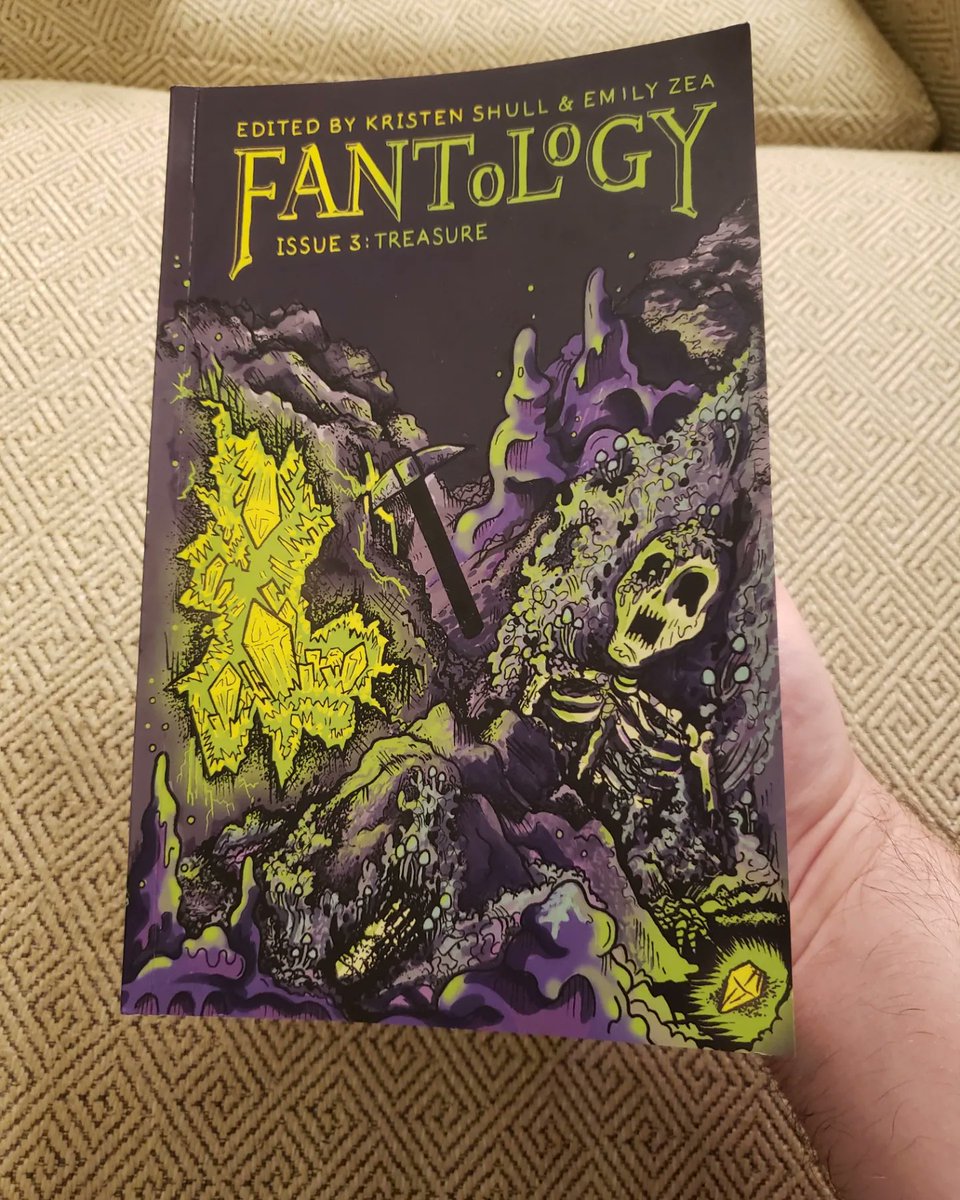
31 Days Of CCS, #26: Fantology Volume 3

Kristen Shull and Emily Zea have produced another winning edition of Fantology, with probably the strongest issue from top to bottom. Its central conceit is that the artists have to work within an established world delineated by a map, which of course is similar to but not as rigidly prescribed as the fantasy minicomic series Cartozia Tales. The theme for this issue is "treasure," and that's a solid basis for stories because it instantly gives protagonists something to want.  


Kat Ghastly's "Lore" kicks things off, and their inventive layouts and page composition make this piece truly stand out. It's as much horror as it is fantasy, as it details a deadly prophecy concerning the new sorceress of the kingdom. Ghastly uses open page layouts, zooms in and out on key characters, uses tiny details to provide narrative and decorative flourishes, and provides rich and provocative characterization. This feels like a long book in the offing. Tay James' work is text-heavy, but the weird lettering choices and bonkers page design help with the light-hearted humor of the piece. Sage Clemmons' entry alternating illustrations with hand-written letters detailing a couple separated by life circumstances is deeply emotional, and ideal for an anthology. Natalie Norris' wordless tale of two mermaid lovers discovering a trove of human treasure is the emotional and narrative opposite: two lovers with no regard to the outside world, inseparable. The treasure amounts to simple baubles for them, instead of life-or-death plunder, and if there's one thing Norris is aces at drawing, it's slender, elegant, beautiful women. 


Emily Claire's piece about disaffected undead employees in a dungeon is funny and has a sharp punchline, although the dependence on grayscale shading made the visuals bland. A pet is a major aid in that story and in Chelsi Fiore's entry about an elf and his small steed being trapped in an underground city. These are breezy transition pieces that lead to the third chapter of Shull's ongoing fantasy story about two accidental traveling companions who both carry secrets. Shull's boisterous and bawdy style of fantasy is propulsively fun, as she pairs a serious (but horny) character with a light-hearted (but also horny) character who loves carousing, singing, dancing, and playing games of chance. Shull has a way of adding a slice-of-life touch to fantasy proceedings that centers the story around her protagonists, and both of them are memorable--both in terms of how they're drawn and their personalities. Hopefully, this makes it into a book one day. 


Michael Beachy's treasure-hunter story is a little visually overwrought, but he reins it in just enough to tell a clear and funny story. Mona's story about a bored wizard staging a tournament because he loves violence is heavy on pen-and-ink pyrotechnics, but her command over her line and clever storytelling techniques makes this fun, right on down to its cut-off ending. I get that it's part of a larger story, but not having any real closure in the story was distracting. The scratchiness of that story is followed by Stephen Pellnat's painstaking detail in service of some dynamic storytelling about a cat adventurer getting more than he bargained for on his adventure, and learning a valuable lesson along the way. There's another stylistic shift, to a sketchy, hatching-heavy story by Jackson Maceo Schleicher about a lack of honor among thieves as they look for a wishing egg. 


Rainer Kannenstine's piece is yet another visual shift, as it looks like scratchout white-on-black, with a simple, blocky line to tell this story of a grappler named Urta whose use of brute force eliminates the need for skill or magic in taking a dragon's treasure. She also has no problem declaring herself the sole recipient of the treasure and turns the dragon into her pet. My vote for most improved feature is Alex Washburn's newest entry about Clan Zargs. These ragtag adventurers get into genuine trouble, and Washburn tightens up everything here: his line, the storytelling, and even the characterizations. On the other hand, co-editor Zea's piece about a pirate challenging her family's lineage with the help of her hostage/protege/niece feels overblown and self-indulgent. She seems so delighted in her Captain Trub character that everyone else in the story is a means to the end of extolling her awesomeness. The story is still well-drawn, although the use of digital lettering takes me out of the actual story. 

While that story was a misfire, Fantology 3 not only holds up well on a story-to-story basis, the sequencing is also fluid and creates contrasts that make each story stronger. For an anthology with an open submissions policy, they did a remarkable job of putting together such a strong group of creators. It helps that there are regulars to anchor it, but this was the best all-around group to be featured in an issue so far. The conceit of Bartlebee the Bard introducing each chapter is fun, but it seems wholly unnecessary for one-shots. Given that some strips are in their third chapter, a summary of prior chapters would have been useful for readers. This volume will definitely delight readers looking for something a bit off-beat in their fantasy comics.